Published 04/15/2026 1:35 pm | Edited 04/15/2026 14:10
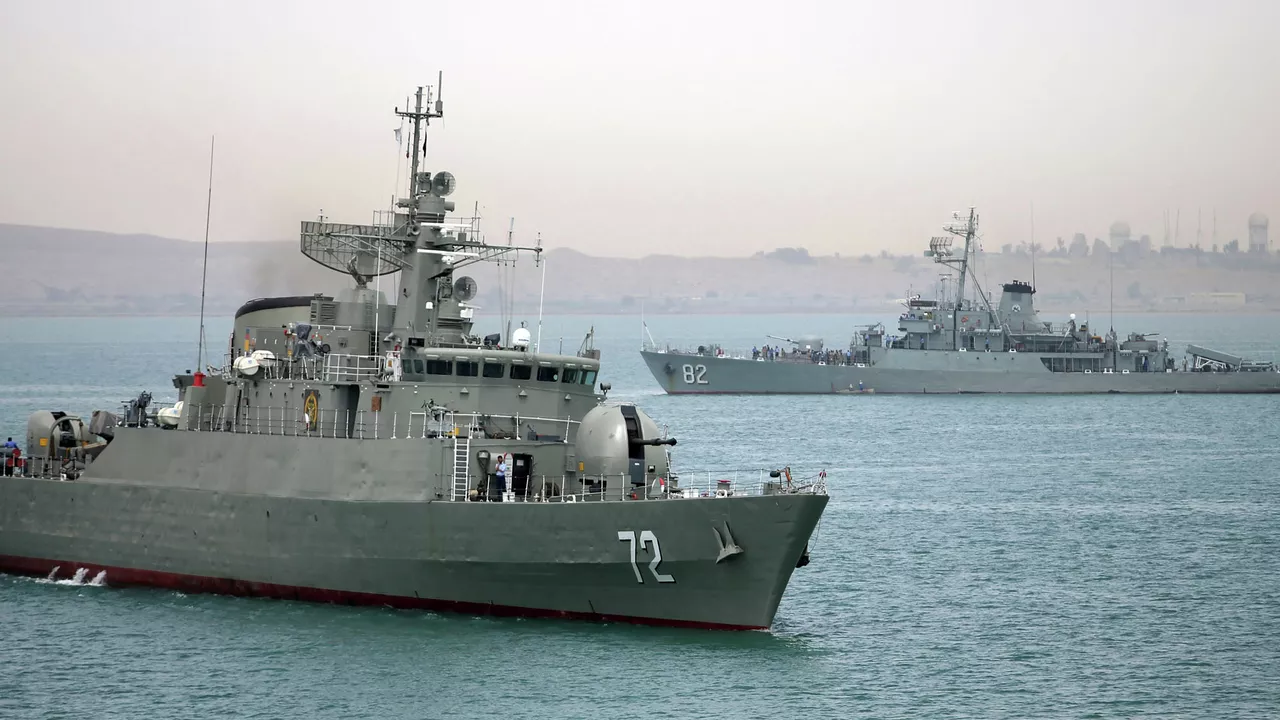
The United States’ war against Iran reached a new and dangerous level this week. The naval blockade imposed by the Donald Trump government on the Strait of Hormuz, which began on Monday (13), has not only paralyzed the flow of energy in the Persian Gulf, but also threatens to overflow into the Red Sea, dragging global trade to the epicenter of the conflict that began in February.
The central point of tension now shifts to the possibility of a blockade war. The Central Headquarters of Khatam al-Anbiya, the unified Iranian command, classified the American interdiction — which mobilizes more than 10,000 troops — as “illegal piracy”. In direct response, Tehran warned that if the siege persists, its allies in Yemen, the Ansar Allah movement (Houthis), could close the Bab el-Mandeb Strait.
Known as the “Gate of Tears”, the site is the bottleneck that gives access to the Red Sea and the Suez Canal, and blocking it would have catastrophic impacts, directly affecting 12% of global maritime trade, which would compromise vital supply chains between Asia and Europe. The Iranian command has already raised the political tone by stating that the “Axis of Resistance” treats Bab el-Mandeb with the same strategic priority as Hormuz, although analysts consider the limitations of this strategy, as a total blockade would require complex logistical coordination under intense pressure from international coalitions, in addition to representing a diplomatic risk by eroding Iran’s relationship with fundamental allies such as China and Russia, which depend economically on the fluidity of this route.
Chaos in the Persian Gulf
Inside the Persian Gulf, the scenario is one of almost total paralysis. Maritime tracking data from platforms such as Kpler and MarineTraffic indicate an operational collapse: the flow, which in normal times registered between 100 and 140 ships daily, dropped drastically to a fluctuation between just 3 and 8 vessels. The dam is visible on radar, with hundreds of ships anchored at strategic points, pressing for a window of exit before the CENTCOM siege becomes insurmountable.
Despite the rigor of the American navy, the blockade has cracks that expose the limits of brute force. An emblematic case is that of the Chinese oil tanker Rich Starry (IMO 9773301). Even under sanctions and carrying around 250,000 barrels of methanol, the vessel managed to cross the Strait of Hormuz on April 14. Currently, the ship is in a position close to the southern coast of Iran, operating at minimum speed. 0.1 knots. The almost zero speed of the Rich Starry indicates that the ship is on standby or anchored, possibly awaiting safety instructions or authorization to dock amid the chaos of naval interceptions.
Diplomacy under pressure
While the price of Brent oil soars on international markets, diplomacy is racing against time. The fragile ceasefire, mediated by Pakistan, expires on April 22. Negotiation rounds in Islamabad failed on the 12th and 13th, held back by irreconcilable demands over Iran’s nuclear program and the payment of war reparations.
With the clock ticking, the international community is watching with fear the possibility that the economic stalemate and show of force at sea will transform the Persian Gulf and Red Sea into a single, sprawling naval battlefield.
Source: vermelho.org.br