Published 03/17/2026 11:16 | Edited 03/17/2026 11:45
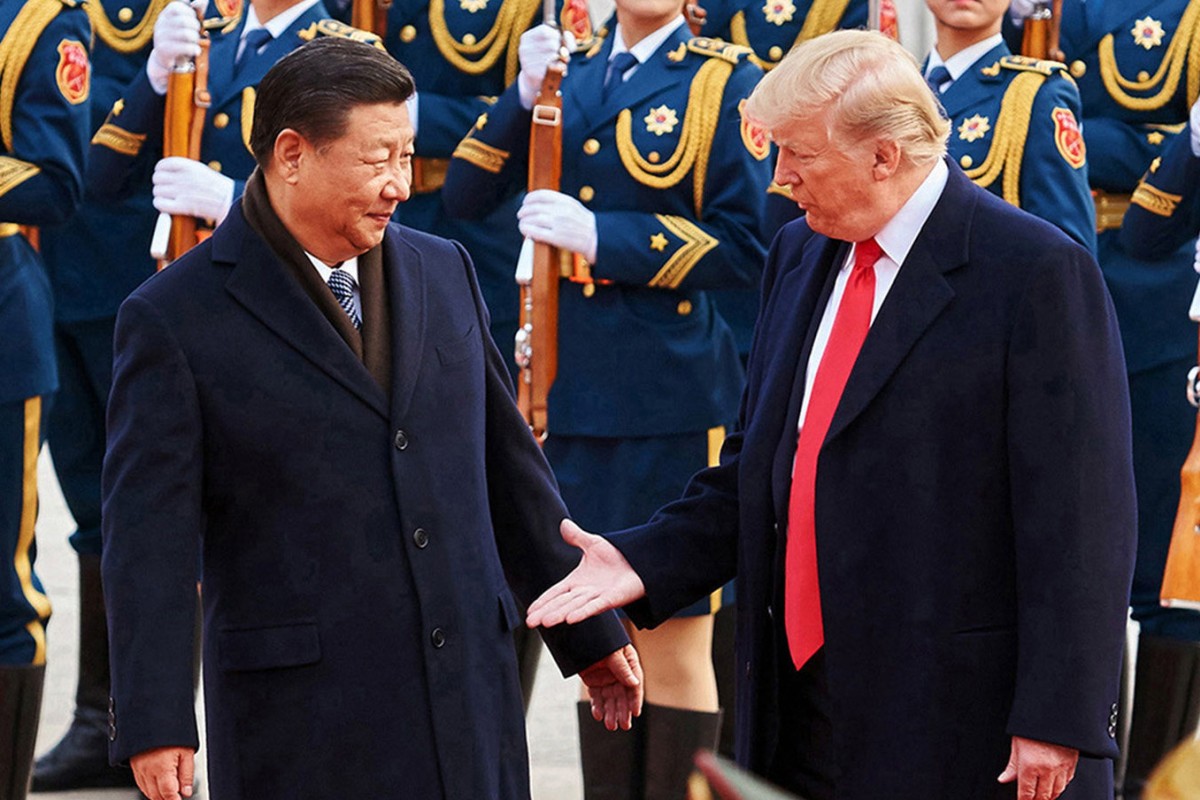
The escalation of the war of aggression between the United States and Israel against Iran began to interfere in negotiations between Washington and Beijing and is expected to postpone the summit between Xi Jinping and Donald Trump, scheduled for the end of March.
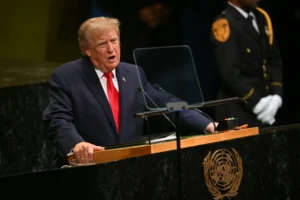
The possibility of postponement was raised by Trump himself when commenting on his international agenda amid the war.
Trump stated that he prefers to remain in Washington to monitor the conflict against Iran, indicating that the trip to China may not take place within the initially planned timeframe. “I would love to go, but because of the war, I want to be here,” he said, justifying the decision.
The statement came after the President of the United States himself conditioned the meeting on the Chinese position regarding the crisis in the Strait of Hormuz.
In an interview, he said he would like to know if Beijing would participate in initiatives to guarantee the circulation of ships in the region and even suggested that the response could influence the holding of the summit. “We would like to know before then. Two weeks is a long time,” he said, before adding: “We can postpone.”
The speeches were made at a time when the United States and China were holding, in Paris, a round of trade negotiations that were being treated as preparation for the meeting between the two leaders.
The talks took place at the headquarters of the Organization for Economic Cooperation and Development (OECD) and were led by Chinese Vice Premier He Lifeng and US Treasury Secretary Scott Bessent.
The first day of meetings ended without public announcements, with delegations leaving the venue without speaking to the press. According to reports from international agencies, the climate was described as “stable”, although no concrete progress was announced.
Despite the reserved nature, sources close to the negotiations indicated that the two sides discussed topics such as agricultural trade, investments and the supply of strategic minerals.
Among the points mentioned is the possibility of expanding Chinese purchases of agricultural products from the United States, in addition to access to inputs considered essential for high-technology industrial chains.
Institutional mechanisms to manage trade and investment disputes between the world’s two largest economies were also discussed, including the possible creation of permanent structures to address these issues.
While these discussions were progressing, the American position regarding the Strait of Hormuz introduced a new factor of tension in the bilateral relationship. The region, through which a significant portion of the oil traded in the world passes, has been impacted by the military escalation, with restrictions imposed by Iran on vessels linked to the United States and its allies.
On the Chinese side, the response to Trump’s statements was marked by the usual caution of the country’s diplomacy.
Asked about the possibility of postponing the summit, Foreign Ministry spokesman Lin Jian stated that “China and the United States remain in communication about President Trump’s visit to China, including the dates”, without confirming changes to the schedule.
The sequence of events occurs at a time when the two countries were seeking to consolidate a trade truce after months of unilateral tariff aggression from the White House.
The Paris round was treated as an important stage to prepare the meeting between Xi and Trump and advance in the management of economic differences.
With the war in Iran starting to directly influence the diplomatic agenda, the holding of the summit no longer depends solely on the results of trade negotiations and is now also conditioned on the developments of the conflict in the Middle East.
Source: vermelho.org.br