Published 03/06/2026 11:06 | Edited 06/03/2026 11:17
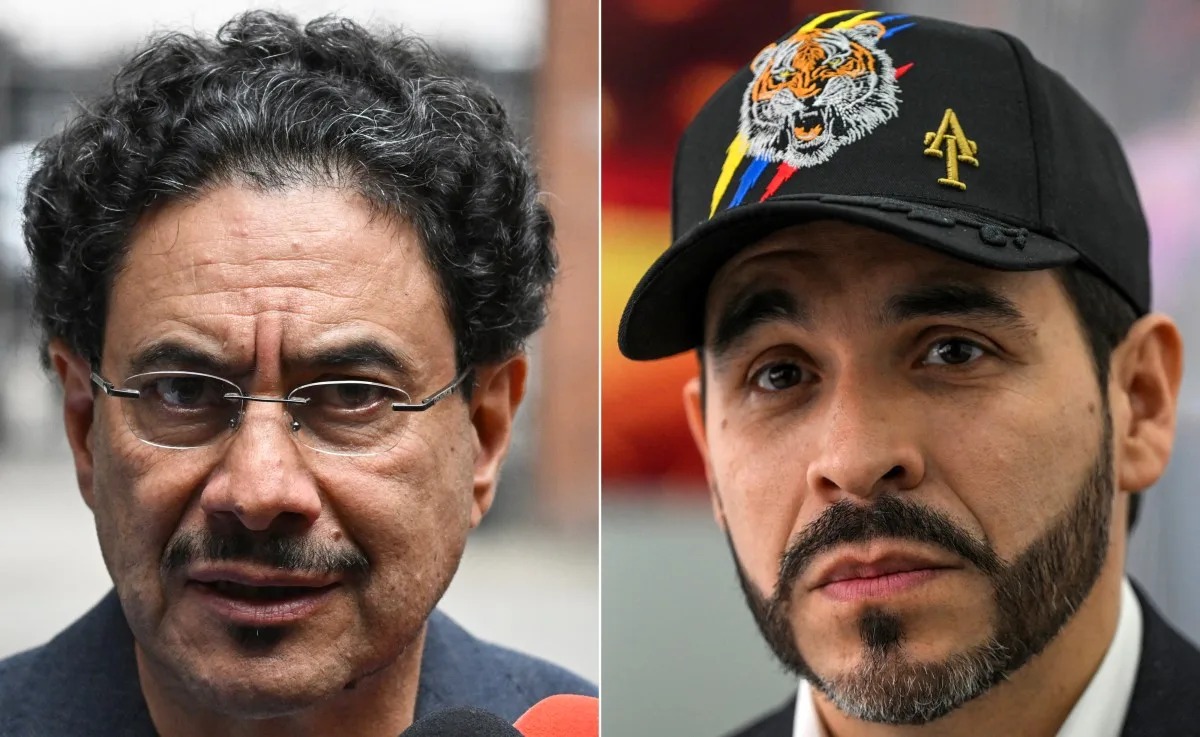
Colombia’s presidential election has entered its decisive phase with the definition of a second round that opposes two radically different political projects.
Senator Iván Cepeda, from the Historic Pact, is trying to prolong the progressive cycle started by Gustavo Petro in 2022, defending social reforms, strengthening the role of the State, expanding popular participation and continuing peace negotiations with armed groups.
Lawyer Abelardo de la Espriella represents an ultra-conservative, punitive extreme right that is strongly inspired by leaders such as Donald Trump, Nayib Bukele and Javier Milei, defending states of exception, tougher penalties and a strong concentration of presidential power.
The second round will be held on June 21, after De la Espriella finishes the first round with 44% of the votes, against 41% for Cepeda.
The result consolidated a polarization between the left-wing camp linked to social movements and a new right that combines anti-politics discourse, religious conservatism and defense of authoritarian measures.
Iván Cepeda enters the presidential race after decades of working in human rights movements, historical memory and peace negotiations.
Son of communist senator Manuel Cepeda Vargas, murdered in 1994 in a crime attributed to paramilitaries with the participation of state agents, he built his political career linked to denouncing political violence against the Colombian left.
Graduated in philosophy in Bulgaria and later specialized in International Humanitarian Law in France, Cepeda became one of the main figures in the defense of victims of the Colombian armed conflict.
He participated in peace dialogues with the FARC, participated in negotiations with the ELN and established himself as one of the parliamentarians most identified with the human rights agenda in the country.
Its national projection grew especially after the long legal battle against former president Álvaro Uribe, top leader of the Colombian extreme right.
Cepeda was a victim and witness in the process that resulted, in the first instance, in Uribe’s conviction for procedural fraud and bribing witnesses. The decision strengthened his image among progressive sectors and boosted calls for him to take on the presidential candidacy.
Politically, Cepeda represents a moderate continuation of the Petro government. It advocates expanding the role of the State in the economy, social reforms, strengthening popular participation and continuing peace negotiations.
It also supports the call for a Constituent Assembly, a proposal defended by the current government and criticized by the conservative opposition.
Although opponents try to present him as a figure “more radical than Petro”, allies describe him as a less confrontational and more conciliatory leader. Its campaign relies on a strong territorial presence, dialogue with popular movements and defense of historically marginalized regions in Colombia.
The choice of indigenous leader Aida Quilcué as vice-president reinforced this strategy of approaching social sectors historically excluded from Colombian power.
On the other side is Abelardo de la Espriella, a criminal lawyer who transformed his media notoriety into a presidential candidacy.
Known for defending investigated businessmen, Uribismo allies involved in paramilitary scandals and characters linked to major cases of corruption and financial fraud, De la Espriella built a public image based on ostentation, aggressive speech and the defense of strong solutions.
Its campaign revolves around the figure of the “tiger”, a symbol that appears in jingles, videos and political acts marked by militarized aesthetics, strong emotional appeal and anti-political rhetoric.
The candidate promises to govern through states of exception, drastically reduce public service, expand the power of security forces and adopt policies inspired by Bukele’s repressive model in El Salvador.
Throughout his career, De la Espriella defended central characters in some of the biggest political and financial scandals in Colombia and Venezuela.
The candidate gained notoriety for defending businesspeople linked to the DMG scandal, a financial pyramid that generated billions of pesos in Colombia in the 2000s and ended up being accused of money laundering and illegally raising funds from thousands of Colombians.
Another axis of his trajectory was the defense of politicians involved in the so-called “parapolitics”, the name given to the scandal that revealed links between parliamentarians, governors and sectors of the Colombian right with paramilitary groups responsible for massacres, drug trafficking and persecution of social movements and left-wing leaders.
Furthermore, De la Espriella maintained political proximity with sectors of Uribismo, a movement linked to former president Álvaro Uribe, historically marked by allegations of relations between regional allies and paramilitary structures associated with drug trafficking during the height of the Colombian armed conflict.
It also maintained close relations with paramilitary sectors during the years of negotiations between the Álvaro Uribe government and the United Self-Defense Forces of Colombia.
Although he was never convicted in court, his career is marked by controversies involving lobbying, relationships with investigated businessmen and campaigns of judicial intimidation against journalists.
The candidacy also relies heavily on evangelical churches and conservative groups.
De la Espriella began to present his political trajectory as the result of a “religious conversion” and uses strongly moralistic language in his campaign. He defends so-called traditional values, combating what he calls “cultural progressivism” and a security policy based on tougher penalties and expansion of presidential power.
Colombian analysts note that its growth expresses not only anti-Petrism, but also a profound erosion of traditional political institutions and a demand for quick solutions in the face of violence and insecurity.
His campaign mixes elements of Bolsonarism, Trumpism and Milei’s confrontational style, combining anti-establishment discourse with strong proximity to business sectors and regional elites.
The dispute between Cepeda and De la Espriella epitomizes a broader political divide across Latin America.
On the one hand, progressive forces trying to preserve social agendas and expand popular participation; on the other, the advance of a radical right that bets on militarization, moral conservatism and concentration of power as a response to the region’s social and economic crises.
The Colombian second round will be closely monitored by governments in the region and the main international powers. The election takes place amid the advance of conservative forces in Latin America, pressure from the United States on progressive governments and regional disputes over issues such as public security, the role of the State, Latin American integration and economic sovereignty.
Source: vermelho.org.br