Published 03/01/2026 14:00 | Edited 03/01/2026 14:01
The attack on Iran, treated as a “declaration of war against Muslims”, is already affecting the world economy, as it affects the countries of the Persian Gulf and harms the flow of oil.
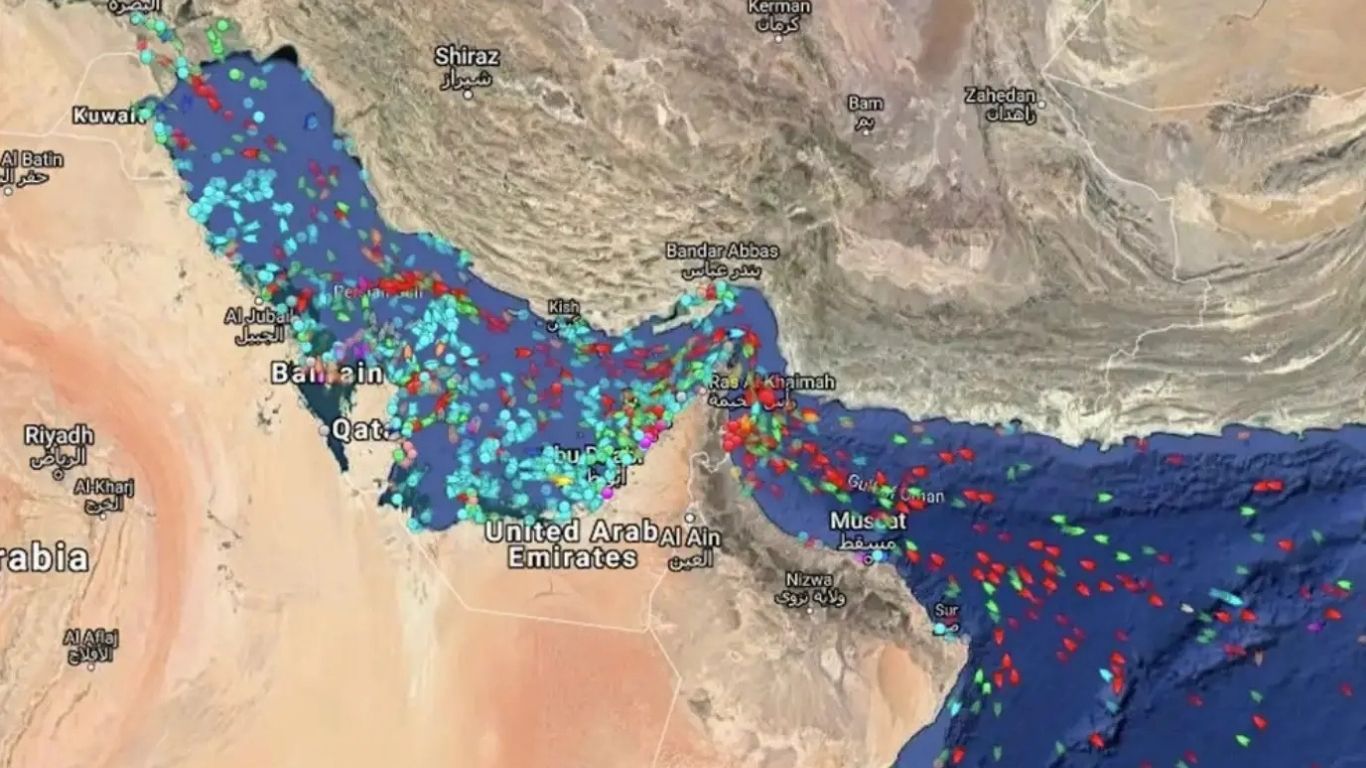
After being cowardly attacked by the United States and Israel, the Iranian government announced the closure of the Strait of Hormuz, one of the world’s main oil routes. The strait connects the Persian Gulf to the Gulf of Oman, with an exit to the Arabian Sea that leads to the Indian Ocean. The closure directly affects the United Arab Emirates, Qatar, Bahrain, Kuwait and Iraq, as well as Iran itself.
About 20% of all the world’s oil passes through these gulfs. Information based on ship tracking by the MarineTraffic platform indicates that 150 tankers (with crude oil or liquefied natural gas) are anchored in the waters of the Persian Gulf to avoid passing through the strait. In the opposite direction, another hundred ships heading towards ports in the region also stopped moving, close to the coast of Oman and the United Arab Emirates (the latter has coastlines in both gulfs).
The main port in the Middle East, Jebel Ali, located in Dubai, in the United Arab Emirates, had its operations suspended this Sunday (1st). The port is the ninth in the world for container handling and the center of the region’s economy – it faces the Persian Gulf.
Read more: Ali Khamenei, supreme leader of Iran, is assassinated in attack ordered by Trump and Netanyahu
Two of the world’s leading container carriers, CMA CGM and Hapag-Lloyd, told their vessels not to transit the region, with a warning to protect their safety. Other companies that transport containers and fuel, such as Mitsui OSK Lines, NYK Lines and Maersk, also followed this line, including warning customers about possible delays in deliveries.
With the markets reopening after the weekend, it is expected that, on Monday (2), the price of commodities, especially oil, may rise. The measure also affects Iran, but it affects neighboring countries that have US military bases and puts pressure on other actors in the region to take a stand against further attacks.
In addition to all countries in the region and those involved in the conflict, the interruption in the movement of vessels also affects other countries in Asia, such as China, and Europe, which buy the oil produced there.
Possible effects
By reaching the interests of world powers, especially the USA, which is embarking on a crusade for global oil by attacking Iran and Venezuela, the Iranians can initiate a defense strategy that involves the economy, even if it affects their finances.
The shock of the closure of the Strait of Hormuz, if it drags on, and, consequently, the stoppage of the functions of the Jebel Ali port, could bring: impacts on global energy prices; financial shock and financial market instability; harm to US strategic allies; and pressure on the US Fifth Fleet in Bahrain.
If global prices rise and markets encounter difficulties, the effect could also be felt politically by the countries involved in the conflict.
Source: vermelho.org.br