Published 10/24/2025 17:16
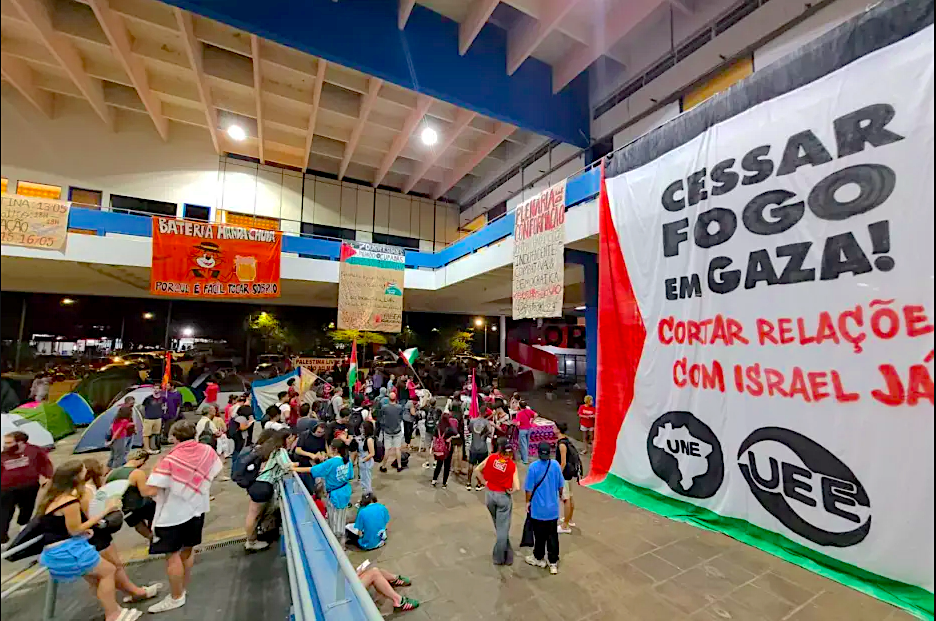
The Faculty of Philosophy, Letters and Human Sciences of the University of São Paulo (FFLCH-USP) decided to break the agreement signed with the University of Haifa, in Israel, after months of student protests and demonstrations by teachers against the Israeli military offensive in the Gaza Strip.
The decision, approved by 46 favorable votes out of a possible 54, anticipates the end of an agreement that would last until May 2026 and marks USP’s first formal break with an Israeli institution.
“It was a victory of ethics over omission. The Brazilian public university cannot be an accomplice to those who transform knowledge into an instrument of war”, said student João Conceição, student representative of the FFLCH International Cooperation Commission.
Context of the decision
Since the beginning of the war in Gaza, students and professors at FFLCH have been pressuring the rectory to review the university’s agreements with Israel. USP also maintains three other agreements: two with the University of Ariel and one with the Consulate General of Israel in São Paulo.
The director of FFLCH, Ádrian Fanjul, recognized that the decision was symbolic in nature, but necessary given the worsening humanitarian crisis.
“These are sadistic practices, like starving people who are desperate for food,” declared the professor.
In August, the UN officially recognized the existence of famine in the Gaza Strip, classifying the territory as the first in the Middle East to reach such a condition. According to the organization’s estimates, more than 500,000 people face a “catastrophic” humanitarian situation.
Student reaction and international solidarity
The vote was celebrated by student movements and organizations that are part of the Solidarity Committee with the Palestinian People, which have been promoting acts and occupations at USP and other universities for months.
The students argue that maintaining agreements with Israeli institutions “committed to the military apparatus of a State denounced for war crimes” violates the ethical principle of the public university.
The USP University Council must analyze FFLCH’s recommendation to extend the break to all faculties and research centers at the institution.
National trend
USP’s decision follows a growing trend in Brazilian academia. In recent months, Unicamp (SP), UFF (RJ), Unesp (SP) and UFC (CE) have broken or suspended agreements with Israeli universities, in protest against what they classify as “genocide of the Palestinian people”.
At UFRGS (RS), the University Council approved a motion to repudiate relations with AEL Sistemas, a subsidiary of the Israeli weapons company Elbit Systems, which provides military technology used in operations in Gaza.
In a statement, the union of UFRGS employees (ASSUFRGS) stated that “the knowledge produced at the public university should not serve colonization or ethnic cleansing”.
Similar breakups
At UFF, student pressure led to the cancellation of the agreement with Ben Gurion University, which maintains partnerships with the Israeli Ministry of Defense and arms companies. The rectory stated that, from now on, any new international partnership will undergo an assessment of respect for human rights.
UFC, in turn, ended the exchange program with the same university, in a unanimous decision by the University Council. The motion published by the Ceará institution repudiates “the ongoing genocide and expresses solidarity with the Palestinian people who resist the aggression”.
An ethical and political debate
The rupture of academic agreements reignites the debate about the role of universities in contexts of war and human rights violations. For sectors of the scientific community, it is the duty of public educational institutions not to collude with regimes accused of war crimes and apartheid.
Other groups, however, defend the maintenance of academic ties as a way of promoting dialogue and scientific diplomacy. At USP, students taking the Hebrew course expressed concern about possible cultural losses, but the congregation ruled out this hypothesis after finding that there were no active exchanges.
With the FFLCH decision, the debate on the social responsibility of Brazilian universities in the face of international conflicts should gain new momentum. If the USP University Council follows the faculty’s recommendation, the country’s largest university could break all existing agreements with Israeli institutions — a gesture of political and symbolic weight in the international academic scene.
Source: vermelho.org.br