Published 17/08/2025 10:19
President Luiz Inacio Lula da Silva’s government states that he follows Donald Trump’s decision to mobilize more than 4,000 military personnel to the Caribbean Sea and areas near Latin America on the grounds of combating drug cartels.
According to presidential assistants, the measure is worrying “under any circumstances”, especially in view of the hypothesis of territorial violation. The Brazilian Chancellery became aware of the displacement through the international press, without official communication from Washington.
The mobilization is seen in Brasilia as another step of the US interventionist climbing in the hemisphere, in a context where Trump reinforces his foreign policy of confrontation.
The US President has associated the US Fentanil Crisis with Latin American cartels, classifying them as “narcoterrorists” and authorizing their direct military persecution.
Although Brazil is not initially included in the operation, diplomatic sources confirmed that Washington has questioned why organizations such as the CCP are not recognized by the Lula administration as terrorist groups.
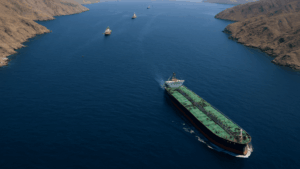
Shipping involves the USS Iwo Jima Readiness Group and the 22nd Naval Marine Expeditionary Unit, as well as nuclear submarines, P-8 Poseidon recognition aircraft, destroyers and a guided missile cruiser.
Other ships, such as USS Fort Lauderdale and USS San Antonio, were also mobilized.
The funds were transferred to the Southern Command Responsibility area (Southcom) and should remain in the region for a few months. In March, the US had already sent destroyers to the sea border with Mexico, under the responsibility of the North Command.
According to the New York Times, Trump has signed a secret order by instructing the Pentagon to use military strength in Latin American countries, with operations planned by land, sea and air attacks.
The document cites directly Venezuela and Mexico, with targets such as Aragua’s Tren and the MS-13 gang. Sources of defense state that the offensive gives the US President a wide range of attack options, although, for the moment, the mobilization is “especially a demonstration of strength.”
Venezuela on the target and hard reaction of Maduro
Although the official justification is the fight against drug trafficking, analysts point out that Venezuela is at the center of Trump’s strategy. Days before troop sending, Washington announced a $ 50 million reward for capturing Nicolás Maduro, accused of bonds with drug trafficking.
The measure was received in Caracas as another attempt to destabilize the Bolivarian government and to pave the way for regime change actions.
Maduro reacted vehemently and addressing the “imperialists,” he said there should be no illusion of impunity. “Do not dare attack, because the answer may be the end of the US Empire,” said the Venezuelan President, in a direct message to the White House.
The Venezuelan government also reinforced diplomatic appeals in international forums, denouncing the militarization of anti -drug policy as an instrument of geopolitical pressure.
Mexican President Claudia Sheinbaum, traveling to Guatemala, responded promptly to news about the mobilization of US troops. She stated that the operation occurs in international waters and, therefore, does not constitute a violation of sovereignty, but stressed that Mexico will not accept any foreign action in its territory.
“Our opinion will always be the self -determination of peoples. Not only in the case of Mexico, but in the case of all countries in America and the Caribbean. The only one who rules in Mexico is the people,” he said at a news conference.
Sheinbaum’s negative dialogues with a history of US interventions in the region, which generate distrust about the actual extension of the operation.
Mexico had already been spying with CIA drones, according to CNN reports, as part of cartel monitoring missions. The new mobilization, therefore, rekindles fears that the anti -drug campaign serves from coverage for broader political pressures.
Legal and strategic risks of the operation
In the United States, experts warn of legal barriers and risks associated with Trump’s decision. Traditionally, Congress should authorize the use of military force abroad, which has not happened so far.
In addition, it is concerned that operations result in deaths of civilians and US military.
Pentagon’s own officers demonstrated reservations regarding the presence of naval marines in anti -drug missions, as they are not trained for this type of operation, which would require delaying the coast guard.
A memorandum signed by Defense Secretary Pete Hegseth reinforced the guideline that the “top priority” of the Armed Forces is to defend the US territory.
The document instructs the pentagon to “seal borders”, “repel invasions” and ensure “credible military options” to ensure unrestricted access to the Panama channel – a strategic point for global trade. In April, Panama and USA signed an agreement allowing the presence of US troops in areas adjacent to the channel.
Source: vermelho.org.br