Published 14/08/2025 10:56 | Edited 14/08/2025 11:03
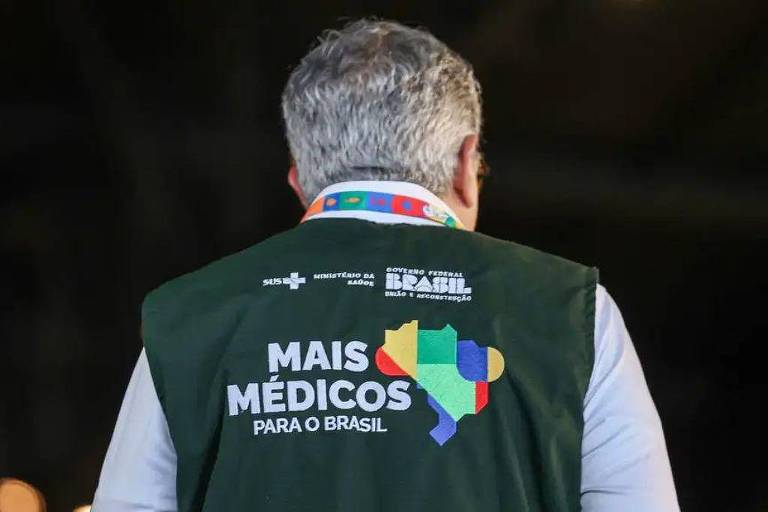
In a new round of attacks on Brazil’s sovereignty, the US government announced on Wednesday (13) the revocation of visas and the imposition of entry restrictions on two members of the Brazilian Executive and former leaders of the Pan American Health Organization (PAH) for implementing the Mais Médicos program.
The target of the measure are Mozart Júlio Tabosa Sales, secretary of specialized care to health, and Alberto Kleiman, general coordinator for COP30 in the organization of the Amazon Cooperation Treaty (OTCA).
The decision also reaches family members of the sanctioned and prevents their entry into US territory.
The initiative is part of Donald Trump’s escalation of attacks against Brazil, articulated by figures of the far right Brazilian as Deputy Eduardo Bolsonaro (PL-SP) and former presenter Paulo Figueiredo.
It was Secretary of State Marco Rubio who made public the measure, stating that “the More Doctors program was an inconceivable diplomatic fraud of foreign medical missions” and accusing Brazil and other intermediaries to enable the sending of Cuban doctors, dodging Havana imposed sanctions.
According to the official statement, “these employees were responsible for, or involved in facilitating the coercive work export scheme of the Cuban regime, which explores Cuban medical workers through forced labor” and “this scheme enriches the corrupt Cuban regime and deprives the Cuban people of essential medical care.”
The statements are part of a long series of attacks from the far right to Cuba. It is not today that Marco Rubio, Senator of Cuban origin and current secretary of state, uses the diplomatic apparatus of Washington to expand sanctions and politically press the island.
The narrative he repeats against more doctors echoes previous isolation and criminalization campaigns of international cooperation programs maintained by Havana, ignoring his history of sending health professionals to dozens of countries.
Including Brazil at this target, Trump management reinforces alignment with a hostile agenda to Latin American integration and tries to reach public policies that symbolize the state’s presence in vulnerable areas.
The attack on Mais Médicos, in this context, is not limited to a diplomatic dispute, but is part of a strategy of weakening projects that contradict the privatist logic defended by conservative sectors in the United States.
More Doctors: Public Policy target of American retaliation
Created in 2013 in the Dilma Rousseff administration, Mais Médicos was born to supply the lack of health professionals in remote areas, indigenous communities and municipalities in the interior where Brazilian doctors did not usually work.
Through an agreement with PAHO, the program brought thousands of Cuban doctors to the country by 2018, when the partnership was closed by the government of Jair Bolsonaro after attacks on cooperation with Cuba.
At the height, in 2016, there were 18,000 doctors serving almost 63 million people in four thousand municipalities.
Resumed in the third Lula administration, the program broke the coverage again, but without the participation of Cubans. According to Alexandre Padilha, “in this current government, in two years, we folded the number of doctors in Mais Médicos” and “we are very proud of all this legacy that brings medical attention to millions of Brazilians who previously had no access to health.”
In addition to the social impact, the program has become a symbol of South-South cooperation and Brazil’s ability to implement universal health policies.
Their interruption in the Bolsonaro government and the removal of Cuban doctors in 2018 had strong international and internal repercussions, with damage to attended vulnerable communities. Trump’s new offensive is seen in Planalto as an attack not only to a program, but to the conception of health as everyone’s right.
Reactions in Brazil reinforce defense of sovereignty and SUS
Health Minister Alexandre Padilha reacted by stating that “the most doctors, like the pix, will survive the unjustifiable attacks of anyone” and that the “saves lives and is approved by those who matters most: the Brazilian population”.
He stated that “we will not bend to those who pursue vaccines, the researchers, science, and now two of the fundamental people for the most doctors in my first management as minister.”
Deputy Jandira Feghali (PCdoB-RJ) stated that the most doctors “saved lives, took assistance to those who had never seen a doctor and strengthened the largest public health system in the world: the SUS”, arguing that foreign and far right attacks “will not dismantle achievements that belong to Brazil.”
Senator Humberto Costa (PT-PE) said the US attacks the very idea of free and universal public health. Deputy Guilherme Boulos (PSOL-SP) said that “the boldness of the bolsonist complô against Brazil has no limits” and that Trump is punishing servants who helped millions of Brazilians have medical attention.
President Luiz Inacio Lula da Silva, during an event in Planalto, criticized Trump’s stance in previous measures against Brazilian authorities, calling the revocation of visas of ministers of the Supreme Court (STF) “bad example for humanity” and “unacceptable and totally inexplicable behavior”.
Sanctions add to previous attacks from Trump to Brazil
The measure against Mozart Sales and Alberto Kleiman is another chapter in the offensive started in July, when the US canceled visas from eight Federal Supreme Court ministers, they imposed financial sanction against Alexandre de Moraes based on Magnitsky Law and applied 50% tariff over Brazilian products.
These actions were justified by Washington in response to the alleged censorship of US companies and citizens, as well as persecution of Jair Bolsonaro.
Decisions were influenced by a campaign organized by Eduardo Bolsonaro and Paulo Figueiredo since Trump’s inauguration. The State Department has already accused the Brazilian government of repressing “the democratic debate” and restricts the expression of Bolsonaro supporters, as an annual report sent to the US Congress states that the human rights situation in Brazil deteriorated by 2024.
Source: vermelho.org.br