Published 11/24/2025 10:58 | Edited 11/24/2025 11:36
A United States destroyer crossed the path of a Russian oil tanker heading to Venezuela and forced the vessel to return, in an episode that expands the military siege led by Washington in the Caribbean and raises suspicions of direct interference to restrict Moscow’s energy aid to the government of Nicolás Maduro.
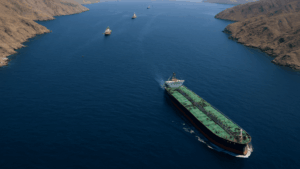
The incident occurred on November 13, when the tanker Seahorse, sanctioned by the European Union and the United Kingdom, approached the Venezuelan coast with a load of naphtha — an essential input for the extraction of heavy oil — and changed course after the approach of the destroyer USS Stockdale.
The tanker diverted towards Cuba, sailed close to Venezuela’s territorial waters and then headed towards the Puerto Rico region.
Since then, it has attempted to resume its journey at least twice, but retreated both times and remains anchored in the Caribbean, in a situation considered anomalous for vessels of this type.
Bloomberg revealed that the destroyer’s intentions toward the Russian ship are unclear, and U.S. Southern Command declined to comment on its movements.
The maneuver is inserted, however, in the context of military and political escalation in the region, in which Donald Trump’s government began to adopt explicit pressure measures on Caracas, combining naval actions, intelligence operations and legal offensives against the Chavista circle of power.
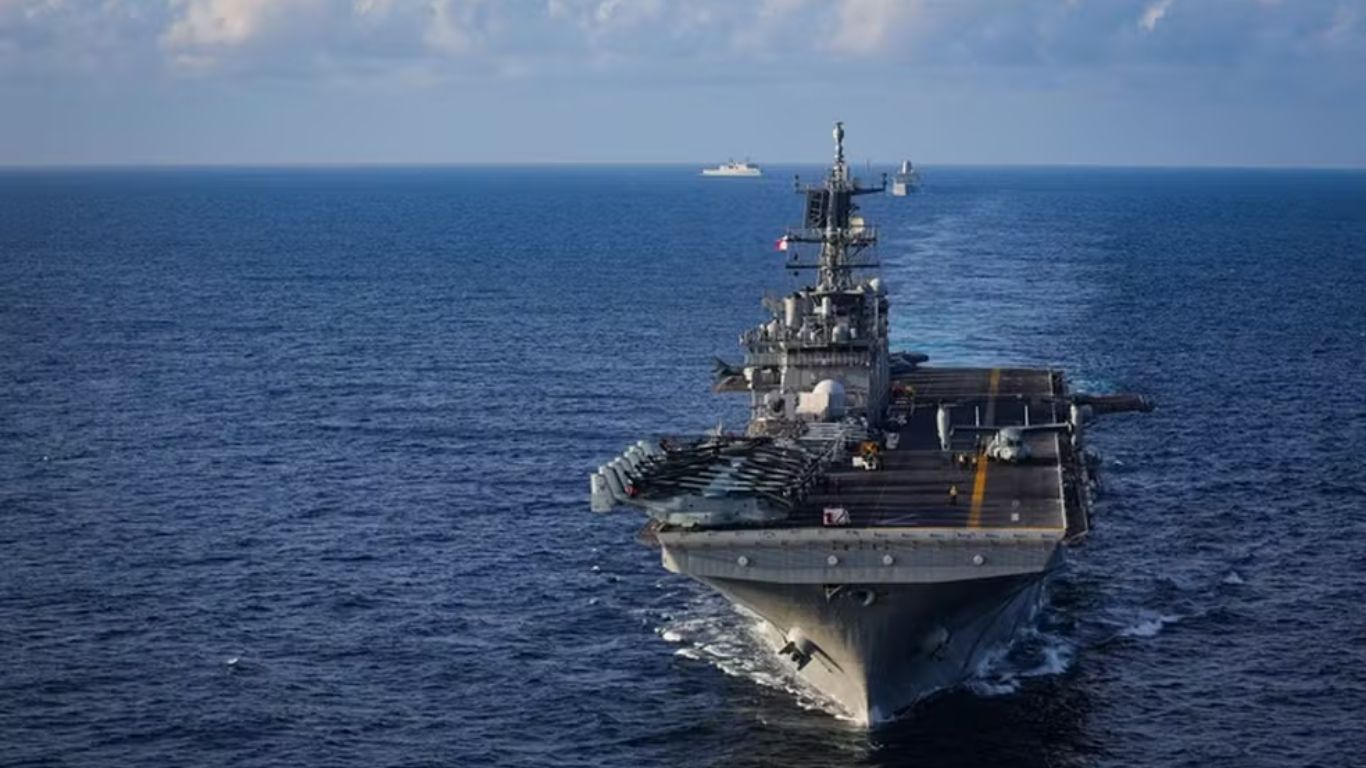
In recent weeks, Washington has stepped up its military presence in the Caribbean and the Pacific with the deployment of the aircraft carrier USS Gerald R. Ford, guided missile destroyers, F-35 fighters, a nuclear submarine and 6,500 troops.
At the same time, Trump announced the designation of the Cartel de los Soles — which he claims is led by Maduro himself — as a Foreign Terrorist Organization, offering a reward of US$50 million for information leading to its capture.
In October, the US president admitted to having authorized the CIA to conduct covert operations inside Venezuela, fueling speculation that Washington plans to disrupt external support for the regime through a combination of energy suffocation and military attrition.
The impacts on the Venezuelan economy would be immediate. The naphtha transported by Seahorse is one of the main bases of the production process of PDVSA, Venezuela’s state oil and gas company, allowing Venezuelan heavy oil to flow through pipelines.
Any interruptions in Russian supplies directly put pressure on the country’s ability to generate revenue, in a situation in which oil constitutes practically the only source of foreign exchange.
For analysts interviewed by Bloomberg, the approach of the USS Stockdale works as a “precautionary signal” that the United States may be willing to apply a new layer of coercion against Russian ships in the region, worsening Caracas’ isolation.
The operation takes place under the official justification that the US is conducting an offensive against drug trafficking, but international data weakens the discourse.
The United Nations’ 2025 World Drug Report points out that fentanyl — the main cause of overdose deaths in the United States — originates in Mexico, and not in Venezuela, which practically does not participate in the opioid production or smuggling chain.
The cocaine consumed by around 2% of the North American population comes mainly from Colombia, Bolivia and Peru.
Even so, US operations in the Caribbean and the Pacific resulted in at least 83 deaths, in actions classified by the UN High Commissioner for Human Rights as “extrajudicial executions”.
Internal pressure also intensifies. A Reuters/Ipsos poll released on the 14th showed that only 29% of Americans support the use of the Armed Forces to kill drug trafficking suspects without trial.
Among Democrats, rejection reaches 75%; among Republicans, 27% are opposed. The division reflects the growing domestic dispute over Trump’s foreign policy, criticized by legal experts and Democratic lawmakers who see violations of international law and the principle of due process.
The episode also occurs at a time when Russia is preparing to send the frigate Admiral Gorshkov to Cuba, increasing the risk of incidents between American and Russian vessels in the Caribbean.
The simultaneous presence of naval apparatus from both powers has raised alarms about miscalculations in one of the most militarized regions of the Americas since the end of the Cold War.
The interception of the Seahorse, combined with the silence of the Southern Command and Washington’s refusal to detail the rules of engagement, puts the legality of the operations under scrutiny and reinforces the perception that the US may be using the fight against drug trafficking as justification for a broader strategy of military pressure and economic suffocation on Caracas.
Source: vermelho.org.br