Published 16/10/2025 17:45 | Edited 10/17/2025 17:02
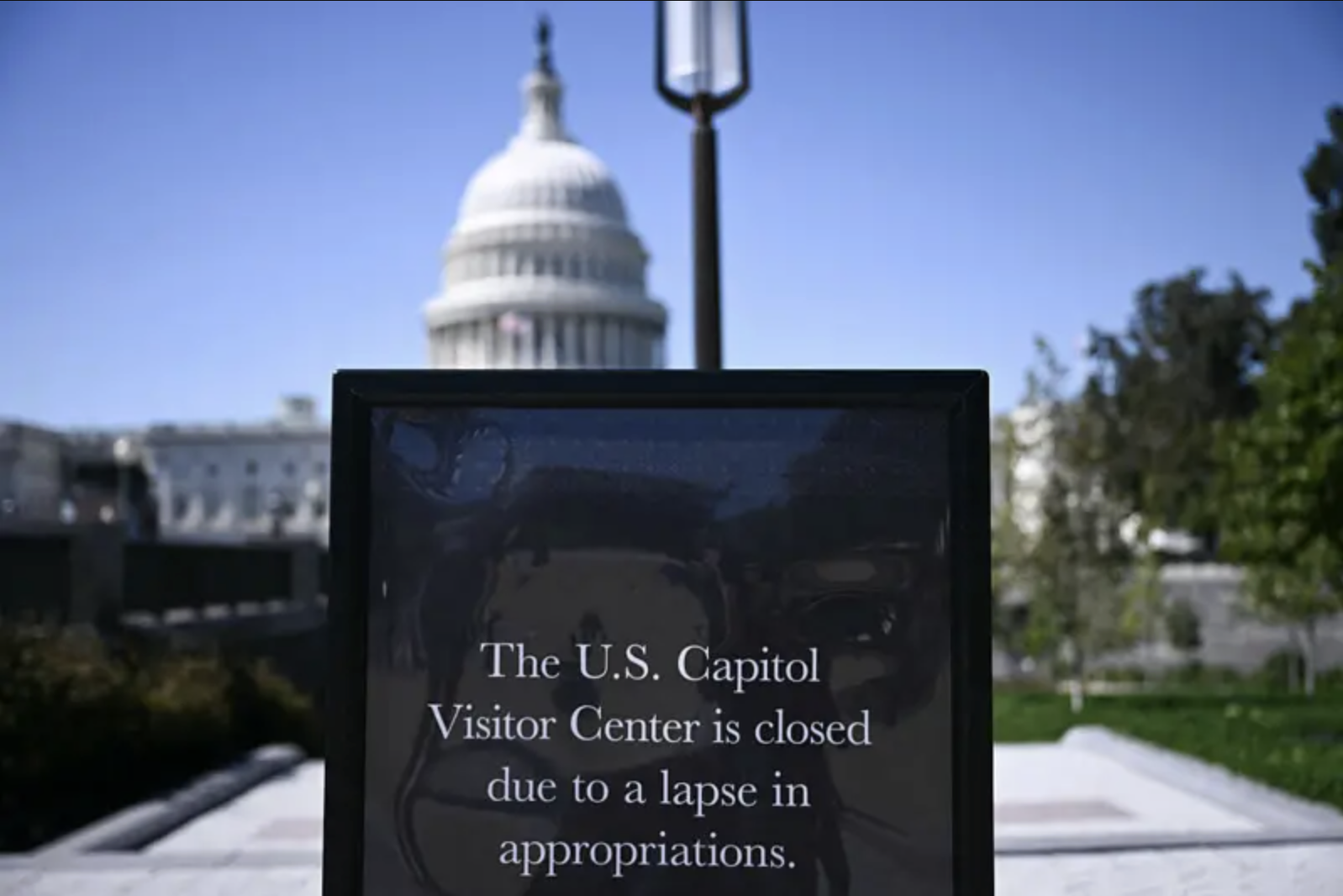
The partial shutdown of the United States government reached its 16th day this Thursday (16), without any sign of a solution. The impasse between Democrats and Republicans over health financing keeps thousands of federal employees on leave and public services paralyzed.
The Senate rejected, for the eighth time, a bill introduced by Republicans to reopen the government. The proposal needed 60 votes to advance, but only obtained 49. The country is thus approaching one of the longest strikes in history, surpassed only by the 35-day strike during Donald Trump’s government, in 2018-2019.
House Speaker Mike Johnson accused Democrats of prolonging the lockdown. “We are headed for one of the longest shutdowns in American history unless Democrats abandon their partisan demands and pass a clean budget,” he said. Democrats accuse Republicans of trying to reduce public health funding, directly affecting millions of Americans covered by Obamacare.
Trump’s unilateral cuts worsen the impasse
At the center of the dispute is President Donald Trump himself, who has ignored congressional budget decisions and promoted unilateral cuts in previously approved funds. His government has already canceled around US$28 billion in resources destined for cities and states led by Democrats, while maintaining transfers to areas and agencies aligned with his policies.
The strategy, known as “rescission”, reignited constitutional tensions between the Executive and Legislative branches. “If the president can alone undo what Congress approves, what is the point of an agreement?” asked Chuck Schumer, Democratic leader in the Senate.
For Republicans, Trump is just “restoring fiscal responsibility.” But for Democrats, this is a usurpation of Congress’s power. Senator Lisa Murkowski, Republican of Alaska, acknowledged that the cuts make any consensus difficult: “It certainly makes it more difficult to reach an agreement.”
Economic impacts and global attrition
Experts warn that the shutdown is already starting to affect the US economy. Brookings Institution researcher Darrell West said the blockade “slows growth and weakens the country’s global image.”
More than 4,000 employees have received dismissal notices, while national parks, museums and federal offices remain closed. Air traffic is one of the most affected sectors: flight controllers work without pay, causing delays and cancellations.
“The impact is still limited, but it is about to increase,” said Dean Baker of the Center for Economic and Policy Research. “Overloaded controllers can literally feel like they can’t handle the load.”
Researcher Clay Ramsay, from the University of Maryland, highlighted that the crisis also affects the science and technology sector. “NASA is practically at a standstill. This deteriorates the US’s place in international science and makes it seem like the country is no longer the best place to pursue a scientific career.”
A political impasse that redefines 2026
The crisis also has immediate political effects. Senator Jon Ossoff, Democrat of Georgia, faces electoral pressure by sticking to the party’s strategy of not giving in until Republicans and Trump guarantee the extension of Obamacare subsidies, which expire at the end of the year.
Ossoff is considered the most vulnerable Democrat in the Senate, as he is running for reelection in a state that Trump won in 2024. “My voters want the government to reopen, but they also want their health plans not to double in price,” said the senator.
Ossoff’s firm position makes him a symbol of Democratic resistance, but also attracts attacks from opponents.
Analysts point out that the impasse over the budget is just a symptom of a deeper crisis of governability. As political scientist Charles Bullock of the University of Georgia summarizes:
“It’s a calculated risk, but it reflects a larger problem: The United States is caught between the politics of confrontation and the inability to govern.”
A government hostage to its own division
While Democrats and Republicans accuse each other, the strike enters its third week with no end in sight. The budget impasse, fueled by Donald Trump’s unilateral strategy, exposes institutional erosion at the heart of the world’s largest economy.
The result is a government that is paralyzed — not just in its departments, but also in its ability to make stable, democratic decisions.
With information from Xinhua and New York Times
Source: vermelho.org.br