Published 10/14/2025 11:54 | Edited 10/14/2025 1:08 pm
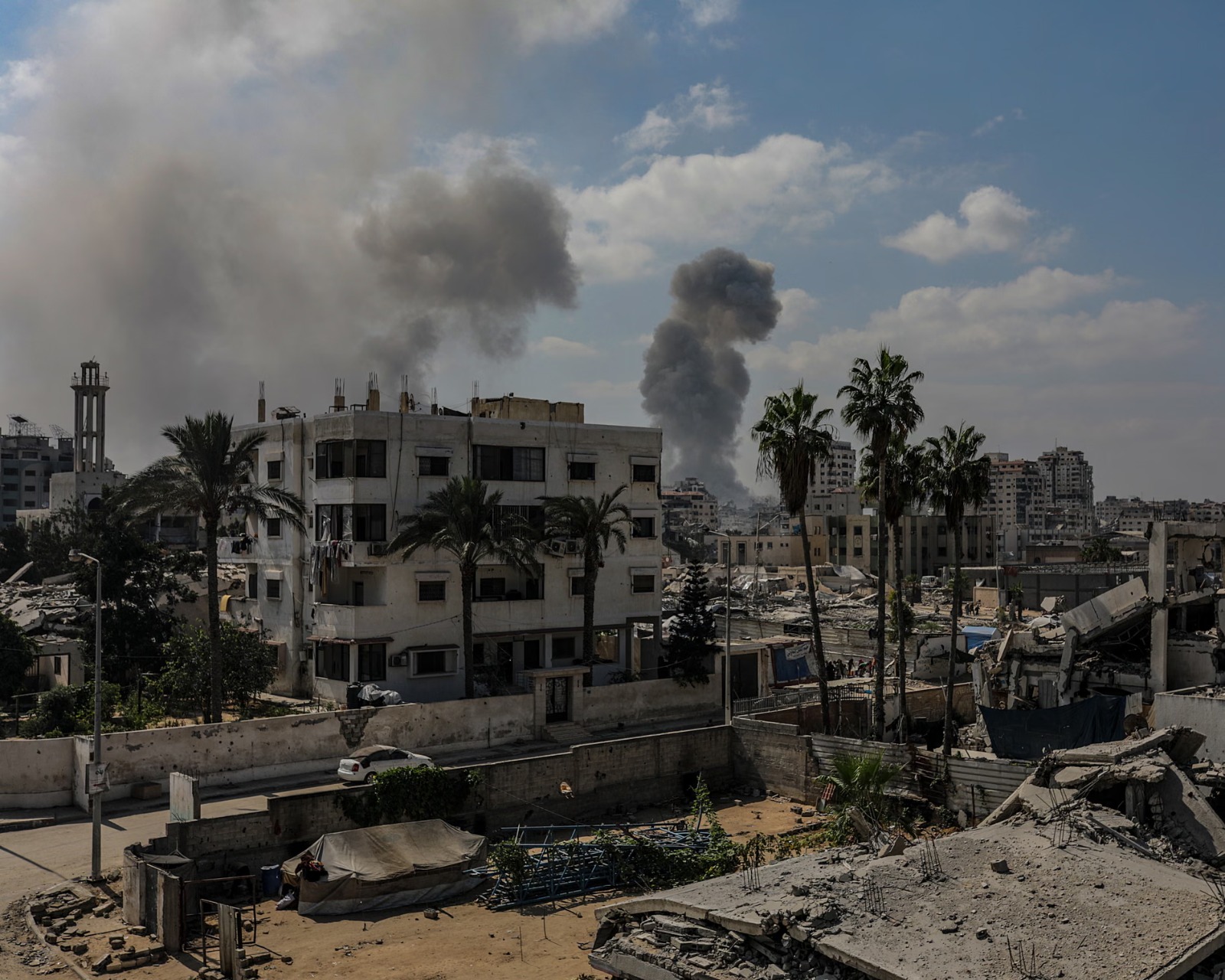
The war in Gaza left 80% of the territory’s buildings destroyed or seriously damaged, according to United Nations reports. Two years of Israeli offensives have turned entire cities into ruins, produced 55 million tons of rubble and left more than 68,000 Palestinians dead.
The dataset was classified by the UN as one of the largest urban and humanitarian crises in recent history, with effects that will last for generations. According to the United Nations Satellite Center (UNOSAT), 83% of all buildings in Gaza City — the largest urban center in the territory — were hit.
The calculation corresponds to around 81 thousand homes destroyed, in addition to hospitals, schools, energy networks and sanitation systems destroyed by successive Israeli bombings.
Satellite images released by the UN show the capital, Gaza City, reduced to a gray and silent landscape, covered in debris and dust, the result of the greatest urban destruction recorded in the Middle East since the Second World War.
“The conflict generated around 55 million tons of rubble, an amount equivalent to 13 times the volume of the Giza pyramids,” said Jaco Cilliers, representative of the United Nations Development Program (UNDP). The UN says the devastation is so great that not all sites can be rebuilt.
Hospitals and schools are partially functioning, and hundreds of thousands of displaced Palestinians live in makeshift tents, while the blockade imposed by Israel prevents the entry of basic reconstruction materials.
The UN special rapporteur on the right to housing, Balakrishnan Rajagopal, described the destruction as “domicide”, a term used to characterize the deliberate elimination of civilian homes. “The destruction of homes and the emptying of areas makes places uninhabitable — it is one of the main ways in which the act of genocide has been committed,” Rajagopal told Al Jazeera.
The expert compared the situation to the Nakba of 1948, when hundreds of thousands of Palestinians were expelled from their lands during the creation of the State of Israel.
“It’s like another Nakba. What happened in the last two years will be similar,” he said.
With the ceasefire signed on October 10, 2025, thousands of Palestinians began to return to the north of the Gaza Strip, where only craters, rubble and collapsed buildings remain.
“The psychological impacts and trauma are profound, and that is what we are seeing now as people return to northern Gaza,” Rajagopal reported. The UNDP reported that it has already removed 81 thousand tons of rubble, but the work is slow.
Destroyed roads and Israeli control over entry points make it difficult for humanitarian aid to arrive, while entire families return to the ruins without access to water, electricity or shelter.
The UN estimates that the complete reconstruction of the Gaza Strip will cost at least US$70 billion (about R$382 billion) and could take decades.
The new estimate is 30% higher than that released in March this year, when the value was US$53 billion. Arab and European countries, as well as Canada and the United States, have signaled their willingness to contribute to financing, but so far there are no firm commitments.
“We have received very positive news from several of our partners, including Europeans, and from Canada,” said Jaco Cilliers, adding that discussions are ongoing with the United States.
Over the next three years, US$20 billion (R$115 billion) will be needed for sanitation, water supply and urban cleaning, according to the UNDP.
The ceasefire agreement, brokered by Egypt, Türkiye and Qatar, led to the release of the last 20 living Israeli hostages and the release of nearly 2,000 Palestinian prisoners.
United States President Donald Trump announced the end of the war, but uncertainties persist about the disarmament of Hamas and the composition of the technocratic government that should administer the Palestinian territory.
While negotiations drag on, the UN warns that, without an end to the blockade and without guarantees of sovereignty, reconstruction will be unfeasible. Gaza, reduced to ruins, is today a symbol of the tragedy caused by a war that destroyed cities, claimed lives and compromised the future of an entire people.
Source: vermelho.org.br