Published 12/09/2025 07:23 | Edited 12/09/2025 11:17
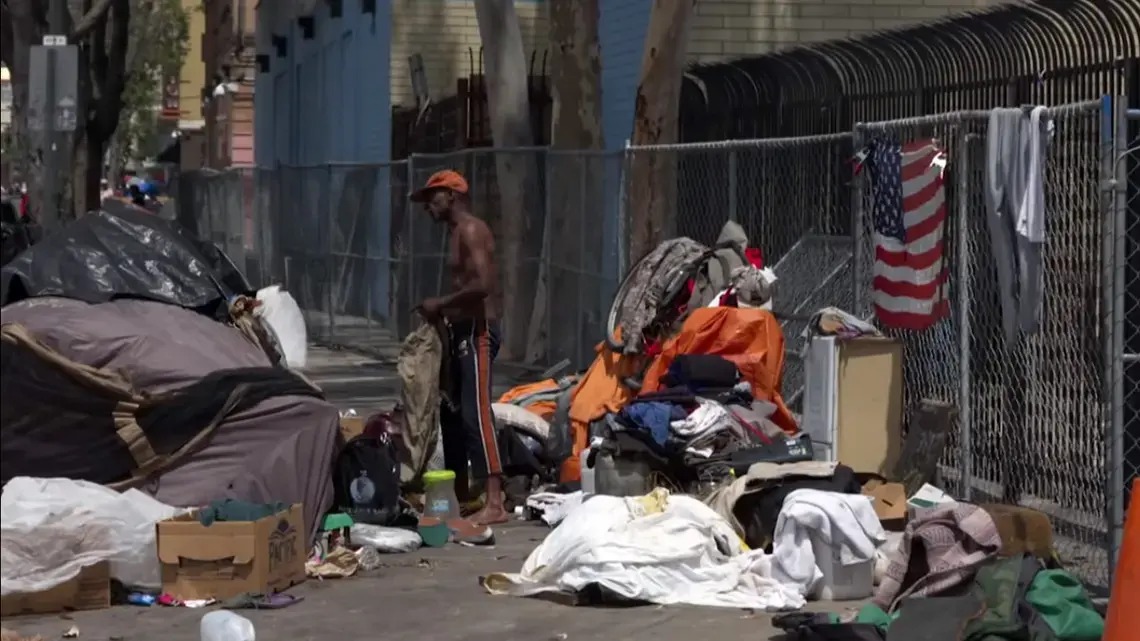
Donald Trump’s new tariff regime threatens to significantly broaden poverty in the United States, according to a study published by The Budget Lab of the University of Yale.
The analysis, released on Tuesday (9), projects that up to 875 thousand people will fall below the poverty line by 2026, if current tariffs remain in force. Of this total, 375,000 are children, showing that the impact will fall with greater strength on vulnerable families.
The calculations were made from the official poverty measure (OPM), an indicator that compares family income to an inflation -adjusted limit.
The index, which was 10.4%, would rise to 10.7% in the scenario of tariffs maintained. The Supplementary Poverty Measure (SPM), which also considers social programs and additional costs such as health and housing, points to an increase of 650,000 poor people, including 150,000 children, with the rate from 12% to 12.2%.
In practice, rates act as an indirect tax on consumer goods, making imported products more expensive and corroding purchasing power.
As low -income families spend proportionally more on food, clothing and housing, the weight of tariffs is unequal, punishing those who have less savings capacity.
According to the survey, rates induced by tariffs affects not only the immediate cost of living, but also the official calculation of poverty, as the threshold used by the government to define the poverty line is indexed to inflation.
The result is that more families have insufficient income to overcome this limit, even if nominally their salaries do not change.
Contradiction in the defense discourse of the working class
The study reinforces criticism that Trump’s trade policy, presented as a way of protecting jobs and the US industry, ends up deepening social inequalities.
Although the government projects increased customs revenue, costs are passed directly to consumers, reaching workers who live salary in salary.
Data from the US Census Department itself showed that by the end of 2024 there were almost 36 million people living in poverty, with a rate of 10.6%. Light improvement compared to the previous year was due to wages and income growth. The tariff, however, reverses the trend and threatens to broaden social exclusion.
Economists remember that poor families tend to consume more imported products – those more affected by tariff increases – than high -income families. The practical effect, therefore, is regressive: while privileged sectors can absorb or pass costs, the poorest see their real income plummeted.
White House spokesman Taylor Rogers reacted to the study arguing that the government’s economic policy “helped the working class families to prosper, reducing income inequality.” The speech, however, contrasts directly with Yale data, which show the opposite: a leap in the number of poverty children amid the largest average US tariff since 1935.
Higher rates in almost a century and the judicial dispute
With the adoption of the 2025 tariff package, the average effective import rate in the United States reached 17.4%, the highest level in almost 90 years. The level only finds parallel in the period of the great depression, when protectionist policies aggravated the global economic crisis.
Part of these measures is in judicial dispute. The US Supreme Court agreed to evaluate the legality of tariffs, after lower courts, considered the interpretation of the Law of Economic Powers in International Emergencies (IEEPA) made by the White House. If the decision is confirmed, 71% of the tariffs imposed this year may be annulled.
Even in the face of the possibility of defeat in court, Trump’s allies claim that the government has other legal tools to maintain rates in force. This impasse projects more instability for global trade and reinforces the climate of uncertainty within the US economy.
At the same time, companies have been absorbing part of the costs on their profit margins, which helps curb the inflationary impact in the short term. However, analysts warn that this breath is temporary: the trend is that the increases are passed on to consumers, causing high prices or signing and salary cuts.
Global consequences and implications for Brazil
Trump’s tariff policy is not limited to the internal scenario. In addition to pressuring poor families in the US, it reverberates on the global economy, with direct effects on exporting countries such as Brazil.
Already in September, Brazilian agricultural producers were hit by additional rates, and the threat of new trade barriers hang over strategic sectors such as steel and aluminum.
The reading of Yale’s study strengthens the critical position of multilateral governments and organisms, which have been denouncing the irrationality of protectionism.
By pushing millions of people to poverty in his own territory, Trump reinforces the perception that his foreign and commercial policy meets short -term electoral goals, but aggravates social and economic imbalances on a world scale.
For Brazil, the analysis offers an important counterpoint: while Trump bets on tariffs that run the purchasing power of the population, the Lula government has appealed to the reciprocity law to defend itself, seeking to protect strategic sectors without penalizing workers.
This contrast highlights two opposing views of economic policy: one focused on exclusion and one to sovereignty.
In the context of an increasingly fierce commercial dispute, Yale’s research makes it clear that impacts are not limited to macroeconomic spreadsheets or indicators. Trump’s tariff already translates into more poverty, more inequality and more instability, inside and outside the United States.
Source: vermelho.org.br