Published 13/08/2025 10:39 | Edited 13/08/2025 10:49
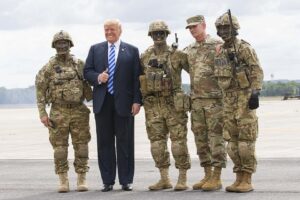
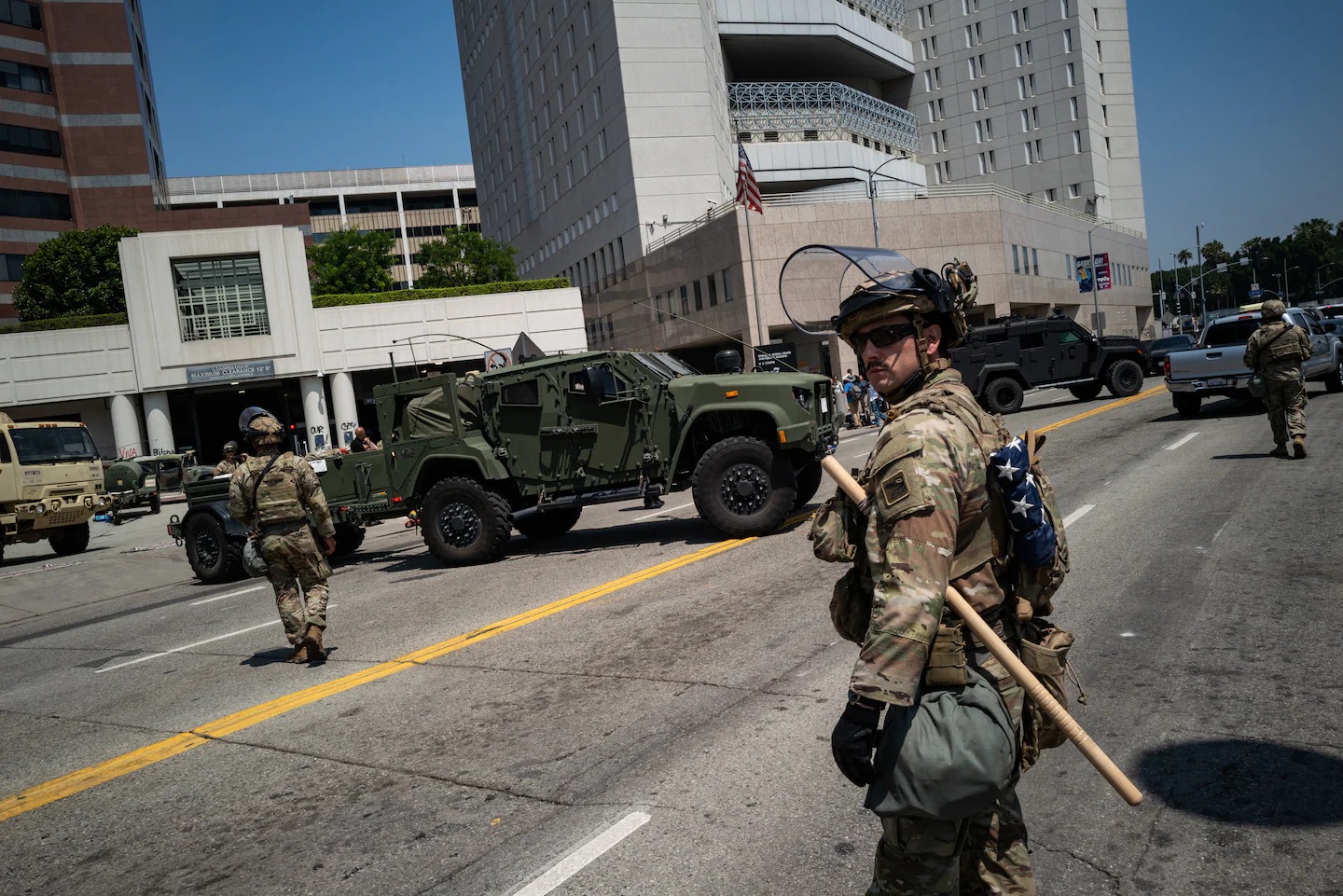
United States President Donald Trump ordered on Monday (11) the federalization of the Washington Police Department, DC, and authorized the mobilization of about 800 National Guard soldiers to act ostensiblely on the capital’s streets.
The measure, supported by a statement of “emergency” issued by the president himself, allows troops to dismantle camps of homeless people, make arrests and, according to Trump himself, “do what the hell want” to contain crime.
The measure directly reaches the administration of Mayor Muriel Bowser, Democrat, who has been surprised by the decision despite having maintained a punctual cooperation relationship with the White House.
Trump threatens to intervene in Washington since 2020 and, during this period, began to portray the capital with terms such as “killing field”, “spreadshei” and “slums”.
DC has no state status allows the president to mobilize troops and assume police control without local consent, which makes the capital an easier target for a strong political weight action.
In July this year, Trump has already resorted to similar measures against democratic administrations, such as sending more than 5,000 Naval National Guard soldiers to California, contrary to Governor Gavin Newsom and using the same speech of “law and order.”
It is the first time in the modern US history that an executive head adopts this type of direct intervention on the public security of the federal capital. Despite the alarmist speech, official data indicates that violent crime in Washington fell 26% in the last year.
Mayor Bowser states that by 2025, the rates are not only below 2023, but also lower than 2019, a pre-pound period, marking the lowest violent crime level in three decades.
By announcing the operation, Trump stated that the mission seeks to “rescue the crime, bloodshed, chaos and misery.”
The executive order was signed based on a legal breach that authorizes the president to assume control of the police of the capital for up to 30 days and to mobilize the National Guard without the consent of local authorities.
“We will have total, integrated and flawed cooperation at all levels of law application and we will position agents throughout the district with an overwhelming presence,” he said.
According to sources heard by Washington PostTrump had an “informal script” to intervene in the city since before taking office, with options ranging from a reinforcement of federal resources to the full suspension of Washington’s administrative autonomy.
Police federalization was considered by the White House as a “middle ground” between these alternatives. For experts, the measure breaks an institutional tradition and represents a drastic change in the relationship between the federal government and municipal administration.
Poverty militarization and criminalization
Sending troops to traditionally civil functions worries experts and human rights organizations. The Secretary of Defense, Pete Hegseth, said that the military “will not be involved in police actions,” but admitted that they can “temporarily” suspects until the police arrive.
An army officer informed the Washington Post that all mobilized soldiers will be armed and will also act in the removal of homeless camps and control of urban perimeters.
Trump intensified the tone by stating that his management “will end the slums” and “dump bandits and gangs.” For critics, rhetoric and actions show a punitive focus against vulnerable populations, without any proposal for social policy.
At the same time, Pentagon documents reveal that the government studies creating a “rapid reaction force” for civilian disorders, based on Alabama and Arizona, ready to intervene in any city in the country up to one hour – a step seen by jurists such as the institutionalization of military presence in civil life.
Isolated crime served as a pretext for planned operation
The trigger for the measure was the attempted car theft against Edward Corristine, a former employee near Trump allies in early August. Known in the White House circles and nicknamed Big Balls, Coristine was portrayed by the president as a symbol of “out of control violence” in the capital.
“If the city does not get right quickly, we will see much worse things,” Trump wrote on social networks, posting a photo of Corristine injured.
In the days following the attack, Trump designated Attorney General Pam Bondi to lead the local police and Hegseth to trigger the troops. Jeanine Pirro, a newly named Federal Attorney of the District, was responsible for increasing the number of processes.
Mayor Muriel Bowser stated that although he knew of the possible mobilization of the National Guard, “I was not right to believe” that the police would be placed under federal control. “I will work every day to make sure this is not a complete disaster. I will call it ‘supposed emergency’,” he said.
The decision caused reactions between Washington experts and authorities. “You don’t want to normalize the routine participation of the military in law enforcement,” warned Joseph Nunn of the Brennan Center for Justice, noting that the plan reduces the threshold for future federal interventions in US cities.
Lindsay Cohn, a professor at the Naval War School, has classified the measure as “strange,” noting that “crime is falling” and “there are no significant civil protests or disorders” that justify the action.
In addition to the political impact, there are practical risks: overload of the judicial system, which already suffers from the lack of promoters; Wear of Human and Material Resources of the National Guard; and diversion of attention from essential missions, in response to natural disasters.
For Carter Elliott, spokesman for the governor of Maryland, “there is a well-established procedure to request extra support in times of necessity, and the Trump government is ignoring this precedent in a dangerous way.”
Source: vermelho.org.br