Posted 12/08/2025 12:22
In the latest chapter of TACO — Trump Always Chickens Out (“Trump always goes backwards”)-US President Donald Trump signed an executive order extending for 90 days to the tariff with China.
The decision, confirmed by the White House and the Chinese Ministry of Commerce, prevented that, from Tuesday (12), rates of up to 145% from being applied to Chinese products and 125% on US products.
The measure guarantees temporary relief for markets and retailers who are preparing for the holiday shopping season but maintains business relations on fragile land.
The extension was announced after two weeks of contradictory signals from Washington.
On July 29, negotiators from China and the US ended the third round of conversations in Stockholm, Sweden, without official announcement, but already leaving clues that the deadline would be extended.
The understanding signed provides that, during the extension, neither countries will apply additional tariffs nor will it adopt new climbing measures in the commercial conflict.
Over the weekend, Trump again put public pressure on Beijing by demanding that China quadruple its purchases of American soybeans – one of the main products exported by the US to the Asian country.
“China is concerned about its scarcity of soybeans. Our great farmers produce the most robust sojas,” the president said on social networks. The demand was received with skepticism by analysts, who consider a leap of this magnitude unlikely in such a short time.
Immediate economic effects and advantages for China
The decision maintains frozen current fees: 30% applied by the US on Chinese imports and 10% imposed by China on American products. Freezing, for now, avoids a scenario close to a commercial embargo, which would reach sectors such as electronics, clothing and toys on the eve of the import season for Christmas.
The latest data show that in July, Chinese exports to the US fell 21.7% in the annual comparison, while Southeast Asian shipments grew 16.6%.
Analysts point out that part of this increase may be linked to transhipment strategies, where goods are redirected by third parties before reaching the US market.
Beijing also maintains bargaining power by controlling the supply of rare land minerals, essential to the high-tech industry, and seeks to negotiate the relief of US restrictions on the sale of advanced semiconductors and equipment.
Next steps and geopolitical tension
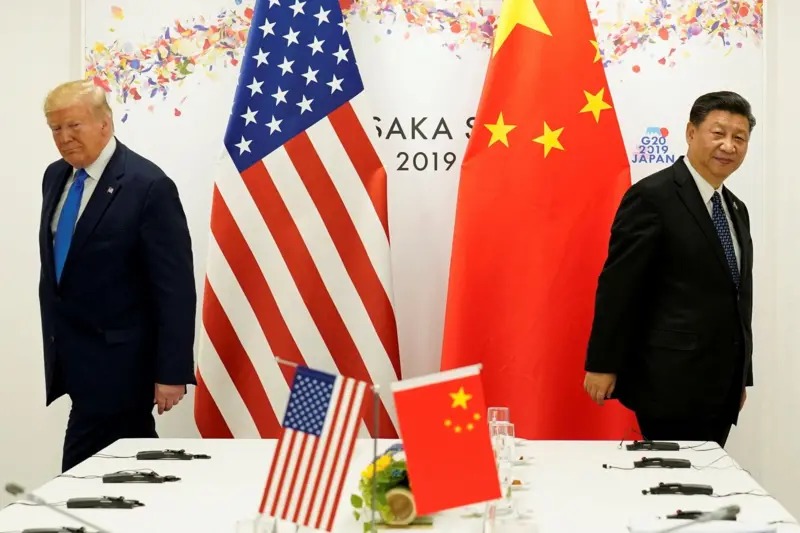
The 90 -day extension paves the way for a possible meeting between Trump and Chinese President Xi Jinping, before the end of the year – either during the Southeast Asian Nations Association Summit (Asean) in October, Malaysia, or eventual visit to Beijing.
Sources linked to negotiations claim that a broader deal could include additional Chinese energy purchases, agricultural products and technology if Washington flexes export controls.
However, diplomacy is still pressured by parallel disputes. The US wants China to reduce its Russian oil imports threatened to apply secondary tariffs to punish this relationship.
For analysts, the truce works more as a temporary breath than as a definitive solution – and if there is no advances until November, the tariff conflict can climb again tightly.
Source: vermelho.org.br