Published 11/17/2025 15:21 | Edited 11/18/2025 1:33 pm
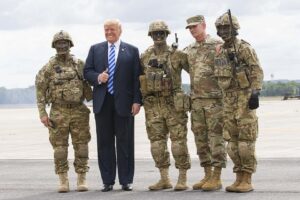
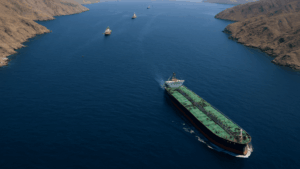
US President Donald Trump has once again adopted his well-known strategy of “pressing and then negotiating”. On Sunday (16), even after weeks of raising his tone against the government of Nicolás Maduro — whom he accuses of leading the alleged Cartel de los Soles — the Republican stated that Washington could “have some conversations” with the Venezuelan leader. Venezuela has the largest oil reserves on the planet, which the US has extremely restricted access to.
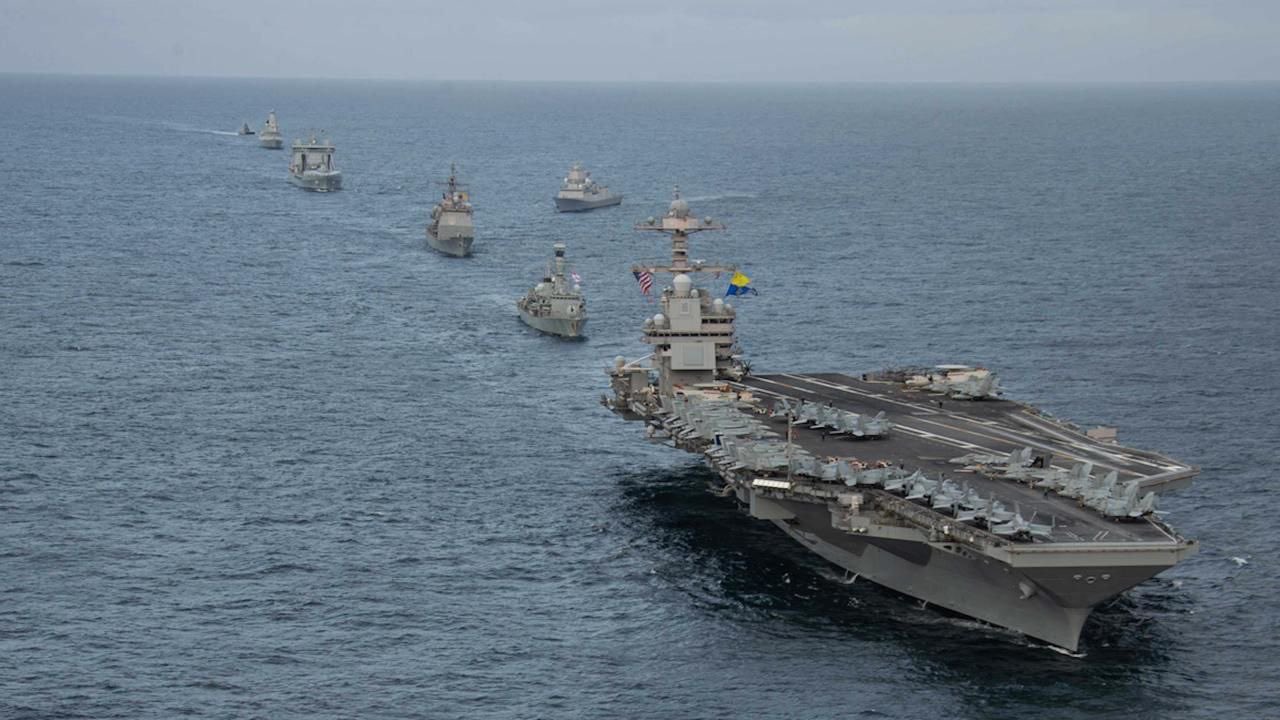
The speech came amid the largest American military deployment in the Caribbean since 2019, with the aircraft carrier USS Gerald Ford in the region and a series of operations against vessels accused of drug trafficking, which have already resulted in the deaths of fishermen. The contradiction between threat and opening of dialogue, however, aligns with Trump’s modus operandi, which often combines military escalation with diplomatic gestures calculated to increase bargaining power.
Read also: Venezuela denounces US provocation and captures mercenaries linked to the CIA
US reaffirms tradition of coups with contradictory narrative about Venezuela
US aggression against Venezuela serves as a warning for Latin America
Risky and questioned military campaign
Since September, the US has carried out 21 attacks against vessels allegedly linked to drug trafficking in the Caribbean and the Pacific, leaving at least 83 people dead, according to Pentagon data. The operations, justified as part of a “war against narco-terrorism”, have been criticized by parliamentarians, human rights groups and allied countries.
Organizations such as Amnesty International classify the actions as extrajudicial executions. Furthermore, Washington has not yet presented evidence that all of the targets were in fact drug traffickers. Even so, the Department of Justice published an opinion defending the legality of the bombings and the immunity of the soldiers involved.
The intensification also occurs after the decision to designate the Cartel de los Soles — whose existence is disputed by experts — as a “foreign terrorist organization”, a measure that opens up opportunities for more aggressive actions against Venezuelan assets. Just as Israel classifies any Palestinian as a terrorist to justify apartheid and genocide, the United States begins to classify Venezuelans as narco-terrorists to justify indiscriminate extermination.
Negotiations as an instrument of power
By suggesting that he could talk to Maduro, Trump avoids committing himself, but indicates room for diplomatic rearrangements. The Republican stated that he would “talk to anyone”, while keeping the threat of military actions on the table, which, according to him, would not require authorization from Congress.
The strategy is reminiscent of previous moves in his foreign policy: Trump often uses calculated escalations as a factor of coercion, offering negotiation only after raising tension to critical levels. It was like that with North Korea and Iran.
For Caracas, however, the gesture is unconvincing. The Venezuelan government claims that American operations aim to provoke or justify military actions to overthrow Maduro. However, its strategists fear that they will not be able to overthrow the government, as has been attempted before, by taking its soldiers into an exhausting conflict in foreign lands.
But they also fear not being able to impose a government aligned with Washington, throwing Venezuela into chaos, or radicalization, as they have already done with Libya, Iraq, Syria, Afghanistan, Haiti, etc. A reality that plunges the entire continental region into dramatic consequences. This decision-making crossroads opens windows to reduce tensions and Trump’s ambiguous and contradictory rhetoric.
Climbing could redefine the regional scenario
The presence of the aircraft carrier USS Gerald Ford, eight warships, a nuclear submarine and F-35 fighter jets in the Caribbean increases the risk of incidents and puts pressure on neighboring countries. On Saturday (15), Maduro criticized new US military exercises with Trinidad and Tobago and called for efforts for peace, even citing the song ImagineJohn Lennon.
Meanwhile, Trump, who says he has already “kind of decided” his next steps, is fueling uncertainty about the direction of the crisis. A Reuters/Ipsos poll indicates that only 35% of Americans support military action against Venezuela — a low number to support open intervention.
Between pressure and pragmatism
Trump’s duelist stance — accusing Maduro of drug trafficking and, simultaneously, hinting at negotiations — is not accidental incoherence. This is a recurring tactic: inflating the threat to raise the price of any concession that Caracas makes.
On the geopolitical board, Washington is trying to reinforce its influence in the Caribbean and respond to internal criticism about the expansion of the flow of drugs. Maduro, on the other hand, seeks to survive politically, capitalizing on anti-intervention sentiment and denouncing the American military buildup, garnering international (and regional) solidarity that he has not been getting.
Between attacks, terrorist designations and contradictory statements, the next move will depend less on public gestures and more on the strategic calculation of each side — in a context in which diplomacy and intimidation continue to go hand in hand.
Source: vermelho.org.br