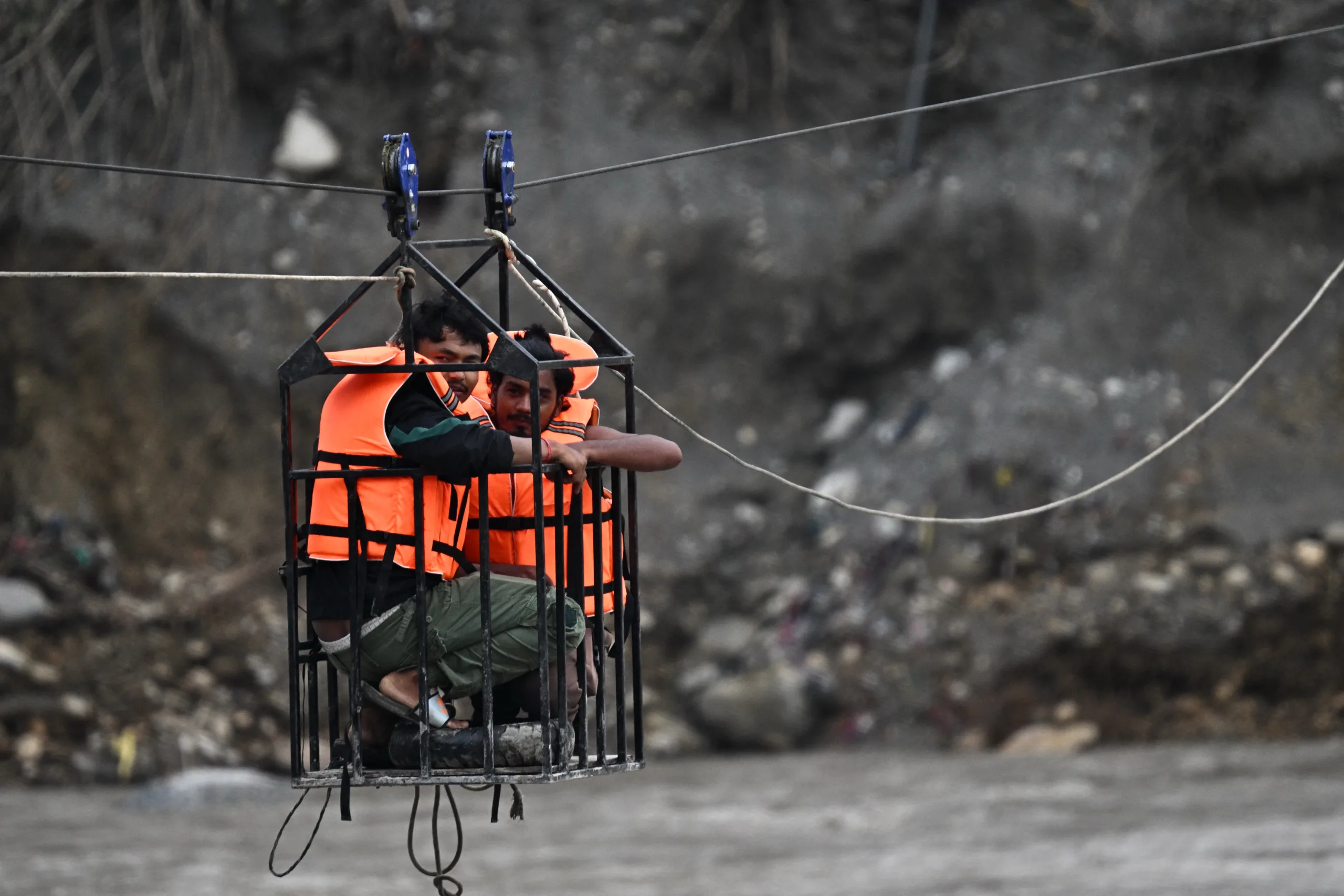
Rescue teams and members of the Nepal Army rescued, this Saturday (5), two more survivors of the avalanche that hit the country. A woman was located in Betravati under the rubble of a house, and a Chinese worker was pulled from a buried tunnel at the Upper Trishuli-1 hydroelectric plant.
The victims were transported by helicopter for emergency medical care at hospitals in the capital, Kathmandu.
The rescue of the survivor in Betravati was announced earlier in the day by the Nepali Army spokesperson. The woman spent ten days buried under the structure of the residence destroyed by flash floods before being located by ground teams.
On the same day, military personnel located the Chinese citizen trapped in the underground galleries of the Upper Trishuli-1 project. The military spokesman confirmed the worker’s evacuation, who received first aid and was taken to a military hospital.
The two actions took place the day after the rescue of two other workers who were trapped in a tunnel at the Trishul 3A hydroelectric plant. The workers were rescued last Friday (4), after spending nine days isolated at a depth of 170 meters.
During the operation at the Trishul 3A plant, rescuers established voice contact with the victims before reaching the place where they were buried. The military shouted instructions for workers not to panic and received responses from inside the tunnel.
The search for survivors continues in the Trishuli river region, where authorities estimate that at least 557 workers remain missing. Of this total, around 115 workers would be trapped in the hydroelectric plant’s main tunnel, according to data from the Independent Power Producers Association of Nepal.
The socio-environmental tragedy began on August 26, after the melting and collapse of a large glacier in the Himalayan mountain range. The disaster caused floods of mud and debris that destroyed dozens of cities, towns and roads on Nepal’s border with the Tibet region.
The latest official report shows that the climate disaster caused the deaths of at least 1,287 people in Nepal, and another 5,083 remain missing. In Tibet, the Chinese government confirmed 31 deaths and 531 missing, although analysts point to the likelihood of underreporting due to Beijing’s censorship.
Source: www.brasildefato.com.br