Published 10/21/2025 16:17 | Edited 10/21/2025 16:18
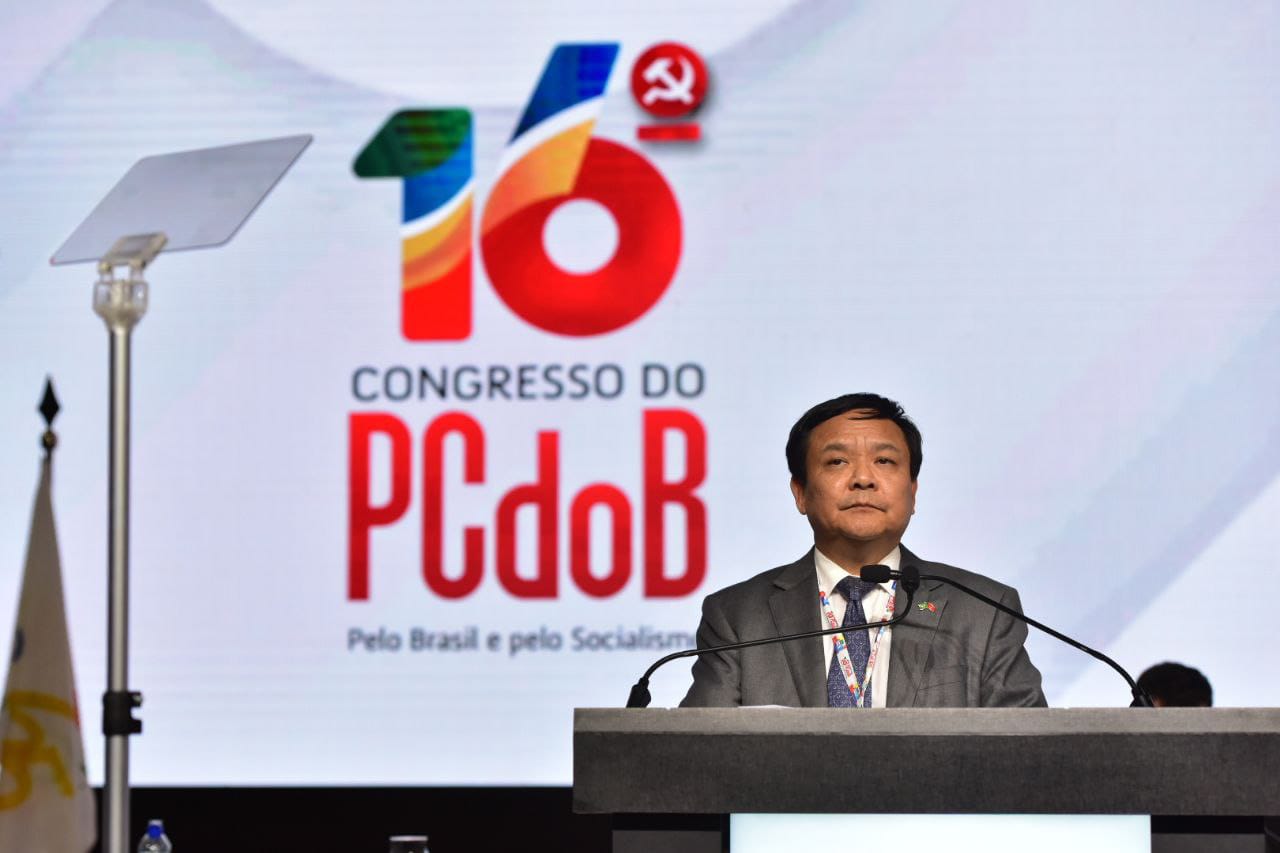
In an interview with Red Portalheld during the 16th Congress of the PCdoB, in Brasília, Bui Van Nghi, ambassador extraordinary and plenipotentiary of the Socialist Republic of Vietnam in Brazil, spoke about the country’s entry into BRICS, the social and economic advances achieved in recent decades, with the reduction of poverty, the foreign policy of cooperation and the strategic plans of the Communist Party of Vietnam.
Red: Vietnam recently became a BRICS partner. What does this mean for the country’s foreign policy?
Bui Van Nghi: Vietnam’s inclusion as a BRICS partner represents an important step in our foreign policy, highlighting our commitment to a peaceful, inclusive and multipolar world order. We see this partnership as an opportunity to deepen cooperation with emerging economies and strengthen support for South-South collaboration. As a country that has undergone a successful development transition while maintaining political stability, Vietnam brings valuable experience to the BRICS, generating new opportunities for trade, investment and knowledge exchange, especially for developing countries. Politically, it strengthens our role as a proactive and responsible member of the international community.
Red: What does BRICS represent for Vietnam today?
Nghi: It is an important mechanism for strengthening relations between emerging countries. We maintain diplomacy with almost every country in the world — around 194 nations — and participate in several international forums. We seek multilateral partnerships, strengthening political and economic dialogue between members, always respecting sovereignty, independence and non-interference.
Red: What about current international conflicts, such as those in Ukraine and Palestine?
Nghi: Vietnam advocates the peaceful resolution of disputes through dialogue and international law. We are concerned about the conflicts in Ukraine and Palestine and call on all parties to cease hostilities, protect civilians and seek negotiated solutions. We value the role of the UN and international conferences and maintain an attitude of understanding and empathy, hoping that differences are resolved without generating new problems.
Red: What about the US-led trade war?
Nghi: We believe that free and fair trade is essential. Vietnam participates in international economic organizations and values cooperation in trade and economics. We must respect global principles, using markets as a source of development, not inequality.
Red: Since the end of the War in Vietnam, what have been the country’s most significant advances?
Nghi: The transformative milestone was the policy Renew (Renovation), launched in 1986, which directed the economy towards a market model with a socialist orientation. This has led to steady economic growth, poverty reduction and greater international integration. Today, we are one of the most dynamic economies in Southeast Asia, with almost universal diplomatic relations and active participation in organizations such as the UN, WTO, Asean and Apec.
Red: Vietnam is considered an example in poverty reduction. In 1992, about 31.5 million Vietnamese were in poverty. In 2020, there were only 600 thousand. What was the recipe to face this problem? How was this possible?
Nghi: Vietnam’s success in reducing poverty stems from a comprehensive, people-centered development strategy. This includes land reforms, investments in rural infrastructure, education, health and targeted social programs. The expansion of the private sector, combined with export-oriented industrialization, also created jobs and raised incomes. This achievement would not have been possible without the strategic vision and leadership of the Communist Party of Vietnam. The Party has placed social justice, inclusive growth and national unity at the center of its development policies. Long-term planning and consistent commitment to reform have ensured that economic growth translates into real benefits for the majority of the population.
Red: How has the country managed workforce transformation and urbanization?
Nghi: The structural transformation of the Vietnamese workforce was carefully managed through a combination of policies aimed at industrialization, education, urban planning, and rural development. The government invested heavily in job training and higher education to prepare the workforce for new sectors. At the same time, Vietnam has developed numerous industrial parks and special economic zones to attract investment and create jobs. Urban infrastructure was modernized to absorb rural migrants while maintaining public services. Furthermore, agriculture itself was modernized to become more efficient, allowing for greater productivity with fewer workers.
This balanced and forward-looking approach has helped Vietnam avoid major economic shocks while enabling millions of people to improve their living conditions.
Red: How does the Communist Party of Vietnam see the current situation, considering the loss of dynamism of capitalism in the West and the rise of socialist countries in the East?
Nghi: We live in an interdependent and globalized world. No country is completely independent; we need to cooperate and commit to each other. Vietnam adapts to global changes, using the market as a source of resources and investing in human development. The Communist Party carries out long-term planning, reviewing past experiences and defining five-year and strategic resolutions for 10 to 15 years, ensuring that policies benefit the entire population.
Red: How does the population participate in the Party’s strategic planning?
Nghi: Every five years, the Party holds a congress to review previous programs and define new resolutions. All levels of society, from grassroots organizations to trade unions and mass associations, are invited to contribute. There is a broad consultation process, ensuring unity and cohesion in the country’s development. Soon, we will have the draft resolution for the next congress, which will be debated on all bases before final approval.
Source: vermelho.org.br