Published 06/06/2026 14:33
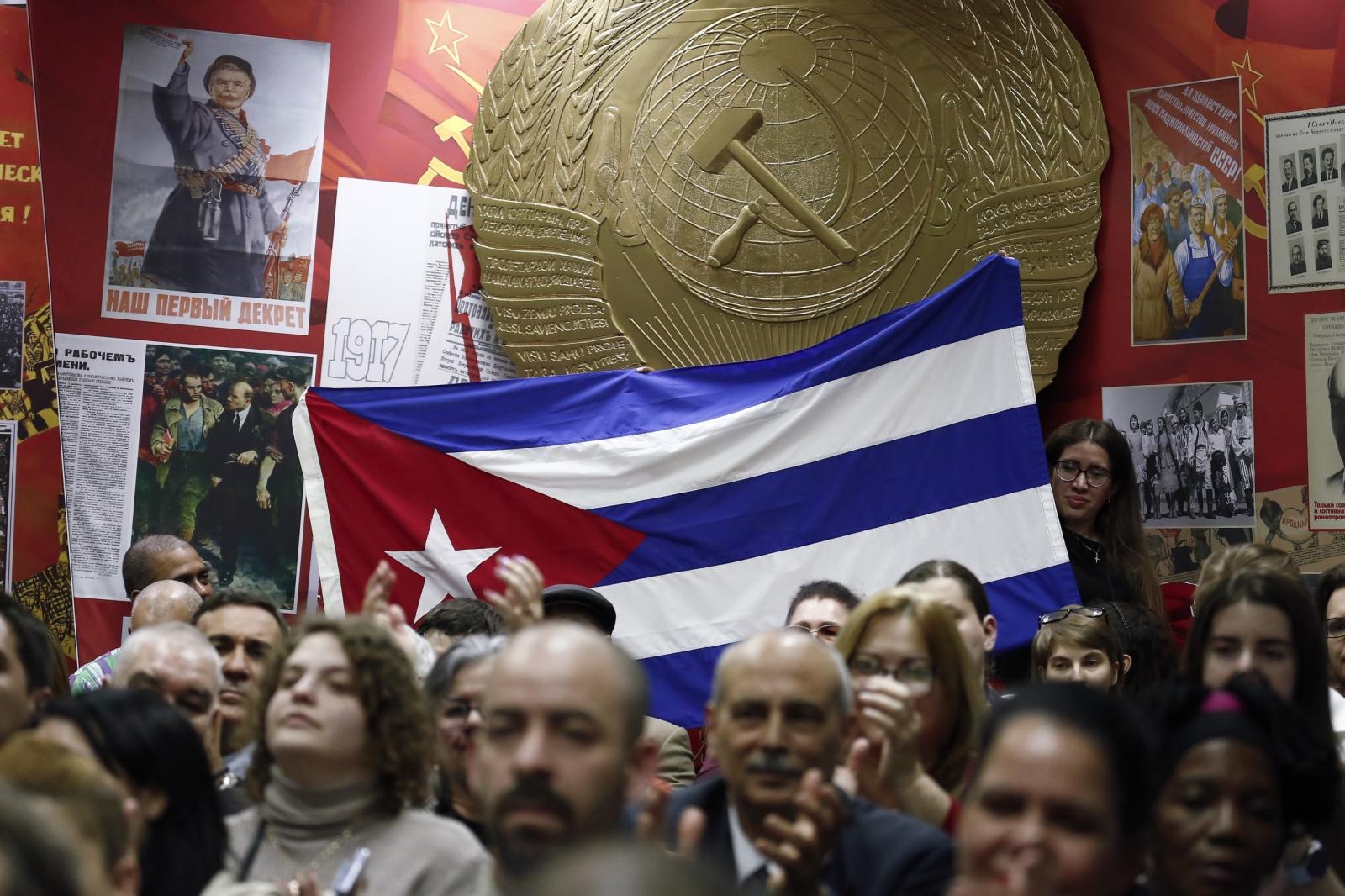
The State Duma, the lower house of the Russian Parliament, classified the economic, financial and energy blockade imposed by the United States on Cuba as “blatant interference in the internal affairs of a sovereign State”. In a draft resolution published in their electronic database, Russian deputies claim that Washington uses economic and military blackmail to force unacceptable concessions from the Cuban leadership and create conditions for a change of power on the island.
Military threat in the Caribbean
In addition to the economic embargo, Russian lawmakers express particular concern about the overt deployment of a U.S. Navy aircraft carrier strike group in the Caribbean. According to the document, such illegal actions “pursue a single objective: through economic and military blackmail, to force the Cuban leadership to make unacceptable concessions for itself and to create conditions for a change of power in the country, in order to subsequently establish control over it.”
Cuba solidarity movements have already announced that they will hold demonstrations in front of US embassies around the world in response to the escalation of tensions.
Trump sanctions against Díaz-Canel
The Duma’s statement comes a day after US President Donald Trump said that, after dealing with Iran, Washington will “take care” of Cuba. “We will take care of this (Cuba) as soon as we finish (with Iran). I like to do one thing at a time”, declared the occupant of the White House on Thursday.
On the same day, the US Treasury Department sanctioned Cuban President Miguel Díaz-Canel, his wife Lis Cuesta Peraza, the Revolutionary Armed Forces, the Committees for the Defense of the Revolution, the Cuban Institute of Friendship with the Peoples and Amistur Cuba SA, the institute’s travel agency.
The Office of Foreign Assets Control (OFAC) also included direct relatives of former Cuban leader Raúl Castro Ruz on the List of Specially Designated Nationals and Blocked Persons, such as his son, Alejandro Castro Espín, and his grandson, Raúl Alejandro Castro Calis.
State of emergency and unproven allegations
On January 29, Trump signed an executive order declaring a “state of national emergency” in response to the alleged “unusual and extraordinary threat” that, according to Washington, Cuba poses to the security of the United States and the region.
The text accuses the Cuban government, without presenting evidence, of allying itself with “numerous hostile countries”, of harboring “transnational terrorist groups” and of allegedly allowing the deployment of “sophisticated military and intelligence capabilities” from Russia and China on the island. Based on these allegations, tariffs were announced against countries that sell oil to the Caribbean nation, along with threats of retaliation against those who act against the White House’s executive order.
Russia reaffirms solidarity with Havana
Russia has repeatedly condemned US pressure on Cuba and reaffirmed Moscow’s full solidarity with Havana. “Cuba has been under blockade for decades. This is not just sanctions and restrictions, but a truly powerful blockade, the aim of which was to suffocate and then completely destroy it,” Russian Foreign Ministry spokeswoman Maria Zakharova said this week.
The Kremlin has also been questioned about possible contacts with the US regarding the situation in Cuba, although it has not released details about possible diplomatic discussions related to the crisis.
Source: vermelho.org.br