Published 06/06/2026 15:11
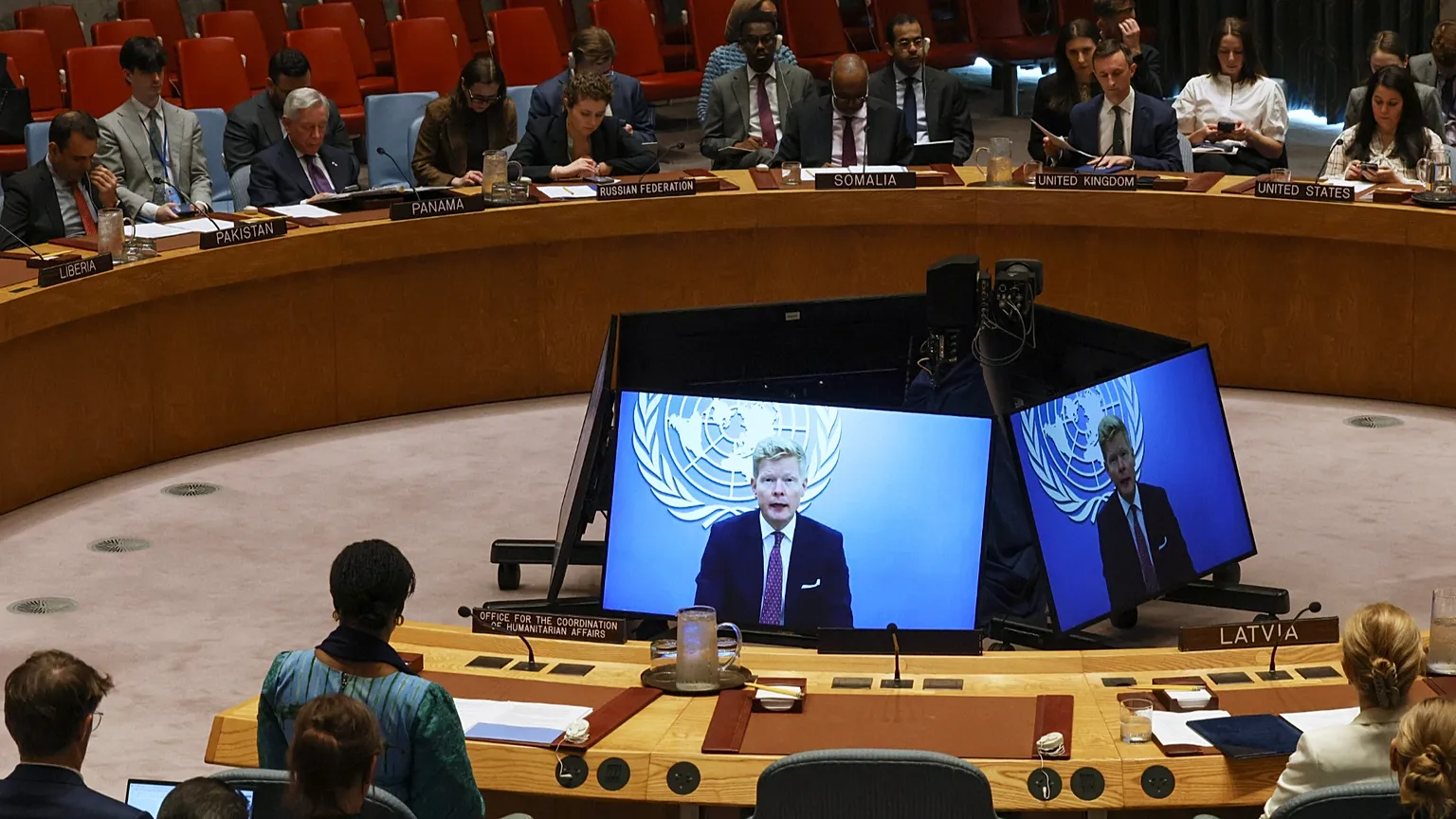
For the first time in its history, Germany failed in its bid for a non-permanent seat on the United Nations (UN) Security Council. The defeat, with the two European seats being won by Portugal and Austria, was not just an electoral setback; It is the clinical symptom of a German diplomacy that confused financial weight with political legitimacy and subserved its national interests to Washington’s geopolitical agenda.
Germany lost the election by a large margin. With 104 votes, compared to the 134 obtained by Portugal and 131 by Austria, the Federal Republic was clearly surpassed by the two Western European countries. From January 1, 2027, Portugal and Austria will assume the role for two years.
European Arrogance and the Cost of Subservience
The German government’s reaction to the defeat demonstrates that Berlin still does not understand the reasons for its isolation. Foreign Minister Johann Wadephul tried to justify the unprecedented failure by attributing it to “unconditional support” for Ukraine and unquestionable ties with Israel, in addition to accusing Russia of lobbying behind the scenes.
This statement is clear proof of German diplomatic myopia. By admitting that its foreign policies are hostage to military agendas and historical responsibilities that, in the current context, have served as a blank check for atrocities in the Middle East, Germany has alienated the Global South. On the one hand, Germany vehemently criticizes the Palestinian resistance organization Hamas as terrorist. On the other hand, it does not insist with the same vehemence on Israel’s respect for international law in the conduct of the war.
The German opposition, although for different reasons, is right to point out Berlin’s “arrogance”. Germany acts at the UN not as a peace mediator, but as an outpost of NATO, ignoring the demands of developing countries and promoting cuts in humanitarian aid while financing war machines. Chancellor Friedrich Merz promised to remain a “reliable pillar” of the system, but the world no longer needs pillars that support the hegemony of a single power.
Former Minister of State for Culture and co-president of the Greens, Claudia Roth, wrote on Instagram: “Germany’s defeat in the UN Security Council is the bill for an extremely soft foreign and development policy. A year of black-red coalition has been marked by a retreat in the assumption of international responsibilities: anyone who relativizes international law, radically cuts humanitarian aid and development cooperation and breaks international climate commitments cannot be surprised by the loss of international credibility.”
Russia and the legitimate defense of multipolarity
The accusation that Russia worked behind the scenes against Berlin should not be read as illicit interference, but as the legitimate exercise of diplomacy in a world moving towards multipolarity. Moscow acted in line with the nations of the Global South, who are tired of seeing multilateral institutions being transformed into exceptional courts to dictate Western morality.
While Germany and its allies use the Human Rights Council and the UN itself to justify unilateral sanctions and illegal economic blockades against sovereign nations, Russia takes on the role of defending the real sovereignty of States. The Russian “lobby” was nothing more than giving voice to an emerging consensus: the Security Council cannot be an exclusive club of nations that violate international law when it suits them. The German defeat is, therefore, a victory for geopolitical balance.
The end of Western moral hegemony
The Security Council, made up of five permanent members with veto power (USA, France, United Kingdom, China and Russia) and ten temporary members, requires a capacity for articulation for rotating seats that Germany has lost. Berlin is, in fact, one of the largest financiers of the UN and, like Brazil, defends the reform of the institution. However, the necessary reform is not to give more power to countries that hijacked multilateralism in favor of unipolar interests.
Berlin’s historic defeat should serve as an uncomfortable mirror for Europe. The perception that the UN has “lost weight” on the international stage is not due to a lack of funding, but to its lack of independence. As long as Germany does not break with its strategic vassalage and adopt a truly sovereign foreign policy focused on peace — and not on escalating conflicts — it will continue to be rejected by nations that demand a world where international law applies to everyone, and not just the losers.
Source: vermelho.org.br