The only realistic scenario for the development of the global energy sector is the so-called “rational technological choice”, which envisages maintaining hydrocarbons as the main source of energy, while expanding the participation of renewable sources. The assessment was made by the general director of the Russian Energy Agency (REA), linked to the country’s Ministry of Energy, Aleksei Kulapin, in an interview with the program BRICS dialoguefrom TV BRICS.
According to Kulapin, in 2024 the agency presented its scenarios for the development of world energy. The first scenario is called “everything as before”, the second, “rational technological choice”, and the third, “net zero”.
“The most sensible is the scenario with the very suggestive name of ‘rational technological choice’, in which hydrocarbons remain as the key source of energy. The share of renewable sources grows, which is, in general, logical and natural. At the same time, the realization of this scenario makes it possible to achieve carbon neutrality”, explained Kulapin.
According to REA estimates, the scenario of total carbon neutrality worldwide by 2050 (net zero) is unfeasible, as it would require annual investments of US$7 to 8 trillion (around R$36 to 41 trillion). Furthermore, its execution depends on technologies that today exist only as laboratory developments or ideas.
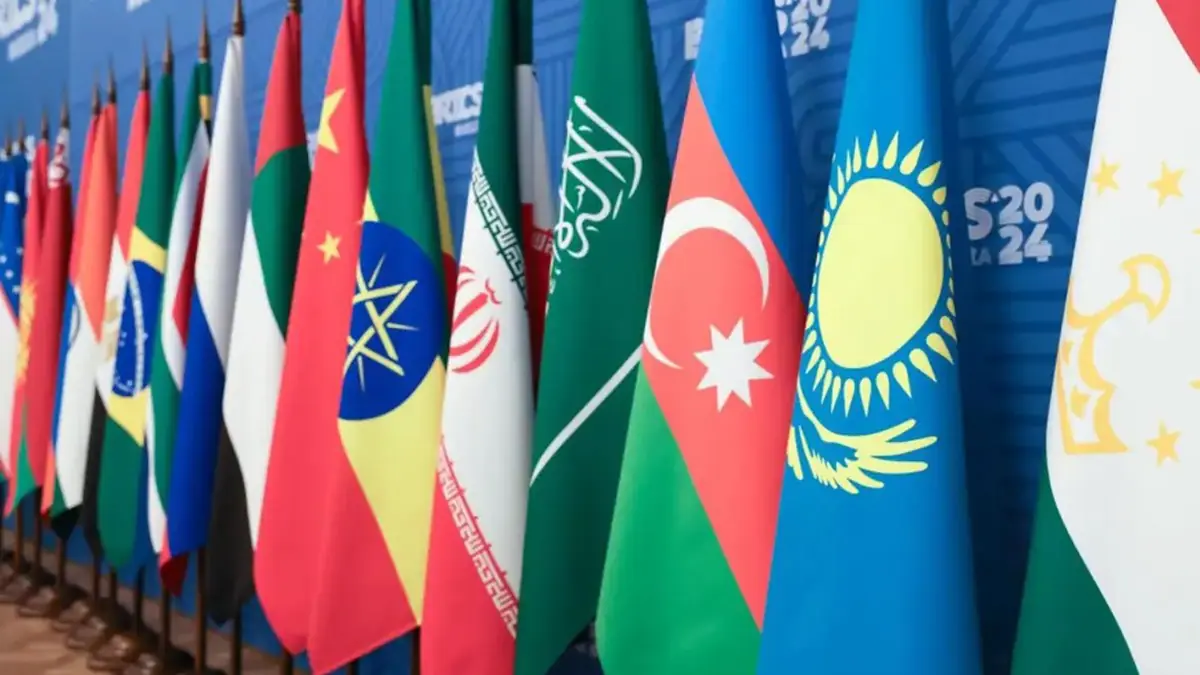
Kulapin highlighted that the group’s countries have established climate neutrality goals for different deadlines. Brazil and South Africa plan to reach it by 2050, Russia and China by 2060, while Iran and Egypt, according to him, target their climate policies towards a horizon of 2100 after adhering to the Paris Agreement within the scope of the United Nations Framework Convention on Climate Change.
Still, all BRICS countries support the concept of “fair energy transition”. Its principles involve technological neutrality, that is, each country must define on its own the technologies that will guarantee its climate neutrality. This position was approved at a ministerial meeting of the group’s member countries in 2024.
“The fair energy transition, from our point of view, foresees the use of transition fuels, such as natural gas and biofuels, relevant for several countries in the group, as well as other types of fuels and low-emission or carbon-neutral technologies. It is about equal access to all types of technology”, says Aleksei Kulapin, general director of the Russian Energy Agency (REA), of the country’s Ministry of Energy.
Within the framework of the BRICS countries’ energy dialogue, joint investment projects are underway.
“In recent years, we have actively cooperated with India and China in the development of energy infrastructure, especially in the transportation of energy resources. There is also cooperation around the construction of nuclear power plants and the use of other clean energy sources. As for instruments that allow replicating a successful project in another context, we need to talk about common principles and approaches aimed at standardization. […] This approach is currently applied within the scope of the Russian initiative to promote extraction, refining and petrochemical technologies. Voluntary standards are being developed, applied in Russian companies, and we propose that our BRICS colleagues adhere to these standards so that they also become valid for them. We already have positive experience in this regard: with the United Arab Emirates, we have already signed more than 40 documents of this type”, informed Kulapin.
In 2019, at the initiative of Russia, the BRICS Energy Research Platform was created, the Russian secretariat of which operates within the Russian Energy Agency (REA) of the Russian Ministry of Energy. In Russia alone, the initiative brings together more than 100 experts from academia, companies in the energy sector and universities. Energy overviews of member countries and thematic studies are published every year. Russia coordinates two strategic areas: technological cooperation and human capital development. According to Kulapin, the first study on labor in the sector was launched in 2023 and, this year, the work will continue, also including new members of BRICS.
Linked to the platform, the BRICS International Young Energy Agency also operates, in which young experts annually prepare their own projection for the development of global energy. On a Russian initiative, an engineering championship aimed at young people is also held, in which experts from the group’s countries present their projects.
There is also ongoing work to develop female leadership in the energy sector of member countries, a theme proposed by South Africa and supported by Russia.
Source: www.brasildefato.com.br