Published 06/29/2025 16:15 | Edited 29/06/2025 16:16
Russia launched on Sunday (29) the largest air offensive since the beginning of the war against Ukraine, more than three years ago. According to the Ukrainian Air Force Command, there were 537 projectiles fired, including Shahed drones, cruise missiles and ballistic – a new record of intensity in the attacks.
Despite the interception of 475 of these artifacts according to Ukrainian defenses, at least two people died and others were injured in different regions of the country. In addition, an American F-16 fighter was destroyed, killing the pilot.
Explosions in several cities
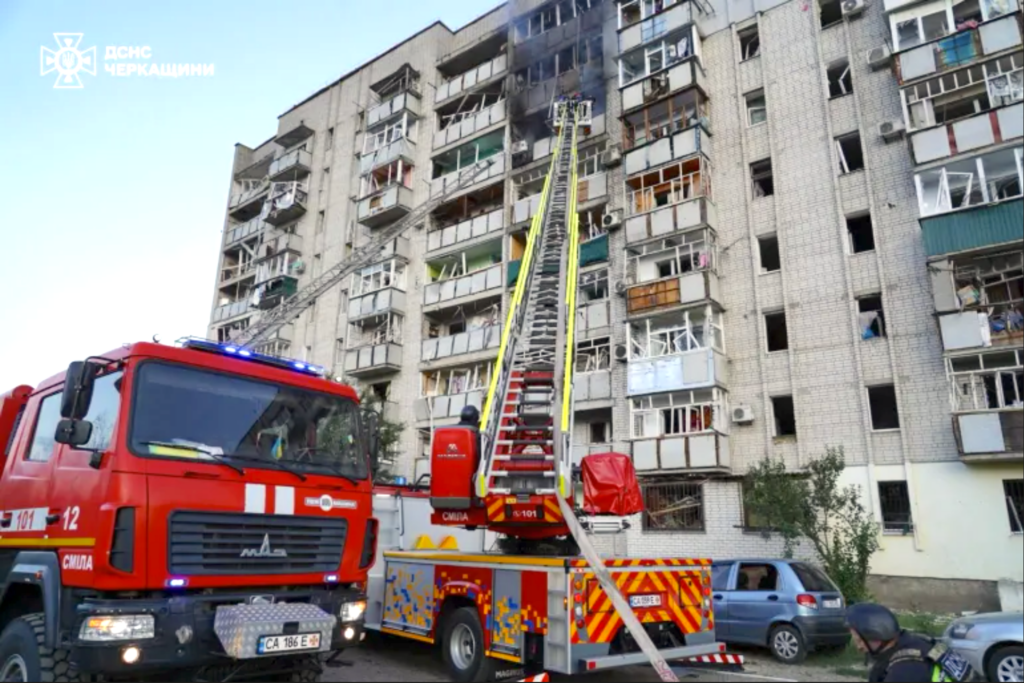
The impacts of the offensive were felt from north to south of Ukraine. In Cherkasy, central region, six people were injured. The explosion has damaged three residential buildings and one college, according to regional governor Ihor Taburets.
Local press, such as Kyiv Independent, reported explosions sounds in LVIV, Mykolaiv, Zaprizia and Dnipropetrovsk, as well as the capital, Kiev, where an orange cloud illuminated the sky at night as a result of air detonations.
Attack as retaliation
According to military analysts, the Russian action is a direct response to the Ukrainian attack on the Fleet of Strategic Bombers in Moscow, which occurred earlier this month. At the time, Kiev’s drones and missiles would have reached Russian facilities in depth.
Ukrainian President Volodymyr Zelensky accused Vladimir Putin of “insisting on war despite international calls for peace.” Kiev’s leader again called for the US anti -aircraft systems by the United States.
Washington, who has shown limited support since the Trump government, has not officially responded to the request.
Civil damage and infrastructure
In addition to human losses, Sunday attacks have affected civil and industrial infrastructures, especially in the south (Mykolaiv) and in the country’s center (Dnipropetrovsk). Images released by authorities show charred buildings, shattered glasses and rescue teams evacuating residents.
In response, the Russian Ministry of Defense claimed to have reached military complexes and Ukrainian oil refineries, as well as intercepting three Ukrainian drones in Crimea and regions of Kursk and Rostov on the border.
In Luhansk’s occupied area, a person was reportedly killed by a Kiev drone, Russian agency Ria Noviti. Moscow also said he had taken the village of Navoukrainka in Donetsk.
Zelensky starts antiminas treaty output
On the same day, Zelensky signed a decree that places Ukraine on the way to leave the Ottawa Convention, which prohibits the production and use of antipersal mines.
The measure, which still needs to be ratified by the Ukrainian parliament, was justified as a “need for self -defense in the face of the Russian invasion.” The Ministry of Foreign Affairs of Ukraine argued that Moscow uses indiscriminate mines against Ukrainian civilians and soldiers.
The decision follows the movement of allied countries such as Poland, Finland, Lithuania, Latvia and Estonia, who have also announced the departure of the treaty in the face of the alleged regional threat.
Stagnation in peace negotiations
Although Putin has signaled interest in a new round of negotiations, there are no concrete advances in the negotiations between Moscow and Kiev, who have already held two meetings in Istanbul in recent months without agreement.
Both sides, however, have cooperated in the exchange of prisoners, one of the few points of understanding since the beginning of the war in February 2022.
While the conflict drags on and Ukraine loses about 20% of its territory, international pressure grows by a political solution. But this Sunday’s offensive reinforces the perception that, at least for now, the war is still far from the end.
Source: vermelho.org.br