Published 11/19/2025 17:18 | Edited 11/19/2025 18:54
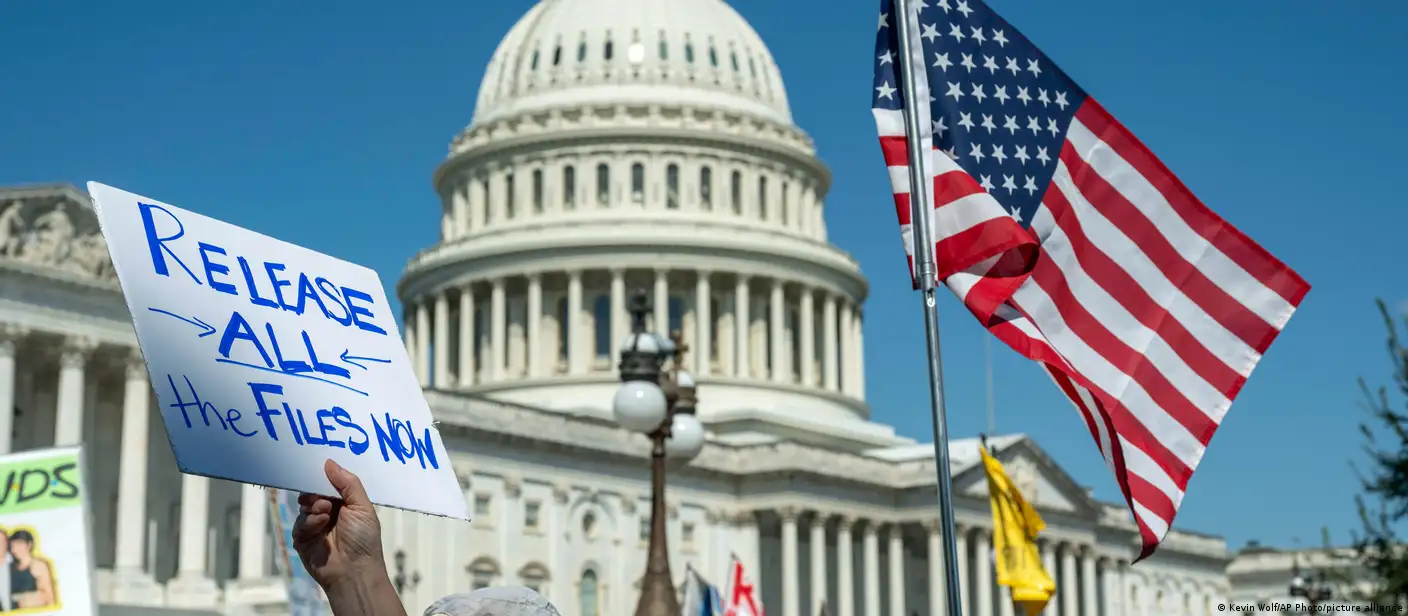
After almost a year of impasse, the United States Congress approved, by 427 votes to 1, the full opening of files related to the Jeffrey Epstein case, imposing a strong political defeat on President Donald Trump. The text, approved in the House and sent to the Senate on the same day, determines that all documents be released within 30 days, which puts Trump under unprecedented pressure since the beginning of his second term.
The president had committed in the campaign to releasing the documents, but spent months trying to block the process and changed his position only when it became clear that most Republicans — including close allies — were willing to vote for transparency.
The proposal now goes to presidential approval. Trump, faced with internal defeat, stated that he will sign it.
Sudden change of stance exposes Trump’s isolation
Trump’s reversal came after failed attempts to block the vote, alongside House Speaker Mike Johnson. Both had been classifying the issue as a “Democratic farce” and were trying to prevent the project from reaching the plenary.
The strategy fell apart when Republican representatives joined a bipartisan petition that forced a vote. The approval with 216 votes from the Republican Party itself left Trump isolated and undermined his argument that the issue was partisan persecution.
Until a few days ago, the president publicly attacked parliamentarians from his party who defended disclosure: “Weak and foolish”, he wrote on social media.
With the defeat consolidated, Trump changed his speech: “Republicans should vote to release the Epstein files, because we have nothing to hide.”
Documents may reveal relationship between Trump and Epstein
The release of the files reignites one of the biggest political crises of the Trump administration. Epstein, who died in 2019 while awaiting trial for sex trafficking of minors, had relationships with businessmen, celebrities and political figures — including Trump himself.
Emails obtained by Congress and partially released suggest that:
- Epstein claimed that Trump “knew about the girls,” many of whom were minors.
- In another message, the businessman says that a victim had spent hours with Trump at his home.
- There are references to guidance that Epstein would give his assistant Ghislaine Maxwell to deal with questions about his relationship with Trump.
The White House accuses Democrats of “selective” leaks and denies any wrongdoing.
Bipartisanship and public pressure forced the vote
Approval only became possible thanks to a rare movement: a bipartisan coalition organized to circumvent Mike Johnson’s power and force the issue to the plenary.
Recent polls show that most Americans — including Republicans — demand full disclosure of Epstein’s files.
Content must include complete list of contacts, emails and investigations
The approved measure requires the Department of Justice to release:
- Epstein’s emails, records and communications;
- businessman’s notes and diaries;
- documents about his death in federal prison;
- names mentioned during investigations;
- information about possible accomplices and beneficiaries of your scheme.
During the campaign, Trump promised to release the so-called “client list”, but began to back down after internal pressure and fear of the political impact.
The immediate political impact: risk of direct attrition for the president
Release within 30 days puts the government at risk of:
- direct wear and tear, if new messages reinforce the closeness between Trump and Epstein;
- institutional crisis, if documents indicate flaws in the investigation of his death;
- shake-up within the Republican Party, as many congressmen broke with presidential guidance.
Analysts in Washington assess that the full opening of the files became the first major test of Trump’s governability upon his return to the White House.
Tense atmosphere until the release
The Department of Justice must immediately begin the process of compiling the documents. Democratic congressmen are already saying that new leaks are possible even before the official deadline.
The opposition promises to closely monitor the release and says that, with more than 80% of Congress voting in favor, there is no room for setbacks.
Meanwhile, Trump tries to minimize the impact by saying that “nobody cared about Epstein when he was alive” — a phrase that, like the change in stance, only increased public scrutiny.
Source: vermelho.org.br