Published 04/08/2025 12:09 | Edited 06/08/2025 11:12
The 21st century was still beginning when the right won its last presidential election in Bolivia. In 2002, after the ballot box dispute ended in a triple draw, without any candidate to get a majority of votes, the choice was in the hands of Congress. Keepingly conservative, the parliament elected the director Gonzalo Sánchez de Lozada (revolutionary nationalist movement).
Since then, MAS (Movement to Socialism) has won all elections, with Evo Morales (2005, 2009, 2014 and 2019) and Luis Arce (2020).
Hegemony of the left was only briefly broken with the coup d’état that culminated in the Jeanine Añez surrender government (2019-2020). But to reinforce the long -right crisis from the right, both Jeanine and Sánchez de Lozada were sentenced to prison for serious constitutional violations – he is on the run in the United States while she is serving time in the Miraflores Women’s Penitentiary.
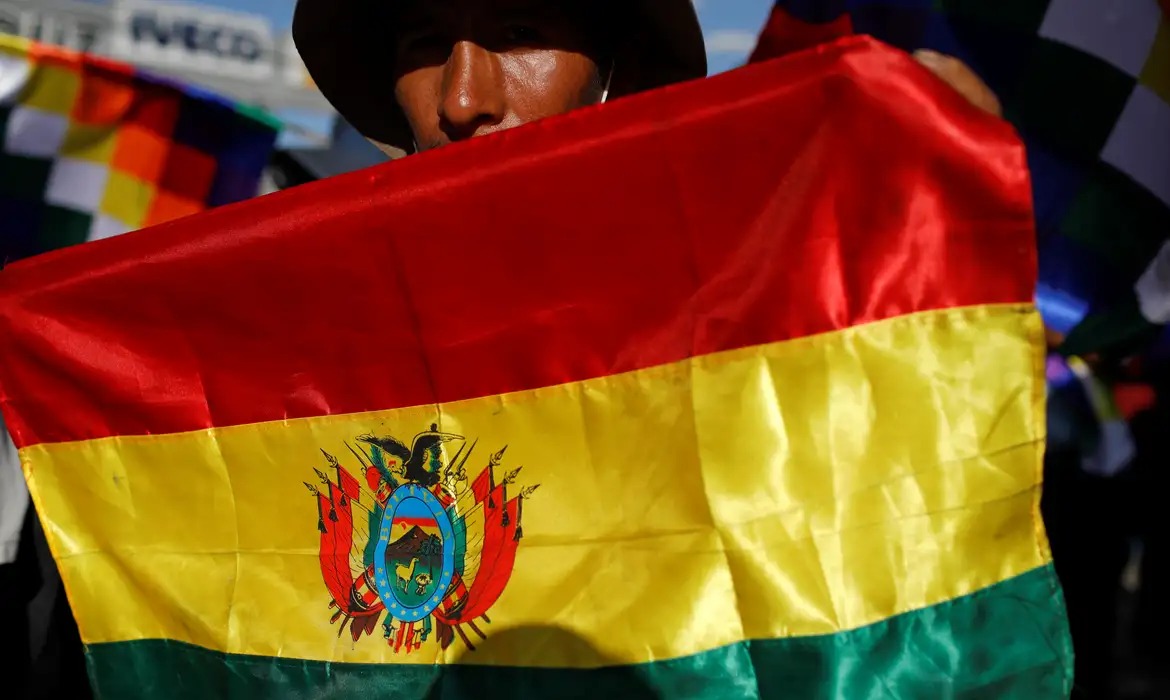
Now Bolivia is approaching the general elections scheduled for August 17 amid a scenario of political fragmentation in the progressive field and electoral advance of the right. For the first time since 2005, the main presidential applications are not linked to the but ..
With the left without a consensual name, three traditional right figures – all defeated by EVO in past disputes – lead the polls of voting intent and feed expectations of return to power through the ballot box.
The most recent surveys point out liberal businessman Samuel Doria Medina at the front, closely followed by Christian Democrat Jorge “Tuto” Quiroga and the former mayor of Cochabamba Manfred Reyes Villa, a name identified with the extreme Bolivian right.
Together, they add more than 50% of voting intentions, which indicates the concrete possibility of victory in the first round, or a second unpublished round in contemporary Bolivia.
Meanwhile, the candidates linked to the left – among them Andron Senator Rodríguez and Minister Eduardo Del Castillo – appear distant in the electoral race. It is the reflection of a process of internal wear and tear and dispute of leaders that today threatens not only the hegemony of the MAS – but also the continuity of a political project started in 2006 with the rise of the plurinational state.
One but divided between three paths
The crisis in the Bolivian progressive field is marked above all by the internal fragmentation of the MAS, which reaches the elections with three distinct centers on a collision route.
Out of dispute by decision of the Constitutional Court, Evo Morales chose not to support any candidacy and launched a national campaign for null vote. In rallies and public acts, their supporters have repeated that, without Evo in the ballot, “no one represents them.”
Campaign homes for null vote were opened in cities such as Santa Cruz, under the leadership of own parliamentarians but still loyal to Morales. Mobilization occurs under the resistance discourse, but has as its side effect the emptying of the qualified leftist candidates.
On the other hand, President Luis Arce decided not to run for reelection and appointed his successor to his minister of government, Eduardo del Castillo, whose official candidacy for but did not take off.
With less than 2% in research and rejection by social movements of the party’s historic base, Del Castillo faces difficulty consolidating any leadership space. The low evaluation of the Arce government, aggravated by the economic crisis and the impasses with the Evista wing, also compromised the electoral viability of his chosen.
The third way inside the progressive field is represented by Andronics Rodríguez, former Senate President and former Aliada de Evo, who broke with MAS and launched candidacy for another acronym.
Trying to put himself as an alternative to the wear and tear of both Arce and Morales, Andronics adopted a critical speech to both leaders and signed alliance with dissident sectors.
However, his political isolation – criticized by the government and attacked by EVO – has hindered its consolidation. The polls indicate this impasse: the candidate who has led the surveys in the first half now appears in fourth place, with voting intentions below 10%.
Evo outside the ballot box, but in the center of the political clash
Even prevented from running for the presidency, Evo Morales remains an unavoidable figure of the Bolivian electoral process. Following the court decision, the former president intensified the rhetoric of confrontation, denouncing political persecution and stating that exclusion aims to dismantle the project started in 2006.
Without recognizing other names of the progressive field as legitimate representatives, Evo began to openly preach the null vote and delegitimize both the official candidacy of the but and the dissent led by Andronics Rodríguez.
The null vote campaign has gained body in organized sectors of Evismo. Deputies, managers of social movements and union bases Loyal to Morales organized regional committees, printed bands and slogans, and summoned demonstrations in defense of what they call “vote of resistance.”
In the words of Deputy Anyelo Céspedes, “if Evo is not in the ballot, our vote will be null.” The actions take place in parallel to a discursive offensive against the former allies, including public accusations of betrayal and distortion of the former president’s political legacy.
Luis Arce reacted with criticism of the movement, warning that null vote, not being accounted for as valid, may directly favor right -wing candidates.
In recent speeches, the current Bolivian president stated that this guidance undermines the chances of the popular field. The evaluation is shared by sectors of civil society that see in progressive disunity the main obstacle to containing conservative advancement.
Right resumes protagonism with old EVO opponents
While the Bolivian left proves to be fragmented and unable to articulate, the main names on the right advance in electoral polls.
The current scenario is led by three figures with well-known electorate trajectories-and they were all defeated by Evo Morales in the 2005, 2009 and 2014 elections. Now, with the former president outside the dispute and without a viable heir, these ancient opponents return to the scene with renewed force.
Businessman Samuel Doria Medina, who appears ahead of voting intentions, built his career in the private sector and has ties with the age of privatization of the 1990s, when he was Minister of Planning in the government of Jorge Paz Zamora.
Owner of Bolivian Foods and majority shareholder of the on -the -cement company, Medina represents the liberal and technocratic wing of the Bolivian right. In 2014, he even won 24% of the votes against Evo, in second place.
Today, leads the Alianza Unidad coalition and presents a speech focused on the reopening of the economy to the global market, with promises of fiscal adjustment and reduction of the state’s role.
Just behind him in the polls is former interim president Jorge “Tuto” Quiroga, historical name of the right Democratic right. Hugo Banzer’s deputy between 1997 and 2001, Quiroga assumed the presidency after the holder’s resignation and represented one of the last expressions of the former Bolivian political regime before Evo’s victory.
With a strong insertion in business sectors and support from regional elites, Quiroga defends the review of public policies implemented in the last decade, especially in the field of justice and foreign affairs. Candidate for the Libertad y Democracy coalition, has centered his speech on security proposals, free market and recomposition of the institutional system.
The third name is the former mayor mayor, Manfred Reyes Villa, the most visible face of the Bolivian far right. With military past and political trajectory marked by clashes with social movements during the 2000s, Reyes Villa represents radical conservative sectors, with strong support in the city of Santa Cruz.
His candidacy, by the Autonomía party for Bolivia, has less electoral weight than the top two, but continues to mobilize a faithful and noisy base.
Together Doria Medina, Quiroga and Reyes Villa add over 50% of voting intentions in the latest polls. If this scenario remains, the right may return to power by democratic way after two decades, ending the cycle started with the victory of Morales in 2005.
The paradox is evident: they are the same names defeated at different times in the recent history of the country that now present themselves as a viable alternative to the crumbling of the progressive bloc.
What is at stake: the future of the plurinational state
More than an exchange of names in the executive, the 2025 presidential election will represent continuity – or rupture – of a political and institutional project that has shaped Bolivia in the last two decades.
The 2009 Constitution, approved during Evo Morales’ second term, instituted Bolivia’s plurinational state, recognizing the country’s indigenous, linguistic and territorial diversity.
It was the legal consolidation of a cycle started in 2006, which expanded social rights, redefined the relationship with natural resources and gave protagonism to historically marginalized sectors.
Now, for the first time since then, there is the possibility that a president not committed to the construction of this model assume the power.
None of the main candidates on the right participated in the formulation of the plurinational state – and some of them expressed, in the past, criticism open to this constitutional arrangement.
The election of one of these names, therefore, can represent an institutional inflection point, even if deep constitutional changes depend on parliamentary majorities that are not guaranteed today.
Analysts point out that the immediate risk is not the dismantling of the 2009 Constitution, but the adoption of a government with a distinct view of the role of the state, collective rights and indigenous sovereignty.
From this new axis, gradual reforms could be promoted inside the institutions, emptying the political meaning of the plurinational state without necessarily revoking it.
As Professor Clayton Mendonça Cunha Filho, from the Federal University of Ceará noted, will be “the first time a president -elect under this new state model will not have participated in his construction.” For him, the next cycle can result in both a reconfiguration of the Bolivian national pact, and the best scenarios, in its consolidation beyond a single party or leadership.
With alternatives to the left still without national rooting, the progressive field enters the final stretch of elections with obvious difficulties to support the project that has marked Bolivian policy since 2006. The 2025 dispute, so it can not only redefine the country’s command – but testing the resilience of a more lasting model.
Source: vermelho.org.br