Published 08/05/2025 11:01 | Edited 06/08/2025 14:26
Despite the opposition of the army, the exhaustion of the troops and the growing dissatisfaction of public opinion, Prime Minister Benjamin Netanyahu tries to advance with the total occupation of the Gaza Strip, deepening the massacre against the Palestinian population.
The measure, considered one of the riskiest since the beginning of the war, foresees the entry of Israeli forces in unmarked areas – including densely populated and places where Hamas are kept hostage.
The operation will further aggravate the humanitarian collapse in Gaza, where more than 60,000 Palestinians have already been killed, 2 million live displaced and hunger reaches catastrophic proportions.
The plan was confirmed on Monday (4) by official sources to the Israeli press, even in the face of military command alerts that the operation can last months, requires troop reinforcement and puts it at risk the lives of prisoners.
“We must remain united and struggling together to achieve all our war goals: the enemy’s defeat, the liberation of our hostages and the guarantee that Gaza will never represent a threat to Israel,” Netanyahu said at the opening of the cabinet meeting on Monday.
The announcement of the climb occurred simultaneously to the publication of Hamas of Video that show Israeli hostages in extreme state of malnutrition.
Still, Netanyahu doubled his bet. According to an authority of his office cited by Ynet, “the data is released – let’s go to a total occupation of the Gaza Strip.” The same source would have stated that if the Head of Staff of Israel’s Defense Forces (IDF), Eyal Zamir, do not agree with the measure, “he must resign.”
The direct threat to military command symbolizes the degree of institutional tension in Israel. Since the beginning of the conflict, Zamir had been defending the liberation of hostages as a priority and warning of the risks of deepening the offensive in densely populated areas.
The new decision, however, indicates that the government is willing to ignore these warnings – even in the face of the possibility of execution of hostages, as reported prisoners already released in interviews with the Israeli press.
Internal Division: Government pressures army and expands institutional tension
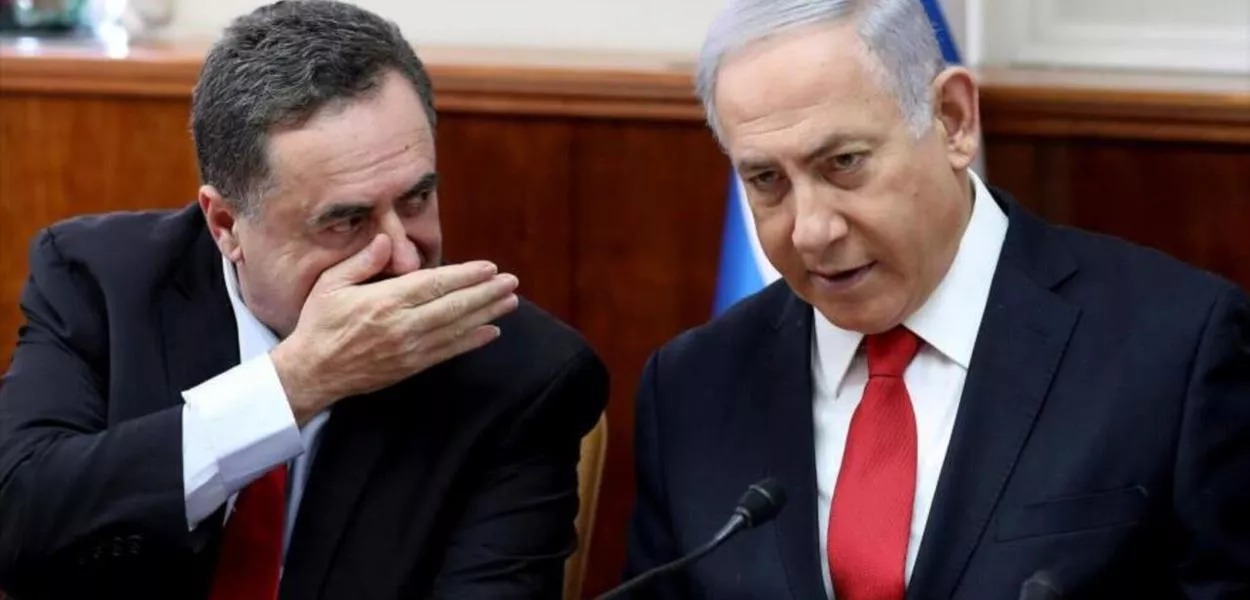
Netanyahu’s decision exposed a division between the government and the military command. Israel Katz, defense minister, reinforced his confrontation in stating that his role is to ensure that “the army fully executes the government defined policy,” adding during a visit to the Gaza Strip: “If this is not acceptable to the Chief of Staff-which he renounces.”
The message was interpreted as a direct challenge to General Eyal Zamir, who has been warning of the humanitarian and operational risks of the total offensive.
National Security Minister, Itamar Ben Gvir, echoed the pressure and stated that the chief of staff must publicly declare his full obedience to the orders of the Office, “even if the decision is by occupation and victory.”
Foreign Minister Gideon Sa’ar tried to soften the clash, but reinforced the civil hierarchy by saying that “the army’s subordination to government decisions is obvious for those who have served the country for decades.”
See the division within the Israeli Security Office:
Favorable to total occupation:
RON DERMER – Minister of Strategic Affairs
Bezalel Smotrich – Finance Minister
Itamar Ben Gvir – National Security Minister
General Roman Gofman – Military Secretary
Yossi Fuchs – Cabinet Secretary
Favorable to negotiation and ceasefire:
Eyal Zamir-IDF Chief of Staff
Gideon Sa’ar – Minister of Foreign Affairs
Aryeh Deri – Leader do Shas Party
Tzachi Hanegbi – National Security Counselor
David Barnea – Mossad head
“Mem” – SHIN BET negotiator
General Nitzan Alon (Reserva) – Responsible for the hostage dossier in IDF
The opposition, in turn, accused the government of endangering the cohesion of the Armed Forces. “Soldiers should not believe they are led by a divided and conflicting leadership, who does not respect their commander,” criticized opposition leader Yair Lapid.
Blue Gantz, the blue and white leader, said that “the unbridled attack of ministers against the Chief of Staff, just because he does his duty and expressing his professional position, is an irresponsibility of first degree security.”
Former military chiefs, such as Gadi Eisenkot, also criticized the climb and warned that the war has already moved away from its initial goals.
The pressure of the government’s most radical wing, coupled with the rhetoric of Yair Netanyahu – who accused Zamir of “riot and attempted military coup” – consolidated the perception of an institutional crisis in the country.
The aggressive discourse of the premie and its allies signals an attempt to completely subordinate the high military command to political decisions, even in the face of technical alerts that the operation could aggravate the situation of hostages and the civilian population.
Threatened hostages and exhausted Israeli society
The decision to expand the offensive in Gaza occurs when the situation of hostages reaches a critical point. In recent days, videos released by Hamas and Islamic Jihad Palestinian have shown visibly malnourished Israeli hostages, such as Evyatar David and Rom Braslavski, causing a wave of indignation between family members and part of the population.
“You see your son dying before his eyes and can do nothing,” Ofir Braslavski, Rom’s father, told Associated Press.
The case of Evyatar generated even more commotion. In the video, the young man appears digging his own grave in a tunnel and begging for his life. Nevertheless, neither the cabinet nor the Security Council were summoned to emergely discuss a new agreement.
“667 days have passed when the hostages are living a Holocaust in the tunnels, and instead of reaching a viable agreement to end the war, Netanyahu prepares an operation that will turn live hostages into bodies and make the dead disappear,” wrote Einav Zangauker, Matan’s mother, still in captivity.
The hesitation of the government to prioritize hostages strengthened public criticism and exposed the wear and tear of military strategy.
Most of Israeli society shows fatigue in the face of the prolongation of war, but apathy begins to give way to specific protests. The Haaretz newspaper noted that even with the release of shocking videos, no minister considered urgent to call a meeting about the prisoners – on the contrary, the cabinet gathered to discuss the security of the Netanyahu family.
“This was the only theme that generated genuine concern between the prime minister and its allies,” said analyst Amos Harel.
The war, which began with the justification of destroying Hamas, now seems increasingly disconnected from its declared goals. Hostages remain at risk, Gaza is devastated, and official rhetoric insists on promises of victory that no longer find backing or among the IDF commanders themselves.
Diplomatic isolation and political use of the far right war
The decision to expand the military offensive also marks the collapse of the previous strategy, based on partial agreements to exchange hostages and temporary cease. According to US special envoy, Steve Witkoff, the limited respite to free about half of the living hostages “didn’t work, and we tried everything.”
The Trump administration now pressures for an “all or nothing” agreement, which includes the total release of hostages, Hamas’s disarmament and Gaza’s demilitarization. Both parties have rejected points of the proposal, and US diplomats, Egyptians and Cataris admit that there is no sign of a viable new agreement.
Diplomatic paralysis is aggravated by the unilateral performance of Israel. The US ceasefire in January was broken by Israel in early February by refusing to negotiate the next phase.
In March, the government ordered the resumption of the offensive, frustrating what was left of the agreement. The new climbing occurs, therefore, in a scenario of increasing isolation – while increasing allegations of hunger, forced displacement and attacks against Palestinian civilians.
At the same time, the coalition led by Netanyahu uses war as an instrument to consolidate its political project.
The government advances with proposals to dismiss the Attorney General, shield the exemption of ultraortodox of military service and to press the IDF command to completely submit to the executive’s guidelines.
As warned the Haaretzthe unlavod objective of the offensive is to extend the conflict to avoid concessions that can destabilize the fragile far right coalition.
“Netanyahu believes time is in your favor,” wrote analyst Amos Harel. “Drag the war for a few more months protects it from agreements that would require setbacks and endanger your government.”
Meanwhile, the humanitarian situation deteriorates. The UN estimates that only 12% of the Gaza Strip is outside the militarized zone or evacuation orders. Most of the 2.2 million Palestinians live in tents, without regular access to food, water or shelter.
Israel restricts the sending of help by international organizations and supports the performance of the Gaza Humanitarian Foundation, which has generated new tragedies: hundreds of civilians have been killed while trying to cross combat zones to receive food, often hit by Israeli forces gunfire.
Even in the face of such devastation, Netanyahu’s allies show no willingness to change the course. On the contrary: While videos of the malnourished hostages shocked the country, the only urgent meeting convened by the cabinet was to discuss the security of the Prime Minister’s family-in a sign that the government prioritizes its own stability above the life of its soldiers and citizens.
Source: vermelho.org.br