Economist Yaroslav Lissovolik knows the global financial architecture from the inside. He entered the market in the late 1990s through Renaissance Capital, then Russia’s main investment bank, and went from there to the International Monetary Fund (IMF), where he served as an advisor to Russian executive director Alexei Mozhin — at less than 30 years old, he was sitting at the Executive Board table. A graduate of Harvard, the London School of Economics and the Moscow State Institute of International Relations (MGIMO), he wrote with his advisor one of the first comprehensive books on Russian accession to the World Trade Organization (WTO).
This process shaped his worldview. It took Russia almost 20 years to join the WTO: China joined in 2001, Moscow only in 2012. He recalls how they experienced the process in Russia: “You think you’ve already made all the possible concessions, and there’s another round of concessions that you have to make. One more, one more, every year.” The country had been converted to a radically liberalized economy, and yet the door to the Western club remained closed. “Anyone familiar with this subject would understand the tremendous degree of frustration that had been accumulating year after year,” he says.
After the IMF came Deutsche Bank, where he was chief economist for Russia and the Commonwealth of Independent States (CIS) for around ten years — a period in which it was still believed it was possible to build economic bridges between the West and Russia, and which ended with Crimea in 2014. This was followed by the Development Bank of the Eurasian Economic Union and Sberbank, the largest Russian bank, where he headed the investment research area.
This descent from the global to the regional and then to the national produced its central thesis. “When I was at the IMF, I thought everything should be top-down, resolved by global institutions and passed on to lower levels,” he says. “This way of thinking changed when I became part of a regional institution. I started thinking about regional blocs as the foundations of a reformed global economy. Because, with these global organizations, it is almost like a colossus sitting on very fragile foundations”, he explains in an exclusive interview with Brazil in fact.
In 2023, he founded Brics+ Analyticsa consultancy dedicated to producing proposals for the bloc and the Global South. In 2017, he wrote the article that launched the acronym R5 — the idea of using the national currencies of the five Brics countries in the operations of the New Development Bank (NDB) and regional banks —, the embryo of the entire subsequent debate about a common currency.
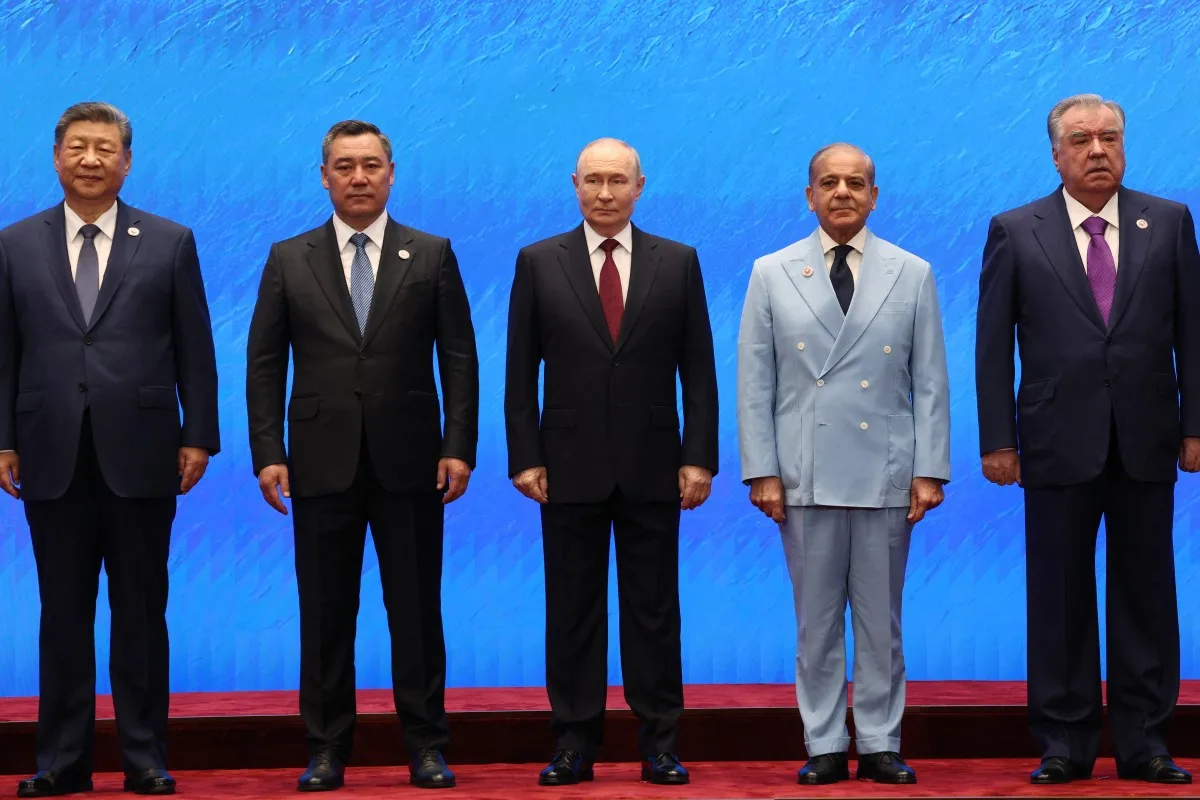
The interview with Brazil in fact it was granted on September 2, ten days before the BRICS summit in New Delhi (India) and one day after the end of the Shanghai Cooperation Organization (SCO) summit in Bishkek (Kyrgyzstan).
Check out the interview:
Brazil in fact: Last week we had the SCO summit in Bishkek. The organization has been gaining prominence, and President Vladimir Putin highlighted that Russia’s trade with the group reached US$400 billion, with 98% in local currencies. Would OCX be transitioning to an economic platform? What is your assessment of the summit?
Yaroslav Lissovolik: You are right to highlight the key vector of the OCX, which is the bloc’s evolution towards an economic bloc. It began with a strong emphasis on security, for understandable reasons at the time, 25 years ago, and today the economic needs are enormous. Each year there was a realization of the limitations faced by regional economies in terms of economic integration and trade.
Therefore, the economic need began to become more pronounced, and this was reflected in the events of the last year, including discussions about the development bank. When we start to see institutionalization, which provides something more rule-based, predictable and viable, we start to see greater support from the economic community, the investor community, the markets.
So I’m not too worried that maybe there hasn’t been as much progress this year in terms of banking. There are many issues to decide. It’s better to dedicate a little more time and not make mistakes at the beginning. And I think one of the key issues may be thirst [Quirguistão e Cazaquistão se ofereceram para sediar o banco].
I’m a big proponent of diversifying institutions geographically to the extent possible. To move away from this Western pattern in which one or two cities represent all global governance, so that all regions of the world begin to represent it. It’s about time. It is a subject that is on the radar, is being discussed, and there will certainly be progress.
28 agreements were signed at the summit. Which ones caught your attention in the final statement?
There were references to working in the financial system, i.e. payments in national currencies. And mentions of connectivity projects related to the main corridors. The most important thing here would be the North-South corridor.
I was very optimistic when I saw members’ roadmaps on projects, project portfolios and connectivity in the list of adopted documents. All of this is starting to become systemic and project-based — something less rhetorical, more concrete, more grounded in real projects.
As for trade, the pattern continues to be, as in Brics+, the emphasis on bilateral agreements, in which the two countries agree on a certain trade goal and work to implement it. This is the case of Russia, Brazil, practically everyone. Reaching higher levels using this instrument is perfectly acceptable, it seems to work and generate results. But a faster path would be a roadmap of trade agreements brought together on common platforms, resulting in a much more systematic and predictable instrument.
My preference is for a roadmap of trade agreements in the “OCX+” format, which not only covers full members, but also partners and observers, in addition to Eurasian integration and regional blocs such as the Association of Southeast Asian Nations (Asean) and the Gulf Cooperation Council (GCC). There is this format that is starting to become more evident — China plus GCC, China plus Asean — and which could very well be integrated into an OCX+ structure.
The long-term vision that crystallizes is OCX+ as the Eurasian platform for Global South cooperation, bringing together all the main actors and serving as an aggregation platform for development institutions, integration blocs and connectivity projects.
You pointed to connectivity as one of the two key issues on the economic front and highlighted the North-South corridor among the projects in the declaration. This corridor connects the port of Mumbai to Iran and continues to Saint Petersburg by rail and navigation on the Caspian Sea, significantly shortening the route that today passes through the Suez Canal. It involves exactly three countries that are at both tables: Russia, Iran and India are part of both the OCX and the BRICS. What does this mean for you?
Which means it’s quite possible for the two to work together. We have seen that the NDB has been co-financing projects with regional banks, such as the Eurasian Economic Union Development Bank. This could very well happen to the OCX bank once it is operational. The OCX definitely needs to be involved in the North-South corridor, as the issue of alternative trade routes is the crucial link that could also connect, to a stronger degree, the OCX to Brics+.
Today four countries are full members of both blocs: Russia, China, Iran and India. If we consider partners, observers and other categories, there are eleven countries at both tables.
That is great. They are bridges, ways to connect and expand. If it was previously thought that overlaps were duplication and a problem, no: this is positive for the Global South in terms of expanding projects and platforms.
The overlap improves the prospects for the formation of platforms between regional integration agreements — such as the Beams platform I proposed, which brings together the Bay of Bengal Initiative for Multisectoral Cooperation (Bimstec), the Eurasian Economic Union (EEU), the African Continental Free Trade Area, Mercosur and the OCX itself. You build a house with “Brics and Beams”: these are the two key elements [em inglês, “bricks” são tijolos e “beams”, vigas]. Time will tell, but we are moving, slowly but surely, towards a paradigm in which it is not just individual countries, but regional blocs, that become the building material for these platforms.
And the OCX will be the backbone, the absolutely crucial link of this entire great project that they call Greater Eurasia. I would call it OCX+.
Source: www.brasildefato.com.br