Published 10/30/2025 18:27 | Edited 10/30/2025 18:29
Two socialist nations are faced with natural disasters that punish the territory, cause losses and take lives. 14 thousand kilometers apart, Cuba and Vietnam are not experiencing even greater devastation due to the planned and efficient action of their governments, led by the Communist Party.
Cubans were hit in the early hours of Wednesday (29) by Hurricane Melissa in category 3 on the Saffir-Simpson scale – which measures the intensity of hurricanes. The Atlantic storm lost strength, but had winds of 185 km/h and gusts of more than 190 km/h. Six provinces (Camagüey, Granma, Guantánamo, Holguín, Las Tunas and Santiago de Cuba) entered a “state of alert”.
Once again, however, the socialist government prepared exemplarily for “the worst hurricane in the Atlantic in almost a century”. To date, no deaths have been recorded in the country as a result of the hurricane – which, however, killed at least 25 people in Haiti, three in Jamaica and one in the Dominican Republic. According to the UN, the trail of destruction left by Melissa reached “unprecedented levels”.
Unlike Cuba, Jamaica experienced “the worst storm in modern history”, as Prime Minister Andrew Holness reported when detailing the state of public calamity in the country. Melissa hit the Jamaican west coast on Tuesday (28) as category 5 (the maximum level of intensity), with winds of up to 300 km/h and waves of 4 meters. Impacts such as flooding, destruction of homes and blackouts harmed 1.5 million people – more than half of Jamaica’s population of 2.8 million.
In addition to the lower intensity, Cubans benefited from the Miguel Díaz-Canel government’s successful contingency plan, which prepared the population in a preventive manner. On national television, the president addressed “dear compatriots in eastern Cuba, where Fidel defied the dangerous hurricane Flora and taught us forever how to behave to protect life.”
“I ask you to be attentive, be supportive and do not forget to be disciplined in the face of threats. We will win,” said Díaz-Canel. According to the Granma (official organ of the Communist Party of Cuba), “there was no loss of time in preparing for the storm”, and around 735 thousand people were evacuated to shelters.
The Cuban government also invested “in the implementation of evacuation plans for risk areas, in the protection of resources, in the security of health institutions, in the provision of rescue equipment and in the preparation of the hydraulic system to deal with large flows”. Still, the government recalled that “it is never possible to predict everything” – and that “there are circumstances not described in the protocols that can be avoided, because, once a hurricane arrives, very little can be done.
The commotion surrounding the impacts of Hurricane Melissa even led the Donald Trump administration to, surprisingly, show solidarity with the Cubans. “We are prepared to offer immediate humanitarian assistance to the people of Cuba affected by the hurricane,” he tweeted, on Xthe US Secretary of State, Marco Rubio.
Vietnam
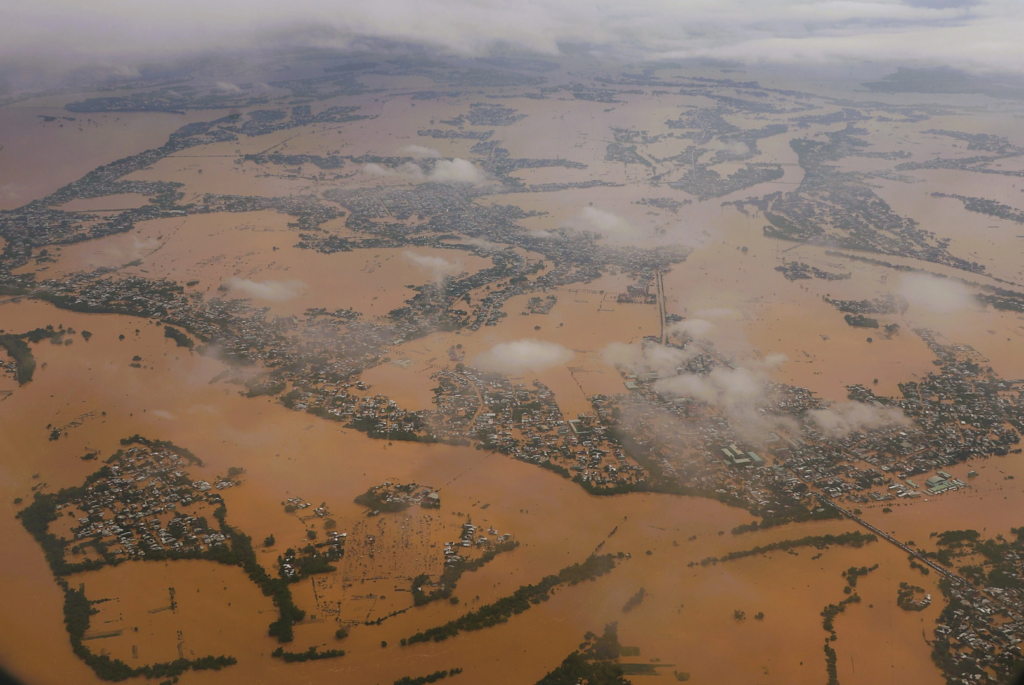
On the other side of the world, in Southeast Asia, the floods were caused not by a hurricane – but by extreme rainfall. Over the course of the week, the storm flooded more than 100,000 homes and left seven people dead in central Vietnam, according to the Ministry of the Environment.
The rains began on Sunday (26) and, in 24 hours, reached a record level of 1,700 millimeters. Provinces close to the coast are the hardest hit. The government counts nine people dead, five missing and 21 injured. There were more than 150 landslides, 2,200 hectares of crops destroyed and at least 103,525 houses flooded. The government isolated ten communes.
A report from the Department of Dike Management and Natural Disaster Prevention of the National Hydrometeorological Forecasting Center, linked to the Ministry of the Environment, indicated alarming numbers of the “great flood”. According to the agency, the water level of the Thu Bom River, in Da Nang, at Cau Lau station, reached a historic peak of 5.62 m at 2 am this Thursday (30). The previous record was recorded in 1964.
The Vietnamese government, like the Cuban government, took a proud stance in the face of the climate tragedy. More than 21 thousand people were moved to safe areas, which prevented a greater number of losses. The central concern now, with the reduction in rainfall, is controlling the rivers – which, according to the government, are at “worrying levels”.
According to CNN, which cites the government weather forecasting agency, “heavy rain will continue in the center of the country over the next two days, with precipitation in some areas remaining above 400 millimeters from early Wednesday until late Thursday.” In the city of Hue, historical relics were submerged up to 2 meters deep.
The tragedy is the second in less than a month in Vietnam. On September 29, Typhoon Bualoi caused eight deaths, destruction of homes, power outages and flooding of roads. In both cases, the socialist government stood out for its assistance to the victims, especially in distributing food to the homeless.
The website Vietnam.Vn explained this week’s action: “Casa 295 aircraft numbered 8902 of the 918th Air Transport Brigade transferred nearly 6 tons of dry food from Gia Lam military airport to Da Nang airport, delivering it to Military Region 5 to provide aid to areas seriously affected by floods in Da Nang and Hue.”
Source: vermelho.org.br