Published 28/11/2025 14:59 | Edited 11/28/2025 15:30
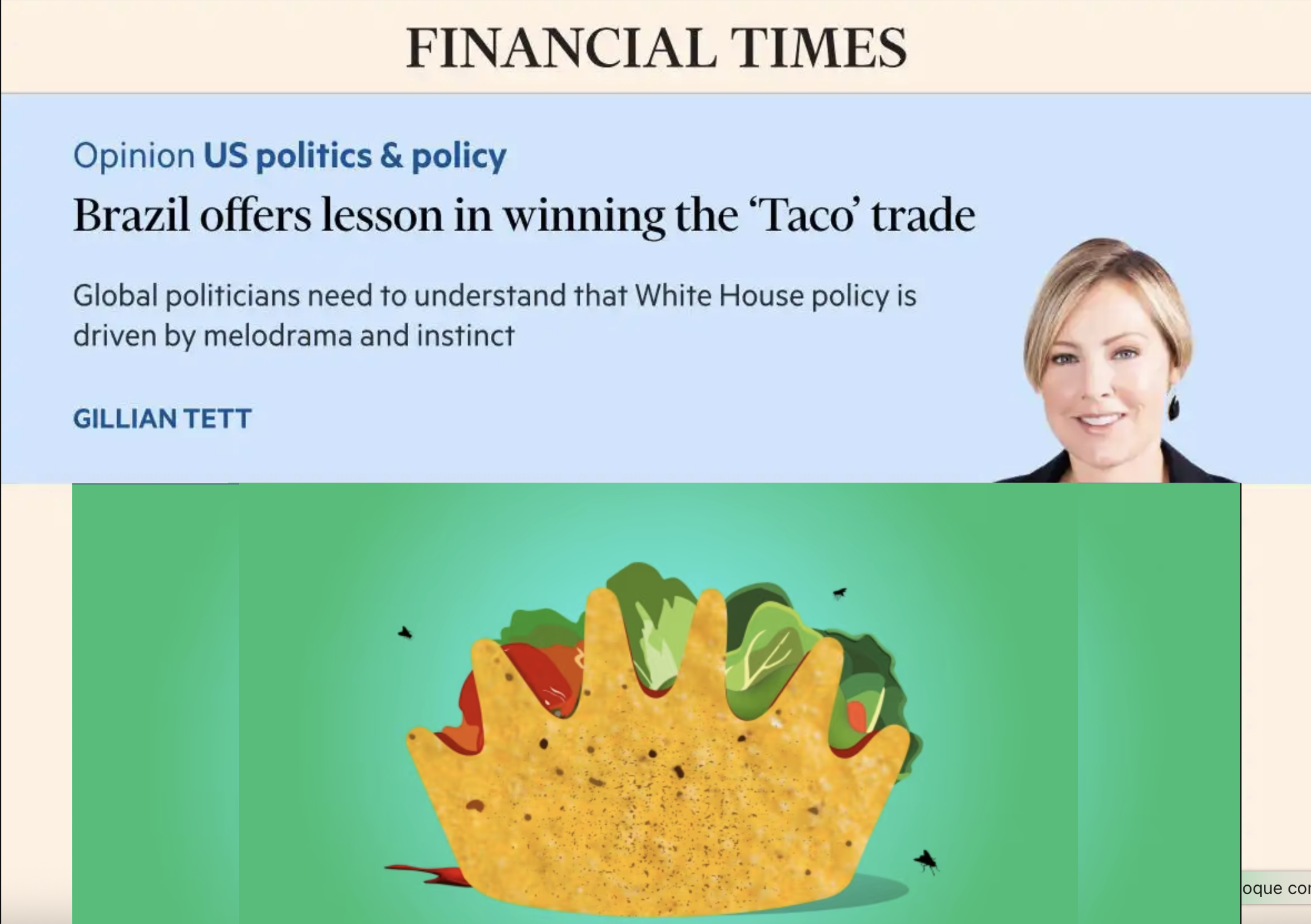
Columnist Gillian Tett, from the British magazine Financial Timesstated this Friday (28) that President Luiz Inácio Lula da Silva “won” the tariff offensive launched by American President Donald Trump. In an ironic article, Tett says that the U.S. retreat — which removed the 40% surcharges imposed in August — has once again exposed a recurring Republican pattern: “Trump Always Chickens Out,” [Trump sempre se acovarda] or simply “TACO”.
“How do you say ‘TACO’ in Portuguese?”, Tett provokes at the beginning of the text, suggesting that many Brazilians would now ask the question “with a smile”. The nickname went viral among Brazilian users in recent weeks, as speculation grew that Trump would reverse the tariff.
US reverses surcharges after diplomatic escalation
In the last two weeks, Washington removed extra tariffs on more than 400 Brazilian products, including coffee, beef, cocoa, fruit and various food items. The expansion of exceptions occurred after a meeting between Chancellor Mauro Vieira and the American Secretary of State, Marco Rubio.
The tariff had raised total taxation to 50% in retaliation, according to the White House, for actions by the Brazilian government that would threaten US national security — including investigations involving Jair Bolsonaro and STF decisions on big techs.
“The retreat confirms: in plain English, Lula won”, concludes Tett. For her, Brasília’s firm stance reinforced the Brazilian president’s internal image and showed that American pressure would not work.
“Bullies respond to force,” says Tett
The author states that the episode leaves three lessons for other countries. The first concerns the US domestic political environment: with persistent inflation and falling consumer confidence, reducing agricultural prices has become urgent for Trump. The tariff reversal, argues Tett, served as a direct gesture to try to alleviate the cost of living.
The second lesson involves the dynamics of coping. “Bullies often respond with force,” writes the columnist. Like China and other nations, Brazil has shown that resisting — rather than giving in — can produce more effective results against Trump’s aggressive style.
White House acts on tactics, not strategy
The third point discussed by the FT is the need to separate tactics from objectives when analyzing White House behavior. Tett claims that Trump tends to mix personal impulse, political calculation and internal disputes, producing erratic movements — from trade policy to the Jeffrey Epstein case, to decisions on Ukraine.
Citing Steve Bannon, she recalls that the president often resorts to “bullying, threats, melodrama, sudden policy changes, favoritism and advertisements to flood the zone”. These flashy gestures would be tactics, not lasting goals, allowing for quick turnarounds when a move becomes politically costly.
The TACO pattern and the logic of pullbacks
For Tett, Trump’s moves follow a clear pattern: when a measure risks raising prices, harming allies or generating political wear and tear, it is unceremoniously discarded. It’s the “TACO” phenomenon, says the author — dramatic advances followed by equally theatrical retreats.
The columnist recalls that, in the same week that he reversed tariffs on Brazil, Trump also changed his tone towards the new mayor of New York, Zohran Mamdani, who he had called a “communist” days before. The sudden turn would reinforce the tactical, not strategic, nature of their actions.
A signal to other countries
Gillian Tett concludes that the episode sends an important message to governments around the world: “kings are rarely as all-powerful as they seem.” In the Brazilian case, he writes, Lula gave the message — and won a dispute that seemed asymmetrical, but revealed the limits of Washington’s aggressiveness.
Source: vermelho.org.br