Published 25/08/2025 14:43
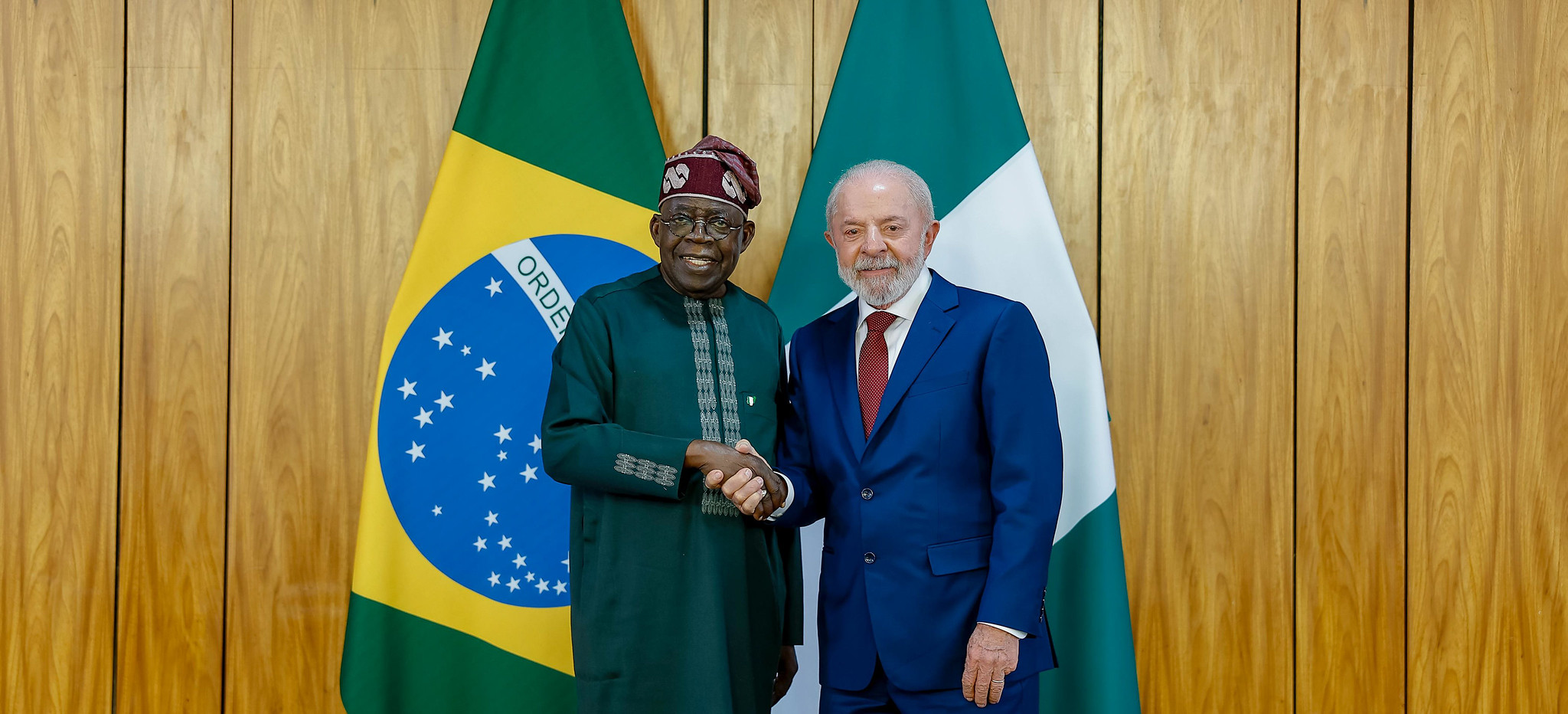
President Luiz Inacio Lula da Silva received this Monday (25), at the Planalto Palace, the head of state of Nigeria, Bola Ahmed Tinubu, on an official visit. The meeting marked the resumption of cooperation between the two countries after a decade of fall in bilateral trade and diplomatic distancing.
Lula pointed out that in a global scenario marked by the advancement of protectionism and unilateralism, Brazil and Nigeria reaffirm their bet on free trade and productive integration.
“We continue committed to building a world of peace and free from hegemonic impositions,” said the president.
Trade and New Agreements
The meeting between President Lula and Tinubu cannot be seen only as a diplomatic gesture. It is part of a broader strategy of the Brazilian government to face the impact of the tariff imposed by the United States on national products. Nigeria faces 15% rate and is seen as a strategic partner for opening new export routes.
According to Lula, trade between the two countries fell from $ 10 billion in 2014 to just $ 2 billion in 2024, a reflection of the foreign policy of the last governments.
“It was no coincidence. In the last governments, Brazil has distanced itself from Africa. Two of the largest economies in Latin America and Africa must have a much greater exchange,” he said.
On the visit, five new agreements were announced in the areas of cultural, science and technology, air services and political dialogue. Also approved of a direct flight between Lagos and Sao Paulo, to be operated by the Nigerian company Air Peace.
Without quoting Trump directly, Lula used the presence of Tinubu to defend a world less dependent on external impositions. “At this time when protectionism and unilateralism resurface, Nigeria and Brazil reaffirm bet on free trade and productive integration,” he said.
The phrase was interpreted as an indirect message to the US, reinforcing the Brazilian arrangement to seek alternatives outside the American sphere.
Historical Commitment and Solidarity
The Brazilian president also evoked the African heritage in the formation of Brazil, mentioning the more than 350 years of slavery. For Lula, repair of this past cannot be measured in monetary values.
“The only way we pay can not be measured in cash, it has to be measured in solidarity, political, economic and cultural alignment,” he said.
Lula stated that Brazil has an obligation to share technology and knowledge, especially in the agricultural area, to contribute to African development.
The data presented by Lula show the drastic drop in bilateral trade with Nigeria – from $ 10 billion in 2014 to just $ 2 billion by 2024 – a reflection of diplomatic removal in recent governments.
More than historical memory, the approach meets the immediate interest of compensating losses in the US market and making room for exports of sectors such as agriculture, fertilizers, oil and gas.
In addition to expanding commercial flow, the measure is symbolic: it approaches two of the largest black population countries in the world and projects Brazil as a relevant actor in south-south cooperation.
Security, Environment and G20
In addition to the economic agenda, the two leaders discussed public security cooperation, combat transnational organized crime and terrorism. Lula announced that Brazil will designate a federal police attachment to Abuja later this semester.
In the environmental area, it reaffirmed the commitment to zero illegal deforestation by 2030 and invited African countries to actively participate in COP30, which will be held in Belém.
The petista also defended Nigeria’s greatest protagonism in international forums. “Nigeria has all the credentials to become a full member of the G20,” he said.
New phase in Brazil – Nigeria Relations
Lula concluded his speech by stating that Tinubu’s visit marks the “definitive return of Brazil to the African continent”.
“Not as a country that wants to have a hegemonic relationship with anyone, but a country that wants to have a solidarity, fraternal and egalitarian relationship, thinking about the growth of the African people and thinking about the growth of the Brazilian people,” said the president.
The Brazilian government sees the rapprochement with African countries as part of its strategy to diversify markets and reduce dependence on the United States, which recently surpassed Brazilian products by up to 50%.
Source: vermelho.org.br