Published 12/09/2025 16:21 | Edited 12/09/2025 16:26
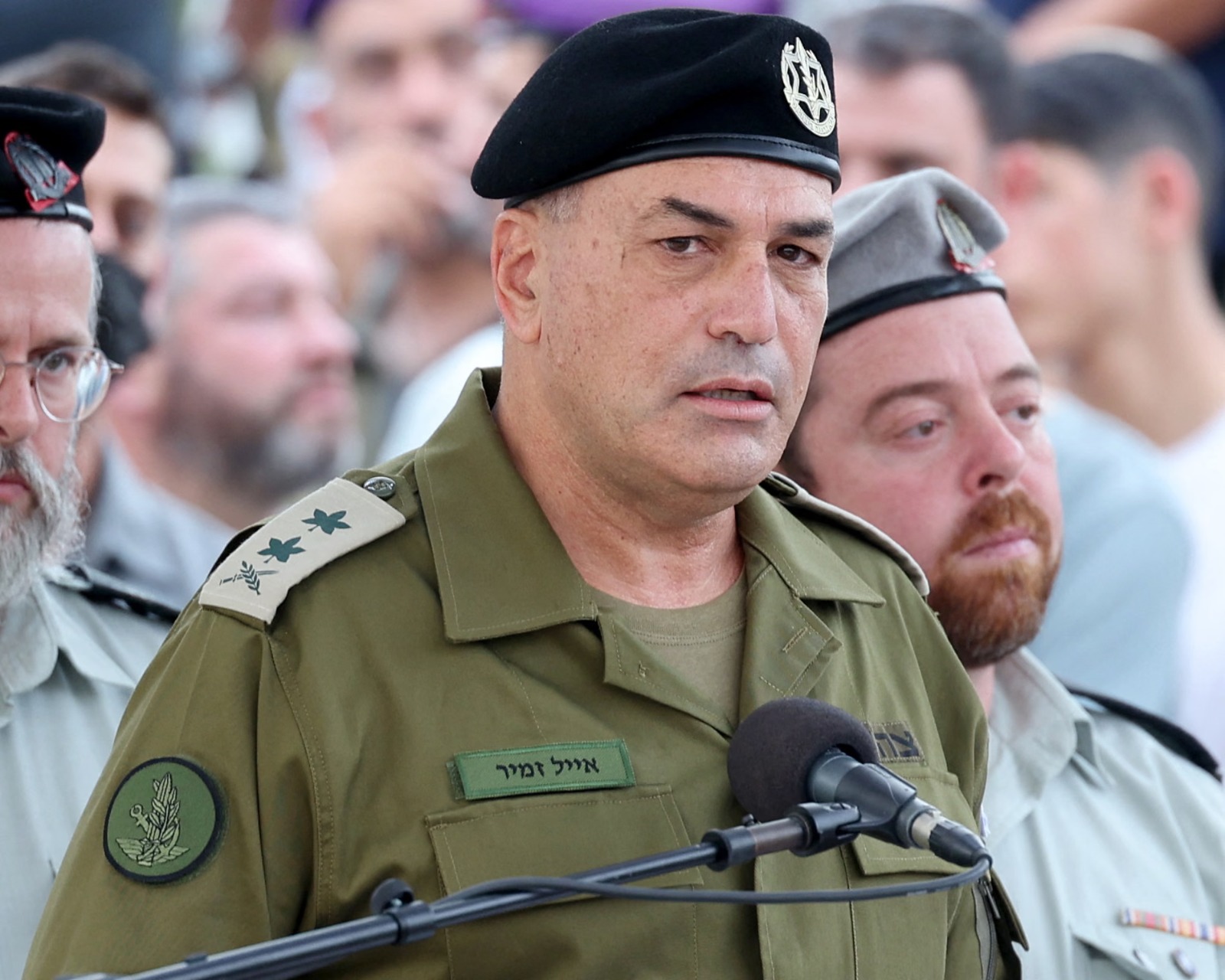
The head of the Israeli Army, Eyal Zamir, declared this Sunday (7) that the so-called Yellow Line — foreseen in the ceasefire plan negotiated by Donald Trump — has become “a new border” for Israel, stating that the country “controls a large part of the Gaza Strip” and “will remain on these lines”.
The statement exposes the conversion of a temporary zone into a de facto territorial limit and raises awareness of the risk that the North American plan will become, in practice, an instrument of permanent loss of Palestinian territory.
During a visit to the ruins of Beit Hanoun and Jabalia, Zamir told soldiers that the Yellow Line functions as an “advanced line of defense for the communities and an offensive line” for Israeli forces.
He stressed that Israel “will not allow the reconstitution of Hamas” and that it will maintain military positions in areas that currently represent more than half of Gaza, consolidating territorial control that should be temporary under the terms of the ceasefire.
Zamir’s statement comes as the implementation of the ceasefire plan negotiated by Donald Trump in October progresses, which established the Yellow Line as the provisional limit for the withdrawal of Israeli troops during the initial phase of the agreement.
According to the schedule approved in November by the UN Security Council, Israel should temporarily remain behind this line until the arrival of an international stabilization force, responsible for taking over the security of the territory and allowing the gradual withdrawal of the IDF.
Instead, Israel has been reinforcing positions along the route — expanding observation posts, installing concrete barriers and moving military units — and satellite images show that part of these landmarks exceed the delimitation originally negotiated with Washington.
Egypt reacted by defending the immediate deployment of the international stabilization force provided for in the ceasefire agreement.
Speaking at the Doha Forum last Saturday (6), Foreign Minister Badr Abdelatty — whose country participated in the plan negotiations alongside the United States and Qatar — stated that the presence of independent observers is essential to verify compliance with the truce, since “one of the sides, which is Israel, violates the ceasefire daily and claims that the other side is responsible”.
According to him, the transition to the second phase of the plan, which foresees the gradual withdrawal of Israeli troops and the installation of an international provisional administration, will not be able to advance without this monitoring.
Abdelatty also reiterated that Egypt will not allow the Rafah crossing to be used “as a gateway for the displacement or expulsion of people from their homeland”, criticizing the fact that Israel keeps the Gaza gate closed even with the border operating continuously on the Egyptian side.
Source: vermelho.org.br