Published 10/29/2025 11:46 | Edited 10/29/2025 12:03
Less than three weeks after the start of the ceasefire brokered by the United States, Israeli Prime Minister Benjamin Netanyahu broke the truce and ordered a new series of airstrikes against the Gaza Strip, killing more than 100 people, including 46 children and 20 women, according to the enclave’s Ministry of Health.
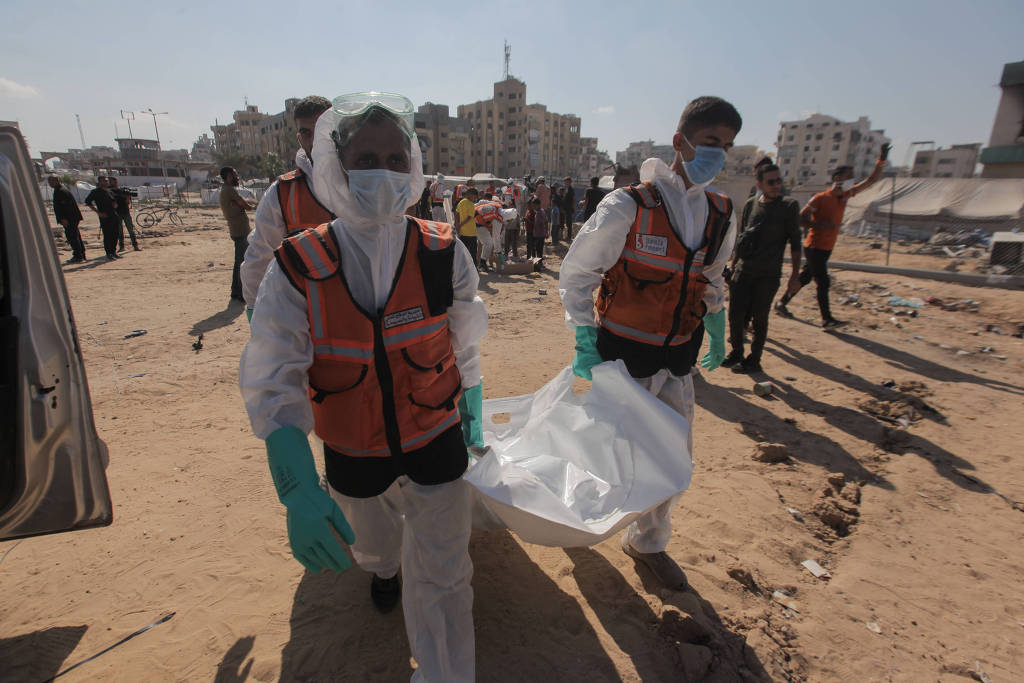
The bombings, launched on Tuesday night (28), hit Khan Yunis, in the south, and Gaza City, in the north, in one of the deadliest nights since the beginning of the truce, on October 10. Gaza Civil Defense confirmed that rescue teams recovered dozens of bodies amid the rubble.
Israel said the operation was a response to the death of a soldier in an alleged attack by Palestinian militants in the south of the Strip. After the bombings, the Army declared that it would “resume the application of the ceasefire” and that it would react “firmly to any violation”.
In practice, the government broke the truce and, the following day, again stated that it “maintains the ceasefire”. The episode was described by international diplomats as the effective collapse of the agreement brokered by Washington, Egypt and Qatar.
Hamas denied any involvement in the reported attack by Israel and stated that it “remains committed to the ceasefire.” “We deny responsibility for the episode and reaffirm our commitment to the agreement”, declared the group in a statement released this Tuesday (28).
The action in Rafah, according to Israeli forces, involved sniper fire and an anti-tank projectile against soldiers who were carrying out “engineering operations” within the so-called “yellow line”, the security zone defined by the agreement.
Hamas classified the justification as “false and fabricated” and accused Prime Minister Netanyahu of “looking for excuses to escape his political obligations”.
“The Israeli government tries to manipulate the truth and find pretexts to resume the massacres,” said a spokesperson for the group.
The Israeli offensive was also preceded by accusations about the handing over of hostage bodies. Netanyahu’s office stated that Hamas returned the remains of Ofir Tzarfati, one of those kidnapped during the Nova festival, whose body had already been partially recovered by the Army. The prime minister accused the faction of “forging the recovery of the remains” and announced that he would “respond with force”.
“Hamas violated the terms of the ceasefire by not returning all the bodies of the Israeli hostages,” Netanyahu declared.
The Palestinian group countered, stating that part of the bodies are still under rubble and that the Israeli government “uses the suffering of families to justify new bombings”.
Arab countries condemn the breaking of the truce
Egypt, Qatar, Turkey, Saudi Arabia and Jordan condemned Israeli actions and called for respect for civilians and maintenance of the truce.
Egypt’s Foreign Ministry classified the bombings as a “serious violation of the agreement” and called for immediate investigations. Qatar, which participated in the mediations, declared that “there is no plausible justification for resuming attacks amid negotiations”.
Saudi Arabia expressed “deep concern about the civilian deaths and non-compliance with the ceasefire”, while Turkey stated that “Israel’s actions undermine any prospect of peace”.
Despite regional reactions, Netanyahu maintained a confrontational tone. “I ordered powerful attacks against Hamas targets in Gaza,” said the prime minister, in a statement released by his office.
US legitimizes Israeli offensive
As bombs fell on Gaza, Washington adopted the role of guarantor. Secretary of State Marco Rubio stated that the United States “does not see a violation of the ceasefire” in Israeli actions.
“Israel has not given up the right to self-defense. They have the right to act if there is an imminent threat, and all the mediators agree with that,” Rubio declared aboard Air Force One.
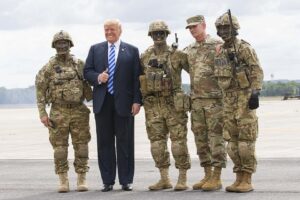
President Donald Trump, on a trip to Asia, reinforced the justification. “They killed an Israeli soldier, so the Israelis fought back — and they must fight back. Nothing will compromise the ceasefire.” he said.
Vice President JD Vance stated that “the ceasefire is standing” and that “small clashes may occur”, adding that the “president’s peace agreement will endure”.
The statements were interpreted by diplomatic observers as an explicit endorsement of the offensive, giving political legitimacy to military actions and transforming the truce into an instrument of strategic control, not humanitarian protection.
Humanitarian crisis worsens with attacks and blockades
This week’s air strikes worsened the humanitarian situation in Gaza, which has already suffered from the total blockade imposed by Israel since 2023. According to the Gaza Civil Defense, displaced people’s tents, homes and hospitals were hit. Spokesman Mahmoud Bassal said the situation was “catastrophic and terrifying”.
“The attacks targeted displaced people’s tents and areas close to hospitals. It is a clear and flagrant violation of the ceasefire,” Bassal said.
Images verified by Reuters show bodies of women and children being carried away in impromptu funerals. Hospitals report a collapse in care capacity, power outages and critical shortages of medicines.
Diplomatic sources interviewed by Reuters and Al Jazeera confirm that Israel began to control the entry of humanitarian and press teams into Gaza, requiring prior approval of names and nationalities. The measure restricts the activities of international organizations and prevents independent documentation of the attacks.
Since the start of the war, on October 7, 2023, more than 68,000 Palestinians have been killed, according to data from the local Ministry of Health. Among them, thousands remain under rubble.
Source: vermelho.org.br