Published 13/10/2025 14:37 | Edited 10/13/2025 15:03
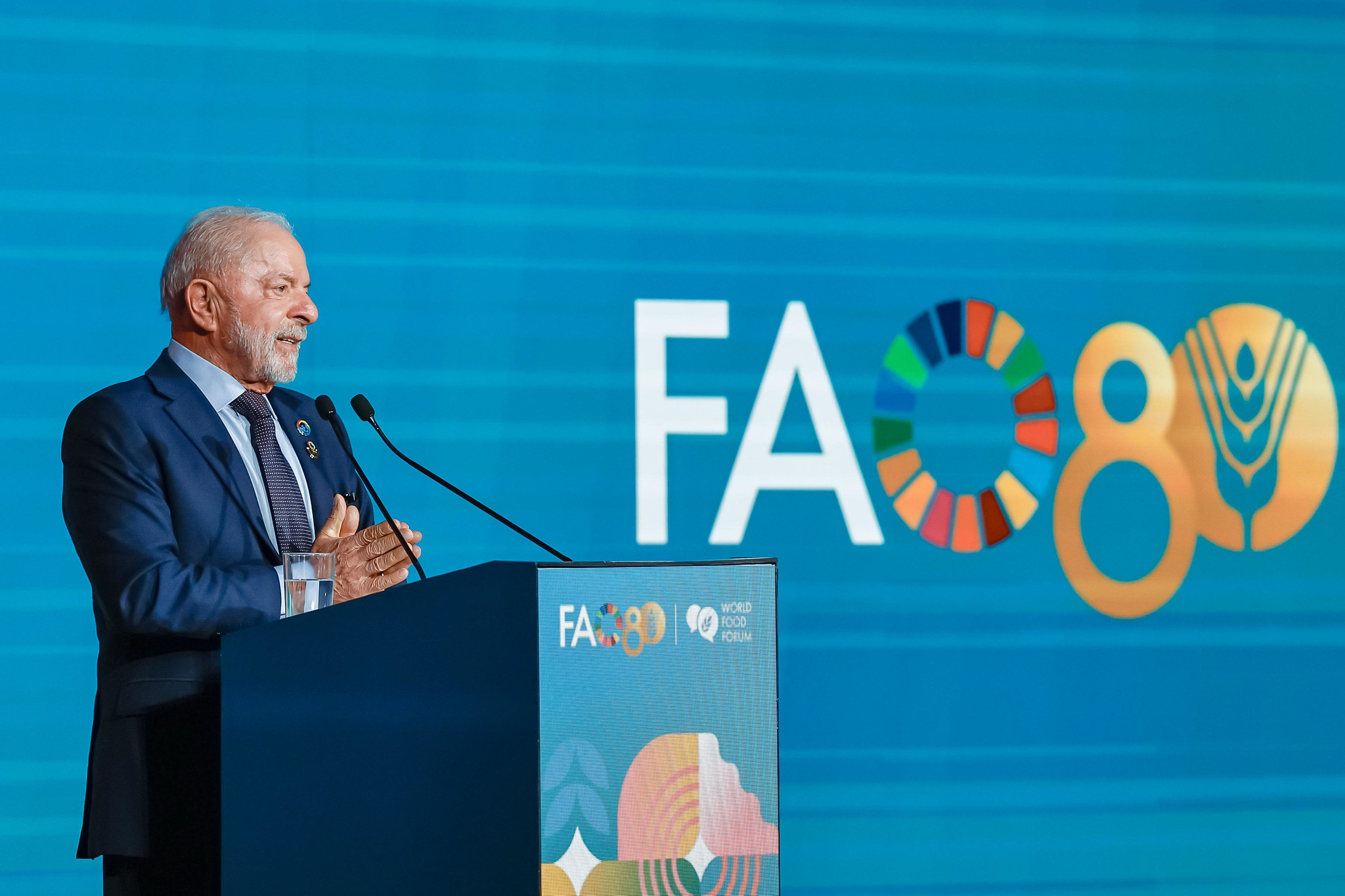
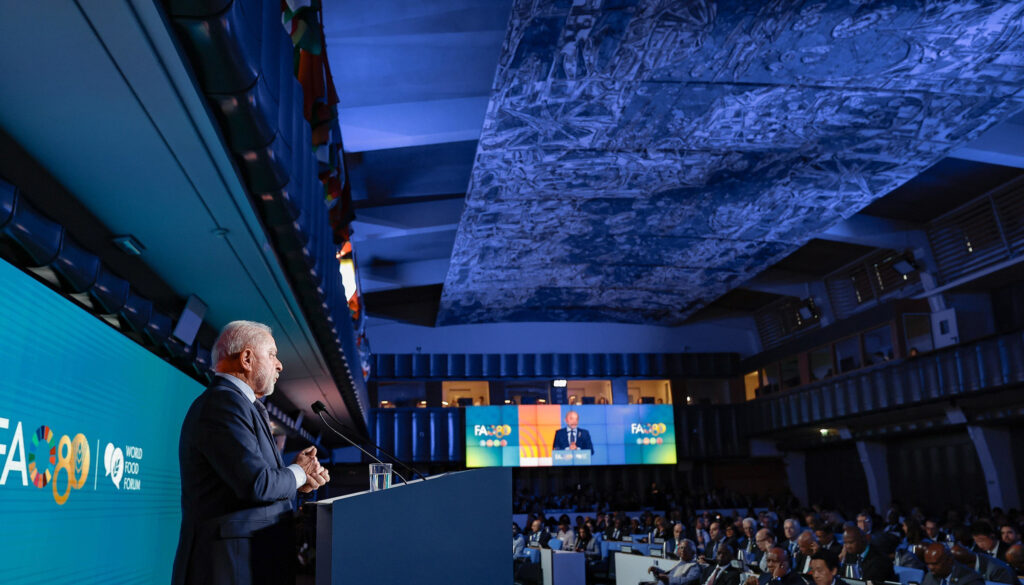
President Lula spoke, this Monday (13), at the opening of the World Food Forum, in Rome, Italy. Earlier, Lula was with Pope Leo 14, at the Vatican.
At the event that celebrates 80 years of operation of the Food and Agriculture Organization of the United Nations (FAO, in English Food and Agriculture Organization), the Brazilian leader highlighted: “as long as there is hunger, FAO will remain indispensable”. On October 16th, World Food Day is celebrated, the official date of the agency’s founding.
In a speech marked by demands on other leaders, the president pointed out the contradictions that prevent ending hunger in the world, gave examples of how the Brazilian government has acted on this front and called on his peers to understand that hunger is part of the problem of climate change and political choices.
Hunger and inequalities
As the president of Brazil explained, “access to food continues to be a resource of power”, thus “there is no way to dissociate hunger from the inequalities that divide rich and poor, men and women, developed nations and developing nations”.
The data he cited indicates that the planet produces enough food to feed one and a half times the world’s population. However, he regretted that 673 million people, according to FAO, are in a situation of food insecurity.
Data from the World Food Program shows that 315 billion dollars are enough to provide these people with three meals a day. As Lula points out, this value “represents 12% of the 2.7 trillion dollars spent annually on weapons.”
Read more: Israel uses hunger as a weapon of war in Gaza, denounces UN
In addition to this suggestion (investing less in war and more in egalitarian policies), he pointed out that “a 2% global tax on the assets of the super-rich” would also be enough to end global hunger.
“Hunger is the sister of war, whether fought with guns and bombs or with tariffs and subsidies”, highlighted Lula, remembering the tragedy in Gaza and the paralysis of the World Trade Organization in the face of international disputes (such as tariffs).
Poor on budget
Lula also said that it is necessary to include the poor in the budget and that the policies initiated in his first two presidential terms, including Fome Zero, allowed the country to leave the Hunger Map in 2014 and again in 2025, after years of setbacks by right-wing governments in the country.
Read more: Lula celebrates 26.5 million Brazilians free from the “evil of hunger”
“This year, FAO announced that Brazil has once again left the Hunger Map. In 2024, we reached the lowest proportion of households in a situation of severe food insecurity in our history. We also registered the lowest proportion of households with children under 5 years of age in a situation of severe food insecurity since 2004. We are interrupting the cycle of exclusion. A sovereign country is a country capable of feeding its people. Hunger is enemy of democracy and the full exercise of citizenship”, exclaimed Lula, who also stated that “it is not enough to produce. It needs to be distributed.”
Foreign policy and climate change
According to the president, the fight against hunger and poverty has been one of the pillars of Brazilian foreign policy. Thus, he listed the actions taken with emphasis on the Global Alliance against Hunger and Poverty, launched by the Brazilian presidency of the G20, and which has 200 members, of which 103 countries.
In the Brazilian vision taken to FAO by Lula, climate change is intrinsically linked to the issue of hunger: “Mitigating emissions from the agricultural sector and adapting food systems to a new climate reality are tasks that require technologies and many resources. For this transition to be fair, cooperation must be redoubled.”
Read more: Brazil and Cuba partner on sovereignty and food security
At this point, he called on nations, at the next COP30, held in Belém (PA) in November, to adopt Nationally Determined Contributions as vehicles for “promoting food and nutritional security.”
Furthermore, he announced the launch of the Tropical Forests Forever Fund, an initiative to which Brazil has already allocated US$1 billion: “an innovative mechanism that will reward both those who invest and those who keep the forest standing.”
Hunger is a political problem
Finally, Lula highlighted that hunger is “a political problem”, and it is necessary to decide where the money that the State collects goes. Thus, he called for greater tax justice in the world and cited the example of the law (approved in the Chamber and now being processed in the Senate) that exempts those earning up to R$5,000 a month from Income Tax, while a higher rate is charged to the richest.
“It is necessary for each ruler to take responsibility. When it comes to creating their country’s Budget, when discussing how much will go to the Armed Forces, how much will go to diplomacy, how much exemption will be given to businesspeople, what benefit it will provide, it is important to remember that the poor are not invisible. And we need to see them, because they, one day, will see us, and we will pay the price for the irresponsibility of not taking care of the poor on equal terms. conditions, how the rich are taken care of”, concluded the president.
Source: vermelho.org.br