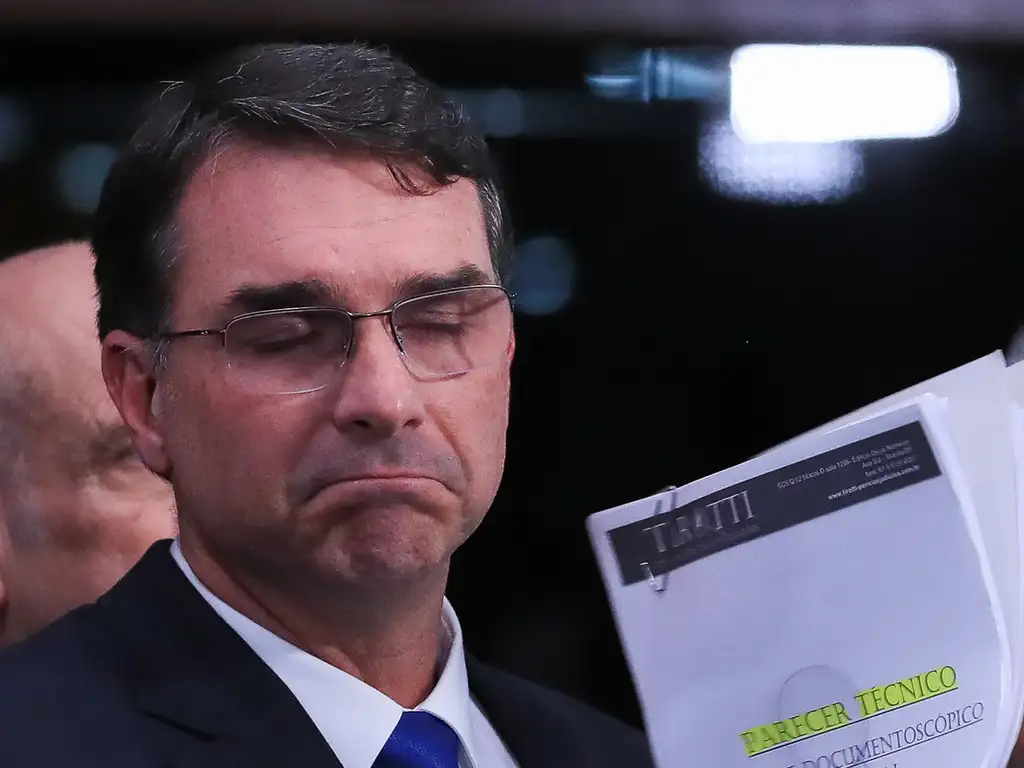
After participating in a hearing promoted by the United States Trade Representative (USTR), senator Flávio Bolsonaro (PL-RJ) stated this Tuesday (7) that he “defended Brazil against tariffs and against Lula” and accused the federal government of not acting to prevent the adoption of trade measures by the United States.
The statement, however, contrasts with the actions of Palácio do Planalto and Itamaraty, which have maintained contact with the Trump administration and publicly criticized the imposition of tariffs. Members of the Executive still attribute part of the escalation of the diplomatic and commercial crisis between the two countries to the actions of the Bolsonaro family itself.
In a video released after the hearing, Flávio stated that President Luiz Inácio Lula da Silva would be the only one interested in imposing tariffs on Brazil, “thinking that this could have some electoral benefit for him”. The speech diverges from the public stance of the senator himself, pre-candidate for the presidency of Bolsonarism, who, a few days ago, had asked for the tariffs to be postponed until after the elections.
The senator also criticized the absence of Brazilian government representatives at the hearing and declared that he carried out a “technical, but also political” defense of national interests.
Behind the scenes of the government, however, the reading is diametrically opposite. According to the president’s interlocutors interviewed by the Brazil in factthe Bolsonaro family’s strategy ends up strengthening the narrative among members of the Trump administration that Brazil would represent a risk to the security and strategic interests of the United States, creating an environment favorable to the adoption of tough trade measures.
Thus, the Executive’s assessment is that the commercial crisis was worsened by the international actions of the extreme right, especially the articulations carried out in the United States by the family and allies of former president Jair Bolsonaro.
How the Brazil in fact showed in previous reports, based on reports from the president’s assistants, Planalto’s assessment is that licensed federal deputy Eduardo Bolsonaro and other members of the Bolsonaro family acted to internationalize the Brazilian political dispute by seeking support from allies of the American president to put pressure on the Lula government. Among the initiatives sought by the extreme right and cited by members of the Executive are, in addition to tariffs, requests for the criminal factions PCC and Comando Vermelho to be classified as terrorist organizations by the United States.
Government says defense is up to official channels
Lula’s aides also reject criticism about the government’s absence at the USTR hearing. According to members of the presidential team, commercial negotiations between Brazil and the United States are conducted through diplomatic and institutional channels, mainly by Itamaraty and the ministries responsible for economic policy and foreign trade, and not by opposition parliamentarians with political agendas abroad.
In the government, the assessment is that Flávio Bolsonaro’s strategy seeks to detach his family from the commercial crisis and, at the same time, transfer responsibility for possible surcharges to Planalto.
Lula’s interlocutors, however, maintain that Bolsonaro’s actions in the United States only weaken the Brazilian position in the negotiations and feed a discourse used by sectors of American politics to justify pressure on the country.
Source: www.brasildefato.com.br