The Communist Party of China (CCP) turns 105 years old this Wednesday (1st). The party was founded in 1921, in Shanghai, amid a historic process of transformation in the country that took China from a nation marked by political instability and structural poverty to one of the main global economies of the 21st century.
According to a report from the Organization Department of the Central Committee, the party had, at the end of 2025, 101.29 million members, after an increase of 1.01 million members in one year. The organization also reached 5.43 million base structures, distributed across different administrative levels, public institutions and social sectors.
The party’s internal composition reflects its broad insertion in Chinese society. Women represent around 31.5% of total members, while members from ethnic minorities make up 7.8%, equivalent to approximately 7.88 million people. Furthermore, more than 12 million members are 30 years old or younger, indicating a continuous process of generational renewal within the party structure.
The CCP emerged in a context of strong political and social instability and, throughout the 20th century, played a central role in the unification of the country and in the construction of the institutions of the People’s Republic of China, proclaimed in 1949.
In recent decades, especially since the economic reforms initiated in the late 1970s, China has undergone profound economic and social transformations, with strong industrialization, accelerated urbanization and a significant reduction in poverty. This process was directly associated with the long-term planning capacity and institutional coordination of the Chinese State under the leadership of the Party.
Xi Jinping leads ceremony
General Secretary of the Communist Party of China and President Xi Jinping led the central 105th anniversary ceremony in Beijing. The event was held in the Great Hall of the People, the main venue for political and institutional events in the country, where the party concentrates its main national ceremonies and leadership meetings.
The celebrations take place a few years after the Party’s centenary, in 2021, when the Chinese government reinforced the historical narrative of continuity between the founding in 1921, the 1949 Revolution and the current period of institutional consolidation under the leadership of Xi Jinping.
In this context, the CCP maintains its position as the central nucleus of the Chinese political system, articulating state decisions, economic planning and long-term strategic direction, more than a century after its founding in Shanghai.
Resistance, liberation, reconstruction and ascension
Inspired by Marxism and the revolutionary transformations of the early 20th century, the Communist Party of China began its organization among urban workers and peasants, in opposition to the nationalist Kuomintang government.
In the early years, the CCP faced strong repression, which led to the consolidation of its rural strategy and the construction of rural bases. This process was accompanied by the formulation of the idea of “siege of cities from the countryside”, which would become one of the central strategies of the Chinese revolution.
Between 1934 and 1935, during the Long March, communist forces traveled thousands of kilometers in strategic retreat to escape the Kuomintang’s military siege. The episode consolidated Mao Zedong’s leadership within the party and reinforced the ideological and military cohesion of the movement, being later incorporated into the official narrative as a symbol of resistance and revolutionary discipline.
From 1937, with the Japanese invasion and the beginning of the Second Sino-Japanese War, the CCP and the Kuomintang formed an Anti-Japanese United Front, a tactical alliance to confront the external enemy. During this period, the CCP significantly expanded its influence in rural areas, strengthening the so-called “mass line”, a concept that defends the direct link between the party and the needs of the people.
During the war of resistance (1937–1945), the CCP consolidated bases in regions of northern and central China, expanding its military and organizational capacity. This process was decisive in strengthening the party in the post-war period and increasing its social legitimacy.
With the end of World War II, internal conflict with the Kuomintang resumed, resulting in the Chinese civil war. The communist victory in 1949 led to the proclamation of the People’s Republic of China, a milestone that inaugurated the construction phase of the new State under the leadership of the CCP.
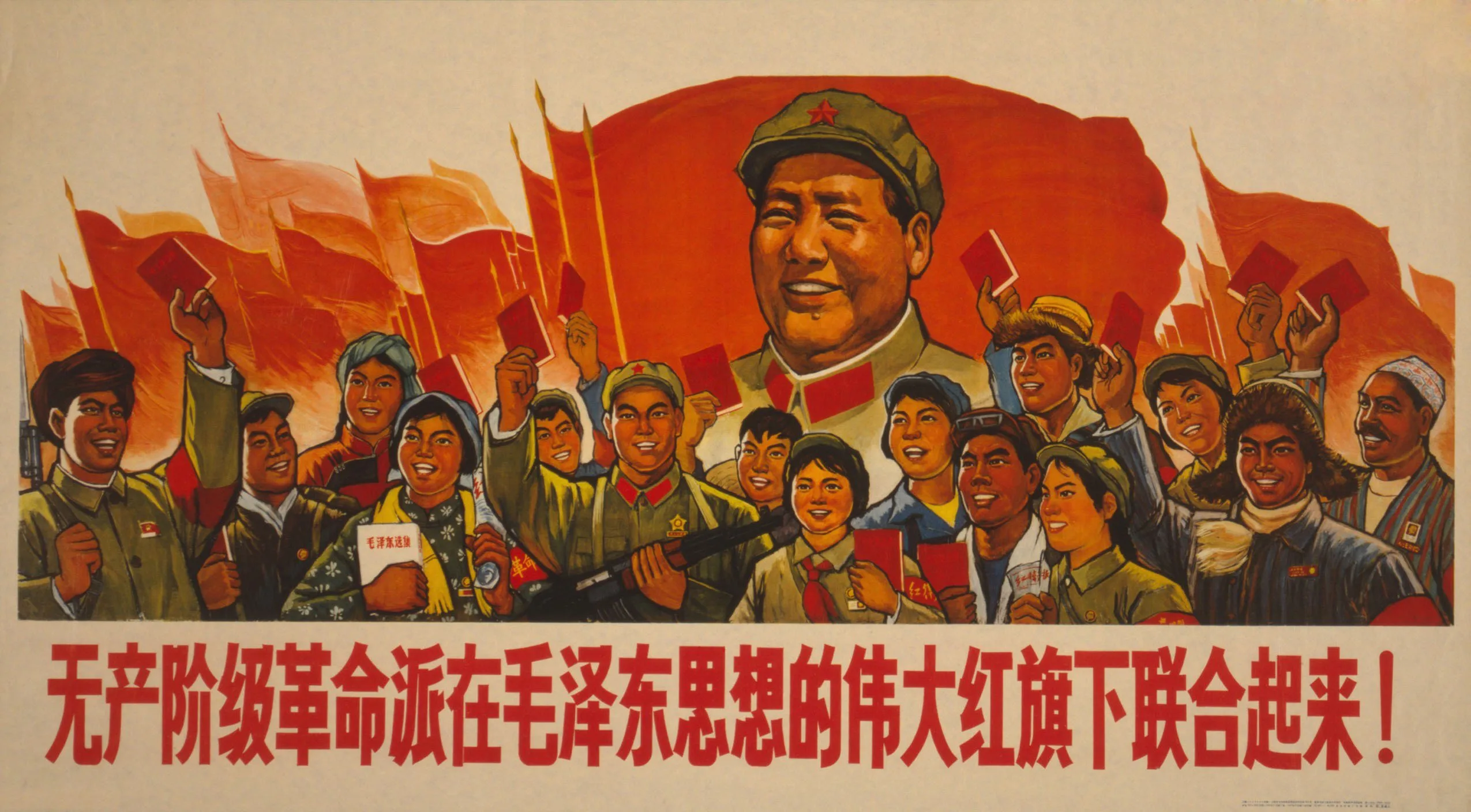
During Mao Zedong’s period, social and economic transformation campaigns were implemented, such as agricultural collectivization and accelerated industrialization, within the concept of “socialist construction line”. This period also consolidated the party’s role as the central nucleus of the State.
From the end of the 1970s, with Deng Xiaoping, China began the process of “Reform and Opening” (gaige kaifang), introducing market mechanisms within a state planning structure. This phase gave rise to the concept of “socialism with Chinese characteristics”, which combines economic development with the political centrality of the party.
In recent decades, the CCP has begun to emphasize the idea of a “New Era of Socialism with Chinese Characteristics”, especially under the leadership of Xi Jinping, reinforcing the party’s centrality in governance, institutional stability and long-term development strategy.
Source: www.brasildefato.com.br