Published 12/18/2025 15:38 | Edited 12/18/2025 16:01
China’s Ministry of National Defense has raised its tone against the recent US arms sale to Taiwan, valued at US$330 million. In a statement on Monday (17), shared by the Xinhua agency and the People’s DailyBeijing classified the operation as direct interference in internal affairs and an affront to national sovereignty.
Even after recognizing Beijing as China’s sole representative in 1979, Washington remains Taiwan’s main arms supplier, contradicting commitments made and increasing tensions amid commercial and strategic disputes. For Beijing, the use of Taiwan to contain China pushes the region down a “wrong and dangerous” path.
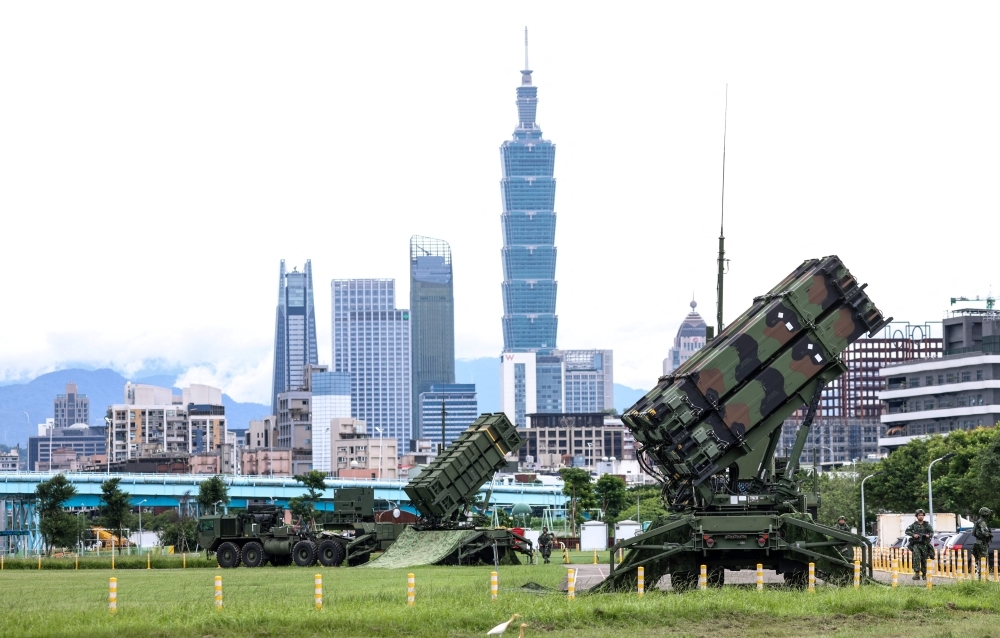
The Trump administration also announced this Wednesday (17) the sale of US$11.1 billion in weapons to Taiwan, the largest US arms package ever destined for the island. The proposed arms sale covers eight items, including HIMARS rocket systems, howitzers, Javelin anti-tank missiles, Altius attack munition drones and parts for other equipment, Taiwan’s Defense Ministry said in a statement. The package needs to be approved by the US Congress, where Taiwan has broad bipartisan support.
Driven by the United States, Taiwan has been working to transform its military so that it is capable of waging “asymmetric warfare” using mobile weapons that are smaller and generally cheaper but still effective in targeted attacks, such as drones.
Taiwan President Lai Ching-te last month announced a supplementary defense budget of US$40 billion, which will run from 2026 to 2033, stating that “there is no room for concessions in matters of national security”.
One China: Solemn protests and warning of consequences
Zhang reported that China has lodged “solemn protests” with Washington and warned that any strategy of military support for separatist movements will have negative consequences. “We urge the American side to immediately stop its wrong actions of arming Taiwan,” he declared.
Responding to the press, spokesperson Zhang Xiaogang stated that the transaction “seriously violates the one-China principle and the three China-US joint communiqués”, in addition to harming the country’s sovereignty and security interests. According to him, the initiative sends “a seriously wrong signal” to the forces that defend the so-called “Taiwan independence”.
The Ministry of Foreign Affairs reiterated the condemnation. Spokeswoman Mao Ning said the arms sales flagrantly violate the joint communiqués, especially that of August 17, undermine peace and stability in the Taiwan Strait and encourage separatist forces. Beijing, she said, is “strongly dissatisfied” and “firmly opposed,” and will act to defend its sovereignty.
Sanctions on US companies
In response to the recurring sales, China announced sanctions on companies in the US military-industrial complex, such as Lockheed Martin and Raytheon, for previous supplies to Taiwan. For spokesman Wang Wenbin, the measure seeks to safeguard Chinese sovereignty and contain provocations that increase regional risks.
The Taiwan Strait is vital for international trade routes and semiconductor production, a sector in which Taiwan is strategic. Any increase in tension generates volatility in the markets, increases logistics and insurance costs and creates uncertainty for long-term investments.
Arms sales benefit large North American defense companies and transform geopolitical tension into recurring business. For China, this confirms the reading that the US uses regional conflicts as an economic and strategic instrument.
Chinese sanctions against US companies indicate growing risk for Western companies operating in sensitive areas; tendency towards fragmentation of international trade, with more closed economic blocs. This accelerates the so-called “selective deglobalization”, with production chains reorganized according to political criteria.
Taiwan is not Ukraine
Chinese diplomacy also rejected comparisons with the conflict in Eastern Europe. Hua Chunying was adamant: “Taiwan is not Ukraine; it has always been an inalienable part of China, an indisputable historical and legal fact.” President Xi Jinping has already warned that supporting Taipei’s independence is “playing with fire”.
The Chinese reaction, added to Russia’s explicit support for Beijing’s position, accelerates the formation of a more cohesive Sino-Russian bloc and the structural distance between China and the USA, which is no longer just economic and becomes openly strategic-military. This pushes the international system towards a logic of bipolarization, with countries pressured to align.
Countries in Asia, Europe and Latin America begin to face contradictory pressures to support the position of the USA or China; and risks of diplomatic wear and tear when maintaining balanced relations with both. The dispute reduces the space for neutrality and increases the diplomatic cost of “non-alignment”.
After a summit between Xi Jinping and Vladimir Putin, China and Russia published a joint note criticizing the US stance and reaffirming that Taiwan is an inalienable part of China. The message is clear: regional stability requires respect for the one-China principle and an immediate end to arms sales and military contacts with the island.
On the other hand, Taiwan becomes the centerpiece of the US-China dispute. The island becomes an instrument of Washington’s containment of China and a symbol of sovereignty and territorial integrity for Beijing. The more Taiwan is armed, the more the issue stops being regional and starts having a global impact.
Source: vermelho.org.br