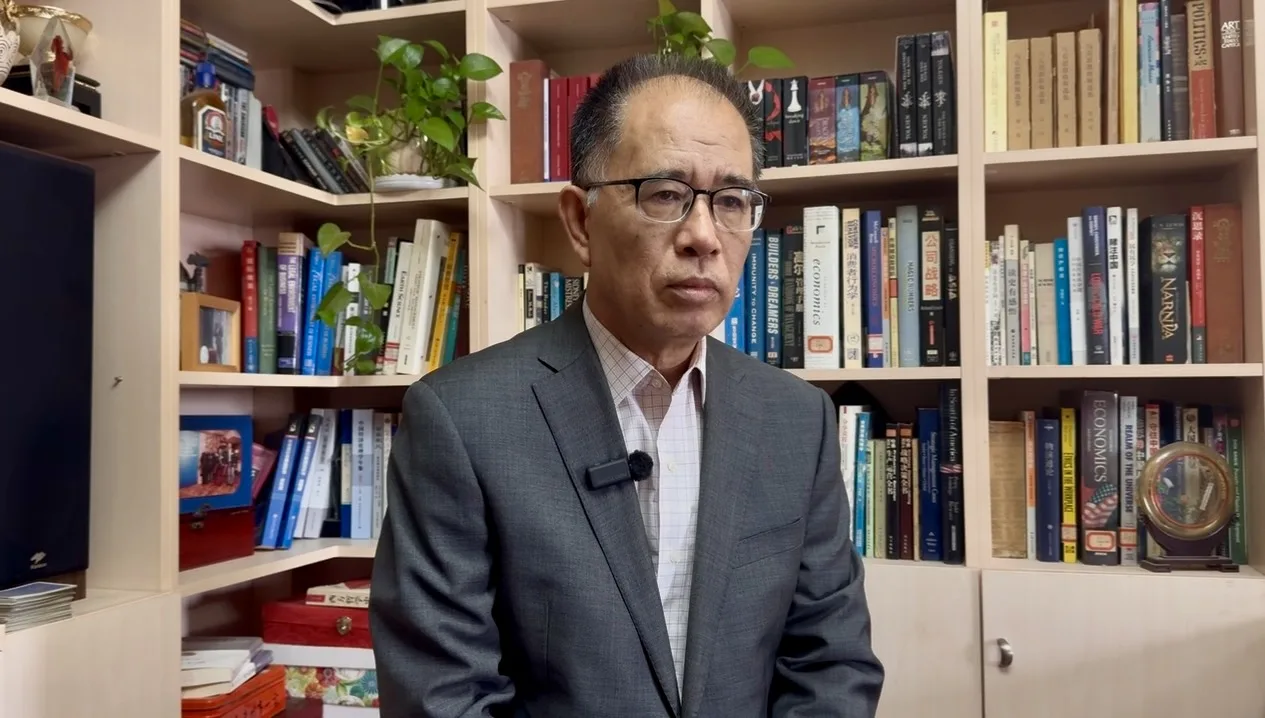
The meeting between Chinese President Xi Jinping and United States President Donald Trump, last Thursday (24), in Washington, produced new agreements and dialogue mechanisms, but did not eliminate structural differences between the two largest economies in the world. For Liu Baocheng, professor at the University of International Business and Economics of China (UIBE), the main challenge now is to transform the commitments reached into a more predictable and stable relationship.
“Cooperation must be the main element. Competition can be healthy for both sides, but it needs to be properly protected against possible confrontation,” Liu said.
The two sides reaffirmed their commitment to building a relationship “constructive of strategic stability” and reached new understandings in the areas of trade, combating drugs, artificial intelligence and military communication. They also reaffirmed their mutual support for APEC and the G20, in addition to discussing issues such as Iran, Ukraine and the Korean Peninsula.
In the commercial area, China and the United States supported the results of consultations between their economic and trade teams, including a reciprocal tariff reduction arrangement of US$30 billion. The two countries also continued work on rare earths and critical minerals and the functioning of bilateral trade and investment mechanisms.
Stability, trade and trust
According to Liu, the negotiations that led to the Washington meeting intensified after the announcement of Trump’s tariffs in April 2025. Since then, five rounds of talks have been held in different parts of the world, expanding consensus around results considered more realistic and viable.
Among the objectives were to consolidate tariff reductions, expand access to markets and ensure greater stability in the supply of rare earths and critical minerals. For the professor, however, the central challenge goes beyond commercial measures. “Fundamentally, it’s about rebuilding some of the trust that was missing,” he said.
For Liu, companies are able to absorb certain costs caused by tariffs and other restrictions, but they have much more difficulty in the face of unpredictability. “[As empresas] What they fear is volatility and frequent policy reversals”, explains
This unpredictability, according to him, affects business decisions, investments, global production chains, finance, monetary policy, academic and cultural exchanges, visas and the movement of people. Therefore, it considers it necessary to establish rules that allow disagreements to be managed before they become new retaliatory measures.
“Stability means transparent rules, with differences put on the table for dialogue and negotiation.”
The professor defends the creation of permanent mechanisms that replace emergency responses with regular negotiation channels. “It is very important to know whether the two sides can actually establish an institutional framework to avoid emergency combat — from restrictions to retaliation — and instead create preventative measures for regular dialogue, with a fixed agenda.” Liu sees the new Trade and Investment Councils as possible instruments for this task.
According to him, previous economic dialogue mechanisms between the two countries have lost strength in recent years. “These mechanisms used to be more effective, but they have really gone cold. Now, there is a need for a new set of institutional safeguards.”
For the professor, both countries have legitimate concerns related to national security. The problem, according to him, arises when these concerns exceed certain limits and end up restricting the gains that could result from cooperation.
Liu also draws attention to the effects of the bilateral relationship on the rest of the world. “Global issues require understanding between the two superpowers to prevent the escalation of regional situations and geopolitical confrontations.”
In this scenario, Liu highlights two words to define what he considers necessary for the bilateral relationship: stability and continuity. He recalls that, during Trump’s visit to China, in May 2026, the two presidents had already agreed to build a relationship of strategic stability.
“Continued strategic engagement benefits U.S. farmers, businesses and consumers.”
For the professor, sudden changes in tariffs and other restrictions can affect the economy as a whole. Maintaining dialogue would therefore require political willingness on both sides and a long-term vision.
Competition and artificial intelligence
Artificial intelligence occupied an important part of discussions between Xi and Trump. The two countries agreed to establish a dialogue on AI and a bilateral communication channel for technology-related incidents.
For Liu, technology can profoundly transform the economy and society, but it also presents risks that require international cooperation.
“AI is truly a game-changer and is here to open up a series of transformative perspectives for every person on this planet,” he said. “But there are concerns about whether AI will be misused.”
According to the professor, the United States and China occupy “a leadership position, although they have different advantages on the technological frontier”.
In Liu’s assessment, the United States has advantages in basic scientific research and cutting-edge advances, while China has the capacity to quickly adopt and apply innovations on a large scale. This complementarity, he says, can open up space for cooperation.
“There is therefore a good reason for the two sides to work together, combining their respective advantages.”
Liu considers that technological competition can also produce positive effects when it does not evolve into confrontation. “Competing can drive technological advancement and efficiency.”
In the field of AI, the professor defends rules to prevent destructive military uses and forms of economic and technological concentration. He warns that the control of extremely powerful tools by a small number of countries or groups could increase existing inequalities.
“It’s not just about open source technology. It’s also about building capabilities through assistance and collaboration programs.”
Liu believes that this effort should especially include countries in the Global South. For him, the uneven development of artificial intelligence capabilities could create a new international division, in which few countries would concentrate the most advanced technologies.
“We need to avoid an intelligence gap,” said Liu, referring to the risk of a technological divide between countries with the ability to develop and control advanced AI systems and those that would remain dependent on these technologies. “If only a few nations control such powerful technologies, it will be unfair and could create problems in the future.”
The professor summarizes his concern with a broader idea: “Human civilization needs to be shared by all humanity.”
Trust also appears as an obstacle in technological development. Liu cites existing suspicions on both sides about equipment security and data protection. Chinese electric vehicles and equipment, such as cranes, may be the target of concerns about possible hidden access mechanisms, while US companies operating in China also face questions related to data collection.
For Liu, these episodes show that technological trust needs to be accompanied by transparency and accountability mechanisms, especially as advanced technologies become part of international markets and production chains.
The differences between Washington and Beijing, however, continue to encompass issues that go beyond trade and technology. During the meeting, Xi called on the United States to oppose so-called “Taiwan independence” and treat the issue with caution. The two presidents also discussed the Middle East, Ukraine and the Korean Peninsula.
For Liu, the mechanisms created by the two governments are important precisely because the differences will not disappear. The objective would be to prevent each new conflict from causing an escalation in the bilateral relationship.
“The key is stability and continuity, which can help prevent the relationship from escalating into confrontation.”
The professor hopes that the Washington meeting will be used as a starting point for a relationship capable of managing differences through permanent negotiation channels.
“I hope this meeting lays a foundation stone for navigating complexity, both domestic and global.”
Source: www.brasildefato.com.br