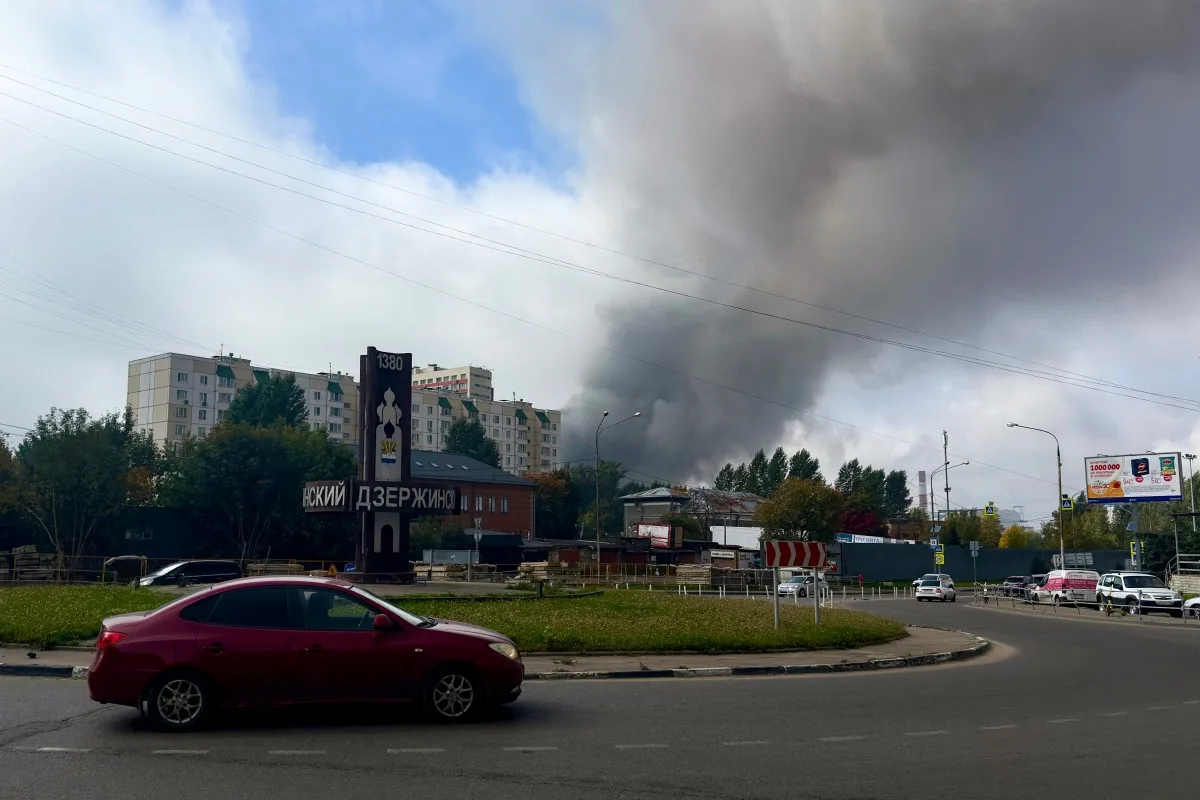
Russian authorities reported, this Sunday (20), that they had contained the largest drone attack ever recorded against Moscow. The action took place between Saturday (19) and Sunday (20). The Russian government claims this is an attempt to disrupt the parliamentary elections, which are expected to strengthen the Kremlin’s grip on power after four and a half years of war with Ukraine.
Sergei Sobyanin, mayor of the capital Moscow, reported that more than 1,600 drones were intercepted by Russian defenses “on all fronts”, of which 450 were intercepted when approaching Moscow. A refinery and residential areas were hit, causing fires. At least two people died and 20 were injured, according to Russian authorities.
In Ukraine, a Russian attack killed four people in the Kiev region, according to local authorities. The attack occurred on Saturday and affected 31 properties. Air strikes also hit railway infrastructure in central Ukraine this Sunday.
Ukrainian President Volodimir Zelensky said the Kiev attacks “had a very important impact on the Moscow region.” Russian President Vladimir Putin called on the population to consider the vote as a show of support for Russian troops.
Elections
In this Sunday’s parliamentary elections, 450 seats in the State Duma, the lower house of Parliament, will be renewed. Regional elections are also held in different parts of the country.
Voting closes today at 9pm local time (3pm Brasília time). The first results should be announced shortly afterwards. In addition to Vladimir Putin’s United Russia party, the Communist Party, the nationalist LDPR, the conservative Just Russia and the liberal Gente Nova are contesting the elections.
Cyberattacks
The Central Election Commission of Russia reported, this Sunday (20), the occurrence of more than a thousand waves of distributed denial of service (DDoS) attacks against the Russian electoral infrastructure in recent days. According to Russian news agencies, Ella Pamfilova, president of the commission, did not appoint a person responsible.
She said the attacks appear to have been carried out by “highly professional and well-coordinated groups using artificial intelligence tools.” DDoS attacks consist of overloading a system with internet traffic, making it unable to function normally.
* With information from Opera Mundi and AFP
Source: www.brasildefato.com.br