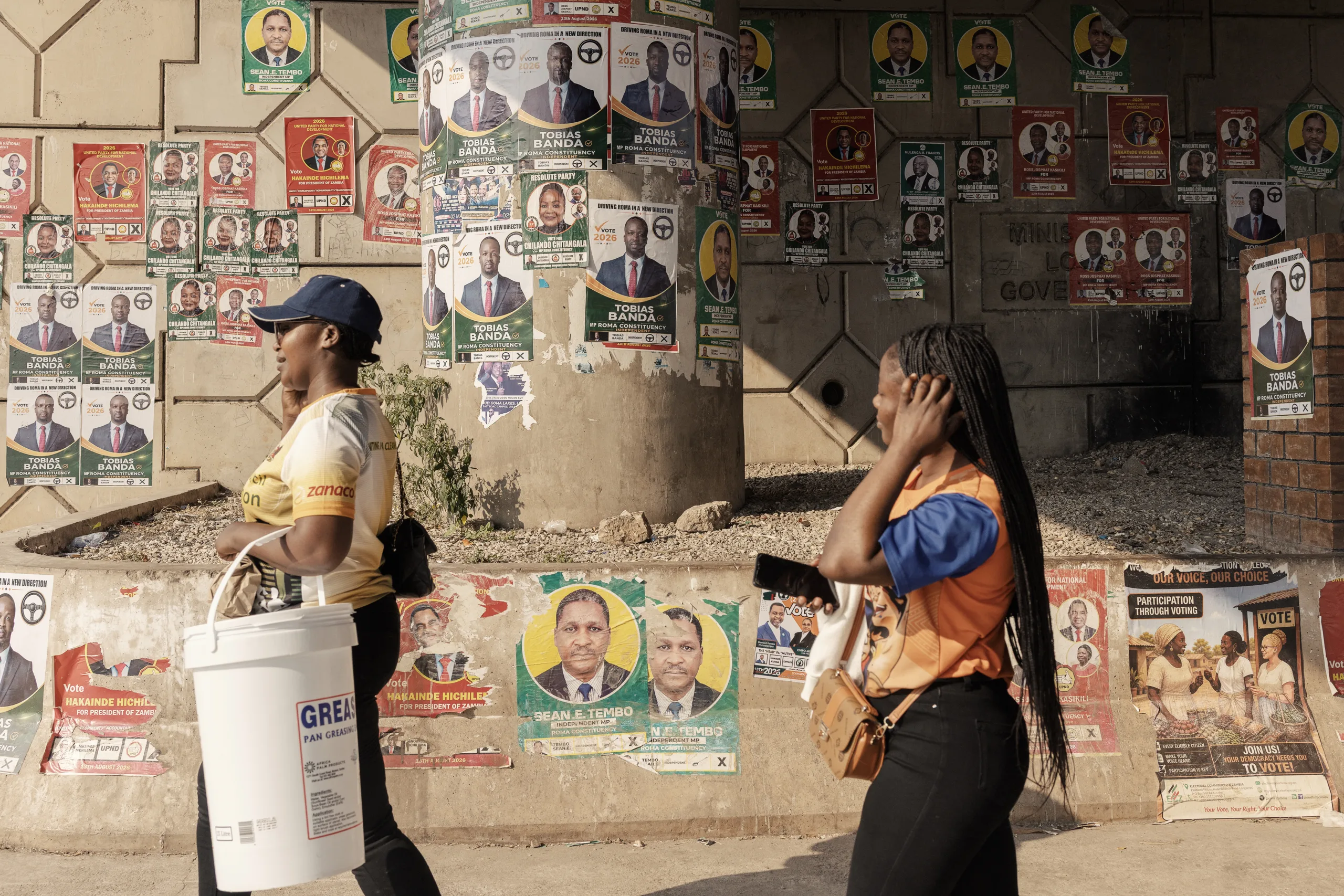
The Socialist Party of Zambia received votes in all regions of the country in the election on August 13th. The result was celebrated by the party as progress after years of criminalization attempts and a legal battle that almost blocked his candidacy. There were 12,094 votes for the party president, journalist Fred M’membe.
The number, although small compared to the 2.9 million votes that re-elected President Hakainde Hichilema, takes on another dimension when interpreted in light of the situation that the party faced in order to reach the polls. Unlike 2021, when voting was concentrated in a few strongholds, the Socialist Party has now reached voters in ten provinces, including northern Zambia, known for its conservative electoral profile.
M’membe arrived in the dispute after a succession of processes. In March of this year, just a few months before the election, he was arrested under the Cybercrime Law, sanctioned in 2025, because of statements in a radio interview. In 2023, the journalist had already been detained on charges of espionage, due to an interview given to a documentary about the elections in Zimbabwe. In 2022, M’membe reported a plan by security forces to kidnap him.
The candidacy was only secured on June 18, when the Constitutional Court rejected a petition seeking to bar M’membe and her running mate, Dolika Banda, on the grounds that she did not have the secondary education certificate required by the Constitution. The court found that the plaintiffs did not present sufficient evidence.
The socialist platform placed poverty, unemployment, education, agriculture and economic sovereignty at the center of the debate.
The legend’s reading is that a left-wing candidacy, even with a low chance of coming to power, was able to strengthen militancy, bringing workers together and making visible issues that the country’s institutional policy would tend to leave out.
The performance also took place in a context of high electoral abstention. Turnout was 57.23%, a drop of 13.38% compared to 2021. Of the 8.7 million registered voters, around 3.7 million did not vote.
The election result was announced by the Electoral Commission, confirming the victory of Hichilema, from the UPND, with 60.49% of the valid votes. The main opponent, Brian Mundubile of the NRPUP, obtained 37.37%.
The election in the African country was marked by an unprecedented suspension of counting across the entire territory. The day after the vote, the Electoral Commission interrupted the count for six hours, citing attacks on election officials and the theft of already marked ballots.
Also on August 14, security forces raided a property linked to Mundubile in Lusaka. During the operation, 49-year-old former minister Mototwe Kafwaya was shot and killed. The government presented the action as the dismantling of a supposed militia, detaining eleven people. Mundubile denied the allegations, calling them “total fabrications”.
Meanwhile, international observation missions recorded that the election would have been held in a “context of restricted democratic space”. According to the head of the European Union (EU) mission, McNamara, the dispute would have been fought unevenly, with media coverage “strongly biased” in favor of the government.
Source: www.brasildefato.com.br