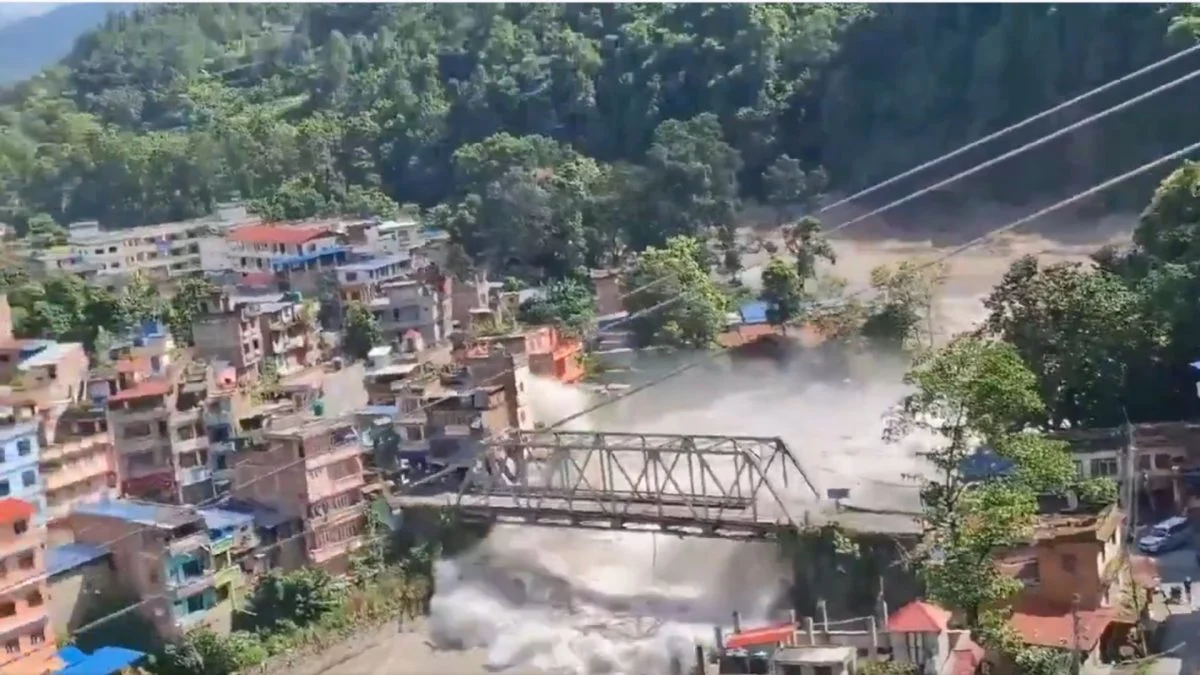
Disaster on the border with China isolates communities and destroys infrastructure; Search for survivors focuses on power plant tunnels
The number of deaths from catastrophic floods on the border between Nepal and China it reached 955 this Monday (31.Aug.2026), according to authorities from both countries. Another 4,471 people remain missing, and rescue teams are working at an emergency pace to locate workers who may be trapped alive in the tunnels of hydroelectric plants in the region.
The floods began on August 26, with a deluge of water, mud and debris triggered by an avalanche and landslide. The tragedy hit especially hard in the remote mountain area that connects the two countries, leaving entire communities isolated and an extensive network of infrastructure destroyed.
Searches in the hydroelectric tunnels
The most urgent points of rescue operations are the tunnels of the hydroelectric plants that line the Trishuli River, in northern Nepal. In total, 933 workers are missing from various projects in the region. It is unclear how many of them were inside underground structures when the floodwaters arrived, nor how many may still be alive.
A team of engineers led by the Nepal Army surveyed the Rasuwagadhi Hydroelectric Project near the Bhote Koshi river. The group reached the innermost section of the tunnel and launched a drone inside. The Prime Minister’s office reported, this Monday (31.Aug.2026), that no signs of human presence were found.
Foreign experts joined local teams to expand the search. According to Nepalese parliamentarian Sumnima Udas, also a former international correspondent, the country continues “in search and rescue mode”. She described the challenge faced by the teams: the terrain in Rasuwa, the epicenter of the tragedy, remains completely isolated, with helicopters having to queue up to enter one by one through the region’s narrow gorges.
David Fisher, head of the delegation of International Federation of Red Cross and Red Crescent Societies in Nepal, said many areas in Nuwakot and Rasuwa districts were inaccessible under the avalanche of debris. “Only this Friday a road was opened, but it is very difficult. It cannot accommodate trucks. It takes 14 hours to travel what would normally take 2, but at least there is an opening,” says Fisher to CNN.
The Nepal government has increased rescue personnel to around 20,000 people. Teams from China, South Korea and India also arrived in the country to assist with operations.
Risks of new disasters
A China Meteorological Administration warned, this Monday (31.Aug.2026), of rain forecast in Gyirong and slippery surfaces on routes leading to the affected port. The temperature can drop to up to 8ºC, with great variation between day and night. Moderate to heavy rains are also expected in southeastern Tibet, which could raise the water level in the barrier lake formed by the initial landslide.
Concern about unstable natural dams extends to the Nepal area. Chinese state broadcaster CCTV reported, citing China’s Ministry of Water Resources, that small areas of stagnant water about 2.5 kilometers downstream of an impact crater formed by glacial collapse are all “in a state of overflow”.
In another nearby river, multiple earthen blocks of different sizes overflow on both sides of the riverbed. “There is a risk that the collapse of the landslide barriers will form a new landslide-dammed lake,” informed the CCTV. China has previously suspended rescue operations due to the risk of a secondary disaster caused by overflowing waters.
Source: https://www.poder360.com.br/poder-internacional/enchentes-matam-955-e-deixam-4-471-desaparecidos-no-nepal/