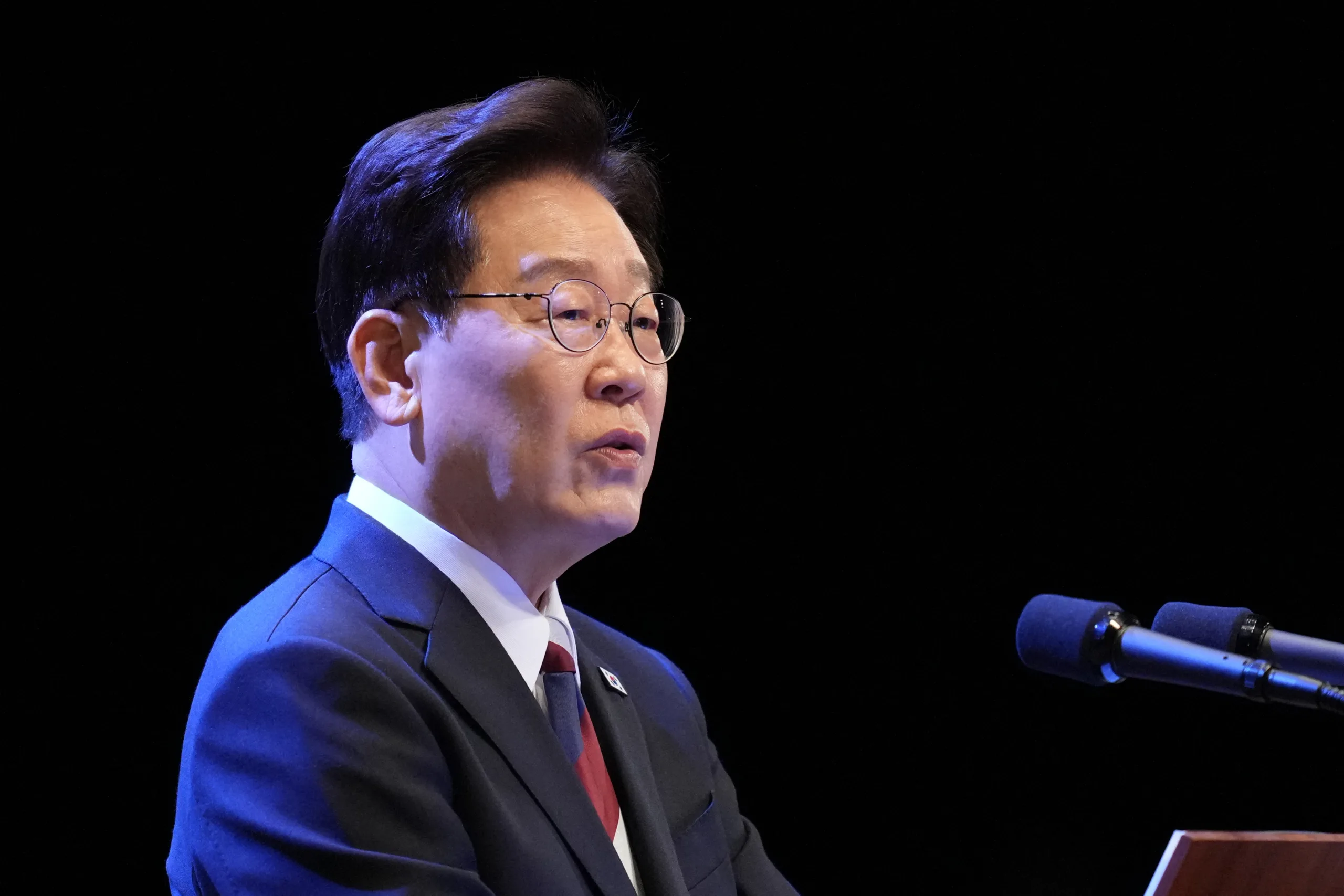
The president of South Korea wants the country to quickly regain operational control of its own armed forces from the United States in the event of war. Lee Jae Myung, who addressed the issue this Tuesday (18), is also willing to promote advances in the acquisition of nuclear submarines.
The local government’s announcement has to do with a decision taken on Sunday (16) by the Donald Trump administration, which confirmed that it had instructed the Pentagon to “substantially reduce” this week’s joint military exercises with the Asian country, known as Ulchi Freedom Shield (UFS).
The presidents’ announcements have to do with a history that has never been resolved between South and North Korea. Since the Korean War, which ended in 1953 with an armistice, the two countries have never signed a formal peace treaty. Which means that, technically, both are still at war.
Due to this context, the United States maintains troops in South Korea. The Asian country has exercised control of its own armed forces in times of peace since 1994, but operational control in times of war — the authority to direct troops in the event of a resumption of fighting — remains with the United States. This structure is led by the commander of the Korea-US Combined Forces Command, a position traditionally held by an American four-star general.
Over the weekend, Trump argued that military exercises are expensive and that their feasibility needs to be reviewed. According to the Republican, North Korea, led by Kim Jong-un, would maintain an excellent relationship with Trump himself. Finally, Trump complains that South Korea has helped little in the effort against Iran.
The financial argument, however, does not weigh on Washington. It is in South Korea that the largest US military base outside of national territory is located, in Pyeongtaek. The structure, known as Camp Humphreys, cost US$10.8 billion, but 90% of the amount was paid by the South Koreans. The agreement is valid until 2030. The complaint about costs had also been used as a justification in 2018, when Trump, in his first term, suspended joint military exercises with South Korea.
At the time, the gesture was interpreted as a diplomatic nod to Kim Jong-un. When asked about the topic last Monday (17), Trump mentioned that he had spoken to the North Korean leader and that Kim had responded to the decision, but did not give further details. “I’m making everything much safer. Kim Jong-un has always treated me with great respect. I understand him, he understands me,” the Republican told reporters.
Although the decision momentarily strains the relationship between Washington and Seoul, it could move in a direction that has long been desired by the South Korean president, whose term ends in 2030. Internally, Lee wants the target to be reestablished for 2028, which could be discussed during a consultative meeting with the US, to be held in October.
The recovery of operational control in times of war should have taken place in 2021, but has been successively postponed. Now, South Korea’s liberal government finds itself close to ideal conditions to achieve recovery. Trump, for his part, applies to South Korea a logic similar to that which he has been applying to NATO countries: freeing the United States from military responsibilities, making support more flexible and transferring the exercise of the defense role to the countries themselves, which find themselves under more pressure to inflate military spending.
The doubt about the future concerns what would be the benefits achieved by the USA in the diplomatic gesture towards Pyongyang, whose military rapprochement with Russia and China is only advancing. Furthermore, encouraging majority control of its own power could lead South Korea to advance the debate on the development of nuclear weapons, which is approved by 80% of the population, according to a survey by the Asan Institute, published in February.
Source: www.brasildefato.com.br