Hundreds of migrants who remained in the enclave after mass crossing report cold and hunger as they wait for a chance to go to Europe
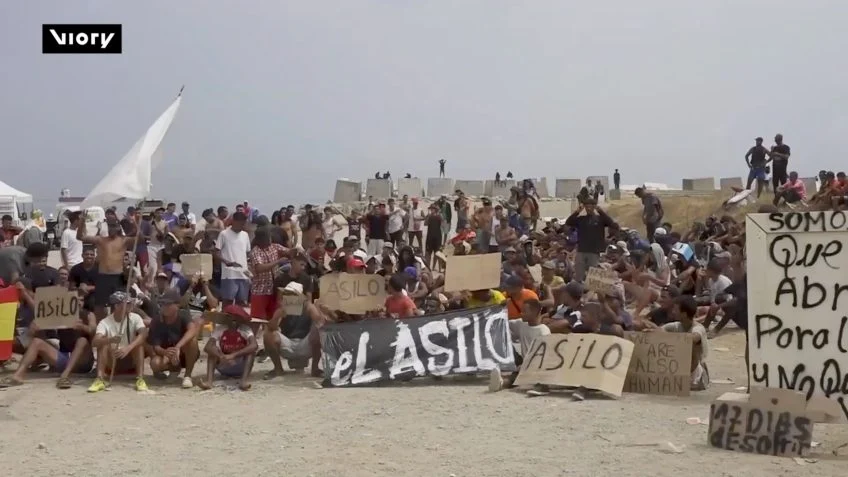
Hundreds of Moroccan immigrants protested on a beach in Ceuta this Sunday (16.Aug.2026), asking for asylum from the Spanish authorities. The protesters are part of a group of 5,000 to 8,000 people who remained in the enclave after the mass crossing two weeks ago.
The protest takes place in a context of extreme pressure on the infrastructure of the small Spanish territory in North Africa. More than 72,000 people crossed the border in a few days, a number close to the total local population of around 80,000 inhabitants.
The vast majority of those who entered returned voluntarily in the days following the crossing. Those who remained live in precarious conditions on El Trampolin beach or on the outskirts of the city, waiting for a chance to make their way to mainland Europe.
During the event, protesters displayed Spanish flags and banners with the words “We don’t want to go back to Morocco” e “We are also human”. watchwords like “We are tired” e “We need a solution” echoed on the beach. On the rocky banks in the background, some immigrants were washing clothes while others were fishing with makeshift bamboo poles.
According to information from Reutersa most Moroccan immigrants Interviewees claimed to have left the country because of poor working conditions, even though they had higher qualifications.
Government response and health alert
Earlier this week, Interior Minister Fernando Grande-Marlaska declared that immigrants who entered irregularly would not be allowed to remain in the enclave, travel to mainland Spain or obtain legal status. The exception would only apply to rare cases of extreme vulnerability.
The head of Ceuta’s medical council, Enrique Roviralta, told radio Zero Wave that the city’s health professionals were exhausted and criticized what he described as a slow response from the central government. Roviralta warned of the emergence of diseases such as infectious diarrhea and scabies, in addition to the increase in injuries related to episodes of violence, such as broken noses and stab wounds.
Health Minister Monica Garcia was in Ceuta on Sunday and rejected the assessment that local services had collapsed, but acknowledged that they were under pressure. She classified the risk of epidemic outbreaks as moderate for immigrants and low for residents. “Associating immigration with diseases is unfair and xenophobic”the minister told reporters.
Source: https://www.poder360.com.br/poder-internacional/imigrantes-marroquinos-protestam-em-ceuta-e-pedem-asilo-a-espanha/