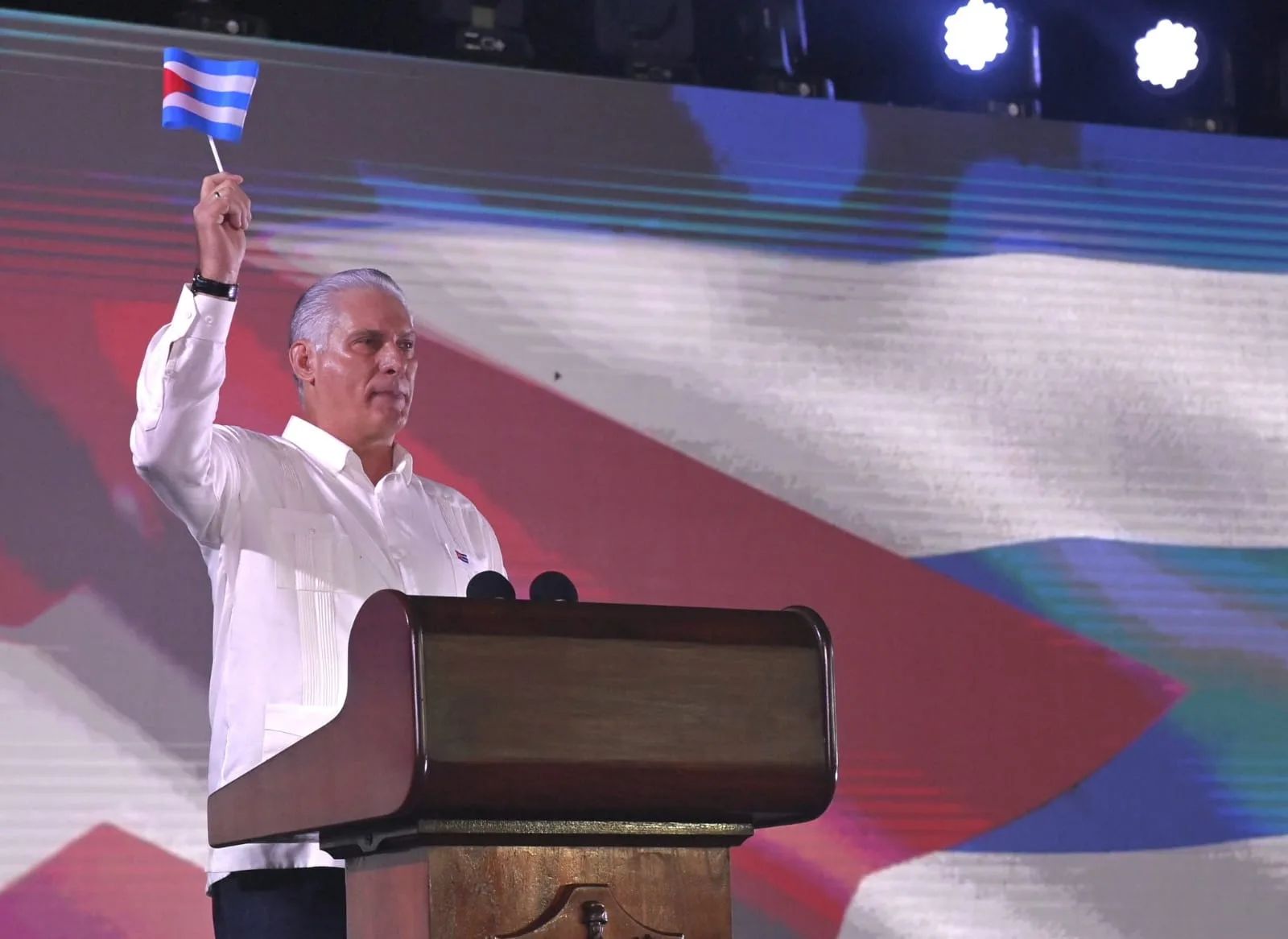
Cuban President Miguel Díaz-Canel began, this Sunday morning (26), the celebrations of Cuban Rebellion Day in Revolution Square, in the city of Pinar del Río, about 170 kilometers from the capital, Havana. In a speech reproduced on the official account of the Presidency of Cuba on the social network XDíaz-Canel celebrated the date, which marks the beginning of the Cuban Revolution with the assault on the Moncada Barracks, and declared that the country faces a challenge similar to that of 73 years ago in its relationship with the United States.
“The current generations act against the walls of a genocidal policy that aims to suffocate the entire population and take over the country. Cuba is not a threat to either the United States or any other country. We are a noble people, who save lives where others destroy them, who send doctors and teachers where others send bombs”, declared the president.
On Saturday (25), Díaz-Canel met with a delegation of representatives from different countries who came to show solidarity on the Caribbean island. In his speech, the president highlighted the impacts of the energy siege on public health. According to him, in the last six months, only one ship with fuel arrived in the country. The impact was immediate and one of Cuba’s main social indicators, the infant mortality rate, has already doubled. According to 2023 data from the World Health Organization (WHO), the country recorded four deaths for every thousand live births, a rate considered low.
Cuban Rebellion Day
The night of July 26 was chosen for the capture of the Moncada Barracks as it coincided with Carnival, which would facilitate the movement of combatants without arousing suspicion. “Fidel’s idea was to start an armed popular insurrection. And, to do so, he had to take over a barracks with weapons to give them to the people”, he told the Brazil in fact the professor at the University of the East, in Cuba, Frank Josué Solar, in an interview carried out in 2023.
The articulations against the Cuban government, then aligned with the United States, had already been built for some years and gained strength after the military coup led by Fulgêncio Batista, who had been president of the country between 1940 and 1944 and returned to power in 1952, after losing the elections. The Rebel Day action was not successful. Fidel Castro was imprisoned for two years and released after popular pressure. The victory of the Cuban Revolution would come years later, on January 1, 1959.
Source: www.brasildefato.com.br