Lula’s government called the new tariff announced by Trump a “regrettable milestone”; standard allows raising tariffs, adopting quotas or suspending concessions
The Brazilian government informed in the early hours of this Thursday (July 16, 2026) that it intends to use the Economic Reciprocity Law against the new tariff announced by the administration of the President of the United States, Donald Trump (Republican Party), against Brazil.
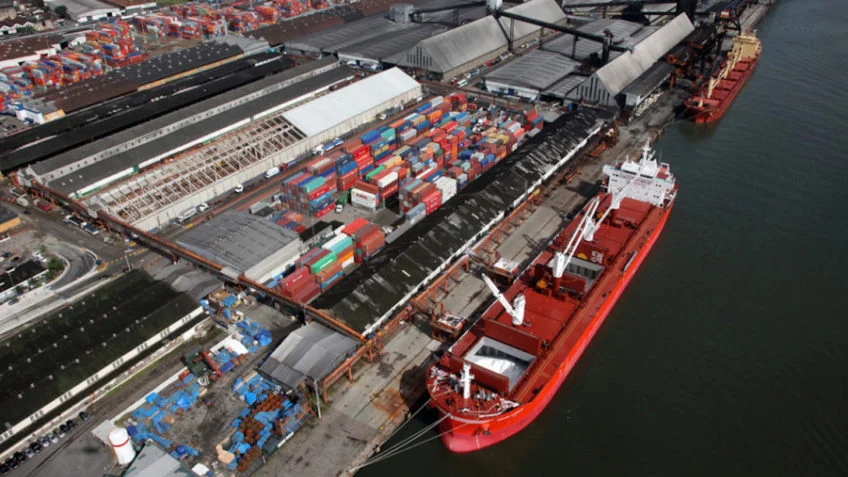
The USTR (Office of the US Trade Representative) confirmed on Wednesday night (Jul 15) that it will apply an additional tariff of 25% on Brazilian products exported to the country. The measure was justified by alleging practices such as favoring Pix, access to the ethanol market and problems related to corruption and deforestation. It comes into force on July 22nd.
In a statement, the government of President Luiz Inácio Lula da Silva (PT) called the decision a “pitiful milestone”. He also declared that he will begin the procedures to activate the Reciprocity Law, approved in April 2025 by Congress, with the WTO (World Trade Organization).
In July last year, Lula signed the decree that regulated the Reciprocity Law, in response to the 50% tariff on Brazilian products imposed by Trump at the time. Here is the full decree (PDF – 131 kB).
WHAT IS THE LAW OF RECIPROCITY
The Law of Reciprocity “establishes criteria for the suspension of commercial concessions, investments and obligations relating to intellectual property rights in response to unilateral measures adopted by a country or economic bloc that negatively impact Brazilian international competitiveness”.
The text determines that countermeasures must be proportional to the damage, that is, the government cannot exaggerate its response.
According to the text, the law can be applied in 3 circumstances:
- when countries or economic blocs “interfere in the legitimate and sovereign decisions of Brazil, trying to force the change, adoption or cancellation of national acts or practices through threats, or the imposition of commercial, financial or investment measures”;
- “violate commercial agreements signed with Brazil, or deny, annul or harm the benefits of these agreements”;
- “apply unilateral environmental requirements that are more stringent than the norms, standards and parameters already adopted by Brazil”.
The decree establishes 2 paths for applying reciprocity:
- ordinary – procedure for non-urgent situations, which will be forwarded to Camex (Chamber of Foreign Trade), linked to the Ministry of Social Security and the Ministry of Development, Industry and Commerce. These cases will involve public consultations;
- express – procedure for cases in which the application of measures is more urgent, to be evaluated by the interministerial committee, composed of members of the Ministries of Industry and Commerce; of the Treasury; of Foreign Relations; and the Civil House.
Brazil can adopt measures such as:
- raise import tariffs on goods and services from the country that adopted the measure considered harmful;
- restrict imports of certain products or services, through quotas, limitations or other commercial barriers;
- suspend commercial concessions provided for in international agreements, ceasing to grant certain tariff benefits or commercial preferences;
- suspend obligations related to intellectual propertyas part of the obligations assumed by Brazil in international agreements;
- suspend other obligations set out in commercial agreementsas long as the measure is compatible with the law and the proportionality criteria are observed.
Also according to the decree, the country targeted by reciprocal measures must be communicated through direct diplomatic channels before they take place, in order to avoid retaliation and to maintain dialogue.
Before the official announcement of the new tariff, the Minister of Finance, Dario Durigan, stated on Tuesday (July 14) that the Brazilian government could adopt reciprocity if the USA confirmed the imposition.
The minister also did not rule out issuing a provisional measure to reduce the impacts of tariffs on Brazilian companies and preserve economic activity. He stated that the “baseline” is to mitigate the effects of what he classified as an attack on the Brazilian economy.
Durigan also said that the government intends to work with a larger exception list and that it will act with “very cautious” to assess the real impact that the tariffs will have on businesspeople before formalizing the MP.
Source: https://www.poder360.com.br/poder-governo/o-que-e-a-lei-da-reciprocidade-que-brasil-disse-que-usara-contra-eua/