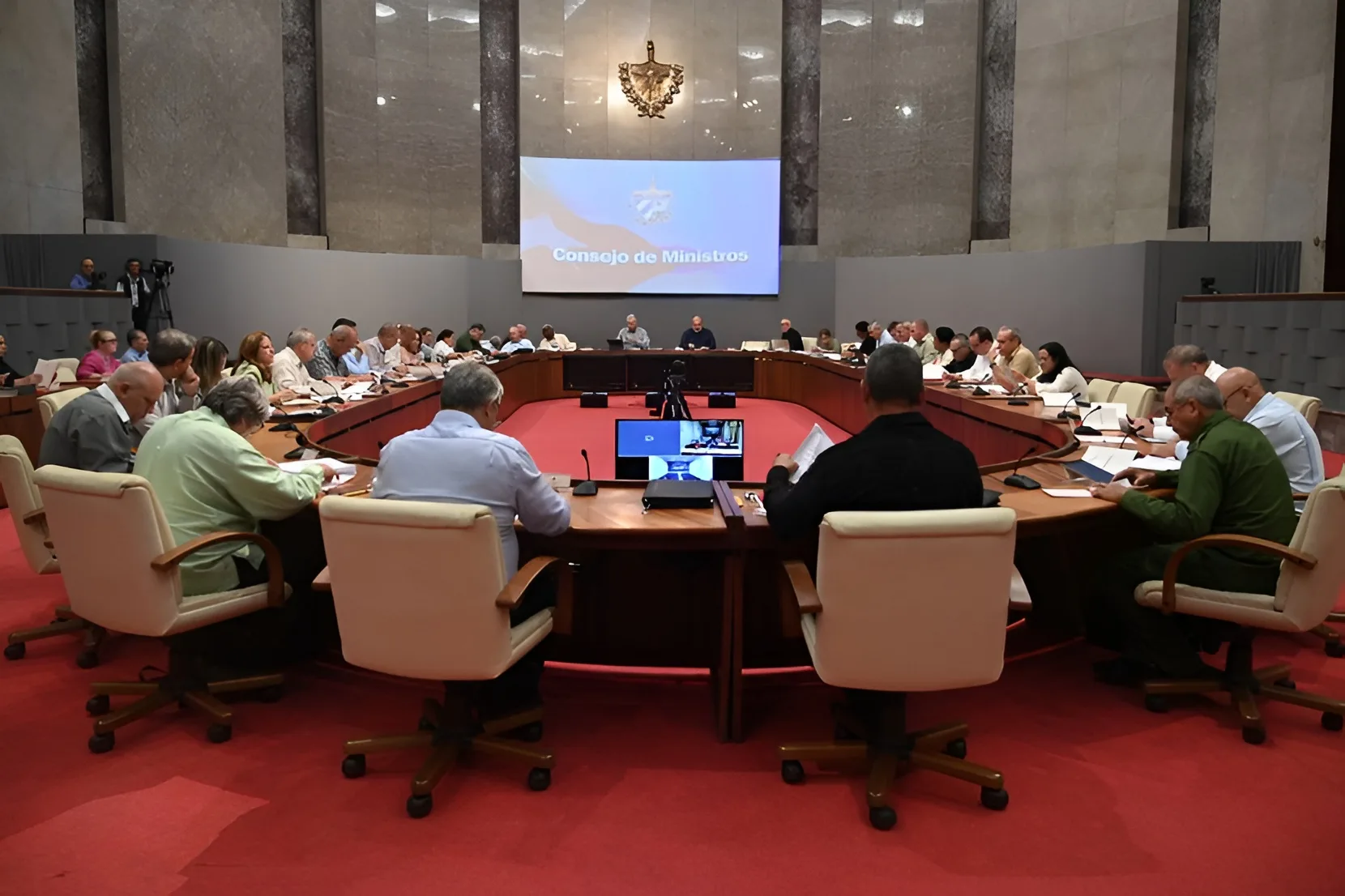
This week, during the last meeting of the Council of Ministers, the president of Cuba, Miguel Díaz-Canel, reinforced the situation in which the country finds itself. “We are faced with a complex dilemma that we need to resolve: how to continue the process of socialist construction on a small Caribbean island subjected to the longest blockade in the history of humanity by the most powerful power in the world.”
The president maintained that Cuba is going through a “multidimensional war” and stated that the recently adopted measures respond to “what needs to be done for the generations that are defending the Revolution”.
During the meeting, the roadmap for implementing the 176 recently approved measures was defined. It is a package of legislative initiatives that substantially changes the country’s social and economic structure.
Amid the growing difficulties faced by the island due to the impact of the crisis, Díaz-Canel insisted that the population’s participation will be decisive for the success of the transformations. “We will not be able to implement the transformations well if the population does not participate”, he warned.
Furthermore, he urged authorities and officials to explain each decision and listen to new proposals whenever necessary. “We don’t have a closed discussion; perhaps someone will propose something better than what we have been able to build so far, and where there is no understanding, we need to explain why and listen.”
The announcement of the measures — which opens the doors to private capital in an unprecedented way — generated a broad debate inside and outside the island. The president himself had already recognized, in previous statements, that these were reforms that did not have an “absolute consensus”.
He also reiterated the need for the process to develop with clear rules and control mechanisms. “The rules for everything we do need to be clear; there must be transparency so that we can control, from a popular and institutional point of view, everything we do”, he said.
Finally, he once again defended that the reforms aim to “free the productive forces” to generate wealth and distribute it “with social justice”.
“It is necessary to explain how each transformation contributes to socialist construction; how it will contribute to economic growth and social development; how it will allow for the expansion of wealth that will be distributed with social justice and improve the situation of those who are most vulnerable; and how each transformation will further strengthen respect for the rights of all Cuban women and all Cubans in our society.”
Source: www.brasildefato.com.br