Senator will participate in hearing on 25% tariff; Itamaraty says the measure tries to interfere in Justice
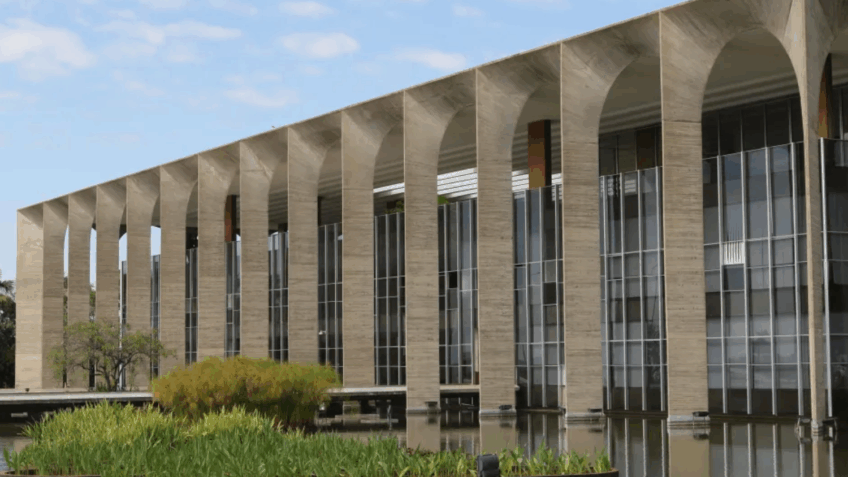
The government of President Luiz Inácio Lula da Silva, through the Ministry of Foreign Affairs, published an institutional reaction this Wednesday (June 24, 2026) against criticism directed at Brazilian diplomatic conduct in the Section 301 investigation, conducted by the United States.
In an official position, Itamaraty called “traitors to the country” the political sectors that hold the Executive responsible for the sanctions and stated that the “tariff” It originates from an attempt at external interference in Brazilian Justice.
Although the statement does not mention Senator Flávio Bolsonaro (PL-RJ) by name, the demonstration is taking place during a period of strong opposition mobilization. According to Itamaraty, opponents are trying to rewrite history and owe the country an apology for the damage caused. The tough position comes shortly after Flávio Bolsonaro, pre-candidate for the Presidency of the Republic, confirmed that he will speak at the USTR (Office of the United States Trade Representative) hearing against the 25% surcharge proposed by Donald Trump’s government.
The senator criticized President Lula’s management during an event in the interior of São Paulo, accusing the Executive of “incompetence” and failing to protect exports and national agribusiness.

The federal government’s demonstration was motivated by the opening of a public consultation by the USTR (United States Trade Representative) on the imposition of customs tariffs. The Trump administration’s measure is based on the 1974 Trade Law, under the assertion that acts of the Judiciary and Brazilian public policies constitute unfair commercial practices against North American companies.
Here are the rest of the publications:


COMPANIES ON OFFENSE IN THE USA
The USTR public hearing regarding the commercial investigation ended its registration period, registering 85 requests for participation from Brazilian representatives. Unlike the private sector and the opposition, the Lula government decided that it will not send official representatives to the debate forum.
The business and political counteroffensive in Washington will count on the industrial representation of the CNI (National Confederation of Industry), which will be defended by diplomat Roberto Azevêdo, former director general of the WTO (World Trade Organization). The entity will defend direct negotiation to avoid reciprocal economic losses.
Big brands and confederations such as Klabin, Bauducco, CSN (Companhia Siderúrgica Nacional), CNA (Confederation of Agriculture and Livestock) and Abimaq also ensured speaking time. They argue that national products are part of essential North American supply chains and that taxes would inflate consumer prices in the US, and Klabin will specifically refute accusations of illegal deforestation.
In addition to Flávio Bolsonaro, journalist Paulo Figueiredo, linked to former deputy Eduardo Bolsonaro (PL-SP), will give testimony. He plans to maintain that sanctions could push Brazil towards greater rapprochement with China, contradicting Washington’s strategic security guidelines in the Western Hemisphere.
ACTS OF THE STF UNDER SCRUTINY
The technical report details eight fronts of accusation, six of which directly involve acts and decisions linked to the STF (Supreme Federal Court), classified by Washington as high-risk regulatory barriers:
- Lava Jato and Toffoli: the report names Minister Dias Toffoli for annulling evidence of a leniency agreement in September 2023. The USTR argues that the measure represented a failure in the fight against corruption, creating disadvantages for US companies subject to strict integrity rules.
- Civil Rights Framework for the Internet: The partial overturn of Article 19 of the Marco Civil by the Court’s plenary, in June 2025, was classified as a factor of uncertainty that forces platforms to carry out preventive censorship of legitimate content.
- Digital blocks and restrictions: the investigation compiles legal sanctions against North American Big Techs, citing the suspension of Rumble in 2025 for refusing confidential censorship, the complete blocking of
The Central Bank of Brazil was also challenged under Section 301. The USTR concluded that the BC’s dual role as regulator and operator of Pix promotes a “unfair disadvantage” against North American electronic payment companies.
Completing the list of complaints is the breakdown of reciprocity in the ethanol market, the INPI’s slowness in biopharmaceutical patents and ineffective supervision against illegal deforestation.
DIRECT CHANNELS AND CASE DEADLINES
The Itamaraty demonstration sought to directly refute the opposition’s demands regarding the failure to send a government delegation to public hearings in the USA. Brazilian diplomacy argued that the Section 301 forum is historically intended for the private sector and civil society, pointing out that partners such as the European Union and China adopt the same procedure and do not send official representatives to these specific debates.
The Brazilian government highlighted that it has acted actively and uninterruptedly in channels of direct dialogue between governments since the opening of the case, on July 15, 2025. The diplomatic corps has already presented two detailed written defenses and sent a delegation for consultations in Washington to demonstrate that Brazilian policies do not harm bilateral trade.
The official process schedule stipulates the following deadlines:
- July 1, 2026: deadline for sending written defenses and comments to the USTR;
- July 6, 2026: holding the official public hearing in Washington;
- July 15, 2026: deadline for Brazil to respond and legal framework for the eventual entry into force of the surcharges.
The proposed 25% trade sanction frustrates the attempted rapprochement rehearsed by Presidents Lula and Trump in a meeting at the White House in May. If the surcharge goes ahead, the US government confirmed that it will exempt items considered strategic for the US market itself, including beef, coffee, fertilizers, medicines and aeronautical equipment.
This report was written by journalism intern Thalita Cardoso under the supervision of assistant editor Giovanna Pacheco.
Source: https://www.poder360.com.br/poder-governo/governo-lula-critica-ida-de-flavio-aos-eua-e-cita-traidores/