Published 06/09/2026 14:11 | Edited 06/09/2026 14:21
Iran accused the United States on Tuesday (9) of withdrawing the quota of tickets allocated to its fans, expanding a series of restrictions that have already affected a Somali referee, journalists and members of delegations from countries considered adversaries of Washington.
A few days before the start of the World Cup, the most delicate case involves the Iranian team.
The country is facing a war of aggression launched by the United States and is emerging as the main target of the migratory and diplomatic measures adopted by the Donald Trump administration during the tournament.
The Iranian Football Federation claims that Washington withdrew the ticket quota allocated to Persian fans, contrary to rules set out by FIFA.
According to the entity’s regulations, 8% of the tickets for each match must be reserved for sale by the federations of the participating teams. In a statement, the Iranian entity stated that the United States has once again prevented the country’s fans from attending the national team’s games.
“Less than three days before the start of the tournament, the United States is once again preventing Iranian fans from attending the team’s group stage matches. However, unexpectedly, the quota agreed for the Iran Football Federation was withdrawn,” the federation declared.
The episode deepens the crisis surrounding Iranian participation in the World Cup.
After weeks of uncertainty, the team’s players finally received authorization to enter the United States, but around 15 members of the team’s coaching staff and management were denied visas or remain without definitive authorization.
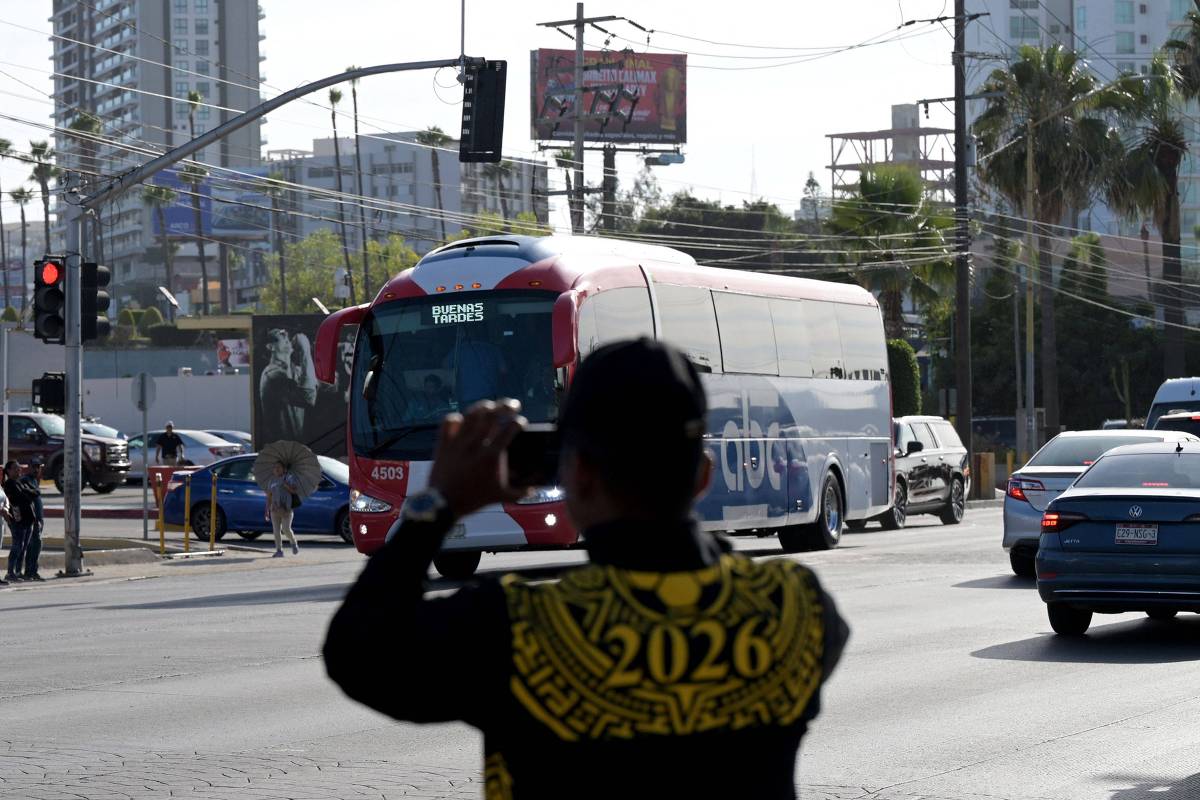
Faced with restrictions imposed by North American authorities, Iran decided to transfer its Arizona Cup base to Tijuana, Mexico, a city close to the border. The team will make occasional trips to the United States only on match days and will return immediately after the games.
The Iranian Embassy in Ankara, Turkey, where the visas were requested, called the measures “the worst possible form of political interference in sport”.
The situation also raises questions about the sporting competitiveness of the World Cup itself.
While the other teams will have fixed training centers and continuous preparation periods before matches, Iran will remain based in Mexico and will make emergency trips to the United States only on match days.
In practice, the team will compete in the tournament under different logistical and sporting conditions than the other classified teams.
Somali referee banned from World Cup
Another case that generated strong international repercussions involves Somali referee Omar Artan, who would become the first Somali representative to play in a World Cup.
Despite having a valid visa and diplomatic passport, Artan was prevented from entering the United States upon landing at Miami International Airport.
After the refusal, he had to return to Türkiye and ended up excluded from the official list of referees for the tournament.
FIFA confirmed the exclusion and stated that it does not interfere in the host country’s migration decisions.
“FIFA can confirm that refereeing official Omar Abdulkadir Artan will not be able to train or play at the 2026 FIFA World Cup after being denied entry to the USA,” the organization said.
The case drew criticism from the Somali Ministry of Youth and Sports. Councilor Clise Aden Abshir stated that the decision violates the principles of equality and sporting merit.
“Denying him entry to the United States and preventing him from refereeing scheduled matches harms not only his person, but also undermines football’s commitment to justice, merit and the spirit of fair play,” he told AFP.
According to US authorities, the decision was taken based on the immigration restrictions imposed by the Trump administration on countries included in special control and travel ban lists.
Somalia is among the nations affected by the measures adopted by the White House, although Washington has not officially detailed the specific reason for the denial against Artan.
The Somali has been part of FIFA’s international team since 2018 and was elected the best African referee of 2025 by the Confederation of African Football (CAF).
Delegations face migratory barriers
The Iraqi delegation also had problems entering the United States. Photographer Talal Saleh was denied access in Chicago, while striker Aymen Hussein, the team’s main player, remained detained for around seven hours before being released.
The Haitian team is still awaiting the issuance of visas for part of its delegation, while African and Iranian journalists report bureaucratic obstacles and denials of authorization to cover the competition.
The International Sports Press Association (AIPS) sent a letter to FIFA denouncing obstacles imposed on press professionals from different countries.
Migration controls and security searches also began to affect African journalists and teams upon arrival in the United States.
Brazilian journalist Karine Alves, from TV Globo, reported having been subjected to an approach considered embarrassing during North American immigration. According to the reporter, agents demanded that she lift her hair during the inspection to enter the country.
Karine stated that the procedure tends to affect mainly black women and noted that other colleagues did not go through the same situation.
The Senegal team was also subjected to rigorous searches upon arriving in the United States. Images released by African sports journalists show players being inspected on the airport tarmac next to their luggage shortly after the delegation arrived.
Trump is booed in the NBA amid criticism
The controversies occur at a time when Donald Trump is trying to use major sporting events as a domestic and international political showcase.
This Monday (8), the American president was booed during his presence at the NBA finals game between the New York Knicks and San Antonio Spurs, at Madison Square Garden, in New York.
Trump received “deafening” boos when he appeared on the arena screen during the US national anthem.
The episode occurred amid a strong security scheme set up for the presidential visit, which blocked streets, restricted the movement of fans and prohibited traditional public events held around the gym during the playoffs.
While trying to project the World Cup as part of the celebrations of the 250th anniversary of the independence of the United States, Trump faces criticism for turning the tournament into yet another instrument of his immigration policy and diplomatic confrontation against countries considered Washington’s adversaries.
Source: vermelho.org.br