Published 06/08/2026 09:52 | Edited 06/08/2026 11:56
Peru remains without a definition as to who will be the country’s next president after a second round marked by a tight difference between the far-right candidate Keiko Fujimori and the left-wing candidate Roberto Sánchez.
With 91.5% of the minutes processed by the Oficina Nacional de Procesos Electorales (ONPE) until the morning of this Monday (8), Keiko appeared with 50.329% of the valid votes, against 49.671% for Sánchez. The difference between the two candidates was around 113 thousand votes.
Despite the advantage of the Fuerza Popular candidate, the scenario remains open in the Andean country because a significant part of the votes still pending come from rural and Andean regions, where Sánchez concentrates his main electoral base
The votes already counted belong mainly to Lima and the large cities on the Peruvian coast, historical strongholds of Fujimorism. In rural regions, known in the country as “Deep Peru”, the candidate from Juntos por el Perú, on the left, performed better than his opponent.
Caution is also fueled by the fact that the quick count released by Ipsos after the polls closed projected Sánchez numerically ahead, with 50.3% of the vote, against Keiko’s 49.7%.
The dispute repeats a pattern observed in the 2021 elections, when Pedro Castillo defeated Keiko Fujimori by a narrow margin after votes arrived from the interior. In that election, the result was followed by weeks of legal disputes, requests for the annulment of minutes and accusations of fraud without evidence presented by Fujimorismo.
The general secretary of the Transparencia association, Omar Awapara, stated that it is not yet possible to declare a winner and warned that the official result could take weeks to be finalized.
After the release of the first numbers, Roberto Sánchez stated that he will await the official result from ONPE and defended the electoral weight of the country’s historically marginalized regions.
“We are in conditions of unrestricted respect for the official results”, declared the Juntos por el Perú candidate. According to him, the votes from “deep Peru” are still underrepresented in the partial count.
Sánchez also celebrated the performance of his candidacy in indigenous and rural regions. “Our Quechua, Aymara and Amazonian peoples decided to recover the government for the people,” he stated.
On Fujimori’s side, Fuerza Popular leaders asked for the mobilization of party inspectors to monitor the validation of the electoral records and the defense of the candidate’s votes.
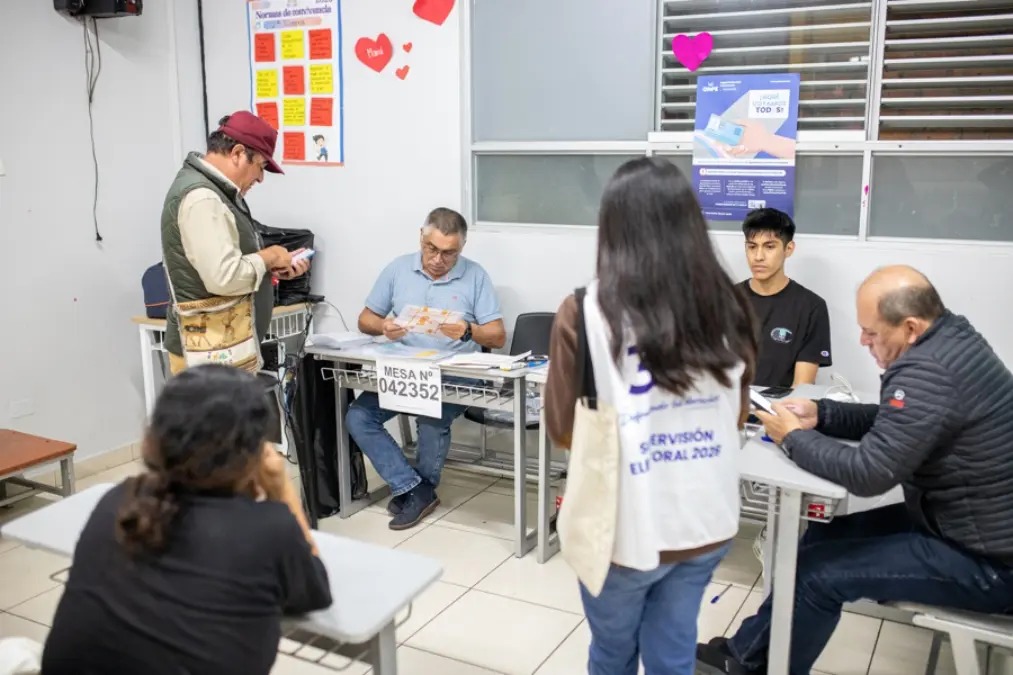
More than 27 million Peruvians were called to the polls to choose the president who will govern the country between 2026 and 2031.
The next president will take office in the midst of a decade of strong political instability, marked by successive presidential dismissals, clashes between Congress and the Executive and increased social inequality in the Andean country.
This Sunday’s voting took place relatively smoothly compared to the first round held in April, when there were delays in the delivery of electoral material and the need to expand voting in some regions.
Electoral authorities and international observers stated that there were no serious incidents during the election day and called for respect for ONPE’s official results.
Also read: Dispute against Fujimorism mobilizes decisive election in Peru
Source: vermelho.org.br