Published 04/27/2026 13:52 | Edited 04/27/2026 16:48
The world has never wasted so many resources on wars. Global military spending reached US$2.887 trillion in 2025 — the highest level ever recorded by the Stockholm International Peace Research Institute (SIPRI). According to a report released this Monday (27), it is the 11th consecutive year of growth in the arms race, with an increase of 2.9% in real terms compared to 2024, and a jump of 41% in the last decade.
The global military burden — the proportion of world GDP devoted to weapons — rose from 2.4% to 2.5%, the highest level since 2009. In terms per capitaeach inhabitant of the planet “contributed”, on average, US$352 to the global military complex last year. See the full report here.
“Global military spending increased again in 2025, as states responded to another year of wars, uncertainty and geopolitical upheaval with major investments in armaments,” said Xiao Liang, a researcher at Sipri.
The trend, according to the institute, is one of continuity. “Considering the variety of current crises, as well as the long-term military spending goals of many states, this growth will likely continue through 2026 and beyond,” added Liang.
Europe and Asia rise; US retreats
The main driver of growth in 2025 was Europe, with a 14% increase in spending, reaching US$864 billion — a record for the continent, double what it spent in 2016. Growth was driven by the war in Ukraine and pressure from the United States for NATO allies to increase their defense budgets.
The US, still the biggest military spender on the planet, reduced its spending by 7.5%, to US$954 billion. The drop is explained by the non-renewal of extraordinary transfers to the Pentagon to support Ukraine — between 2022 and 2025, US$127 billion were approved under this heading. But the respite in American numbers may be short-lived: the US Congress has already approved more than US$1 trillion for 2026, and proposals under discussion speak of US$1.5 trillion for 2027.
In Asia and Oceania, spending totaled US$681 billion, an increase of 8.1% — the biggest annual growth in the region since 2009. China, Japan, Taiwan and South Korea lead the arms race on the continent, amid tensions in the Taiwan Strait and pressure from the Trump administration on allies.
The five biggest: concentration of power
The five biggest spenders in 2025 were the USA ($954 billion), China ($336 billion), Russia ($190 billion), Germany ($114 billion) and India ($92.1 billion), which together accounted for 58% of all global military spending. The 15 largest, together, account for 80% of the total.
China recorded its 31st consecutive annual increase in military spending — the highest of any country in the Sipri database. Germany surpassed the 2% of GDP barrier in military spending for the first time since 1990 and has already promised to reach 3.5% by 2029, financing the increase with public debt, after reforming its “debt brake” rule.
War in Ukraine: the country that spends the most proportionally
Ukraine is the most extreme case in the report. With US$84.1 billion in military spending in 2025 — an increase of 20% — the country allocated 40% of its GDP and 63% of all government spending to the armed forces, the highest percentage in the world for the fourth year in a row. To finance the war, it received US$52.2 billion from international partners, in addition to G7 loans backed by frozen Russian assets.
Russia, in turn, spent US$190 billion, an increase of 5.9%, committing 7.5% of GDP and 20% of all public spending — the highest government percentage ever recorded by SIPRI for the country. About 79% of the Russian defense budget is classified as secret.
Otan targets 5% of GDP
In June 2025, NATO members raised their military spending target from 2% to 5% of GDP by 2035. Of this total, at least 3.5% must go to direct military spending; the other 1.5% can cover items such as “critical infrastructure” and “civil resilience”.
Sipri warns of the risk of “creative accounting”: without clear criteria, countries can reclassify civilian spending as military to achieve political goals. The institute cites the case of Italy, which in 2025 tried to include the construction of a bridge in Sicily as military expenditure. Furthermore, NATO does not publish disaggregated data on its calculations, making independent verification increasingly difficult.
Middle East: Israel retreats, region remains armed
In the Middle East, spending remained practically stable, reaching US$218 billion (+0.1%). Israel reduced its spending by 4.9% to $48.3 billion after the ceasefire with Hamas in January 2025 — but it still spends 120% more than in 2016 and faced a 12-day war with Iran in June 2025. Turkey increased its spending 7.2% to $30 billion, in part through the special fund to support its domestic weapons industry.
Africa and Latin America: the weight of the cannon
In Africa, spending reached US$58.2 billion, an increase of 8.5%. Algeria is the continent’s biggest spender ($25.4 billion), with 8.8% of GDP allocated to the military sector — the second highest percentage in the world, behind only Ukraine. Nigeria increased its spending by 55% (to US$2.1 billion) amid the escalation of extremist violence in the country.
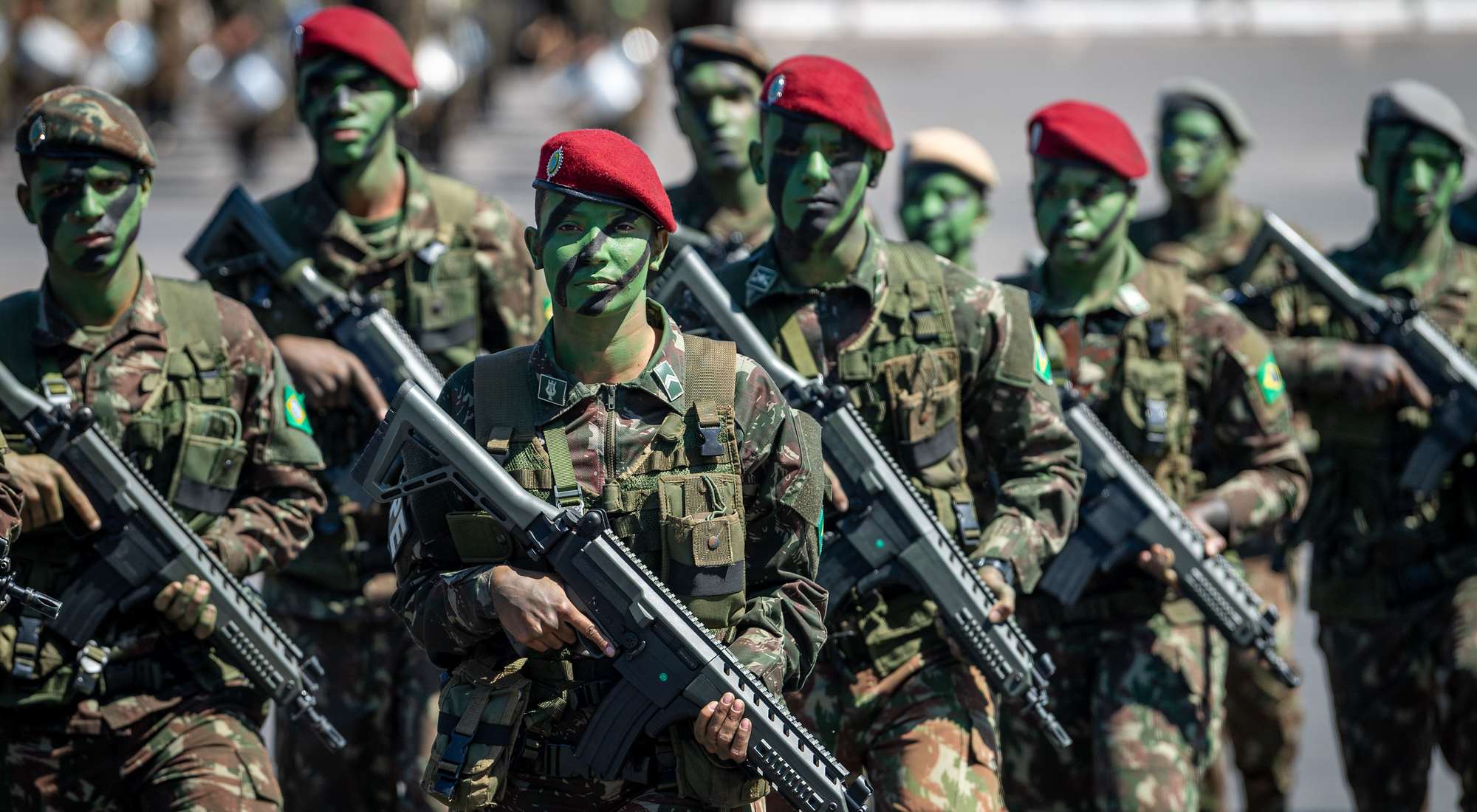
Brazil spent US$23.9 billion on defense in 2025, an increase of 13% compared to 2024 — the biggest percentage jump in the country in recent years. The increase was driven mainly by investments in naval technological development and rising military personnel costs. The country occupies 21st position in the world ranking, with expenditure equivalent to 1.1% of GDP, remaining below the global average of 2.5%. South America as a whole spent US$56.3 billion, an increase of 3.4%.
Arms race and pressure on the public budget
The Sipri report shows that the world is experiencing an unprecedented arms race in the post-Cold War era. The growth in military spending occurs simultaneously with pressure for cuts in social areas in several countries — the United Kingdom, for example, finances part of the rearming by cutting its development assistance (ODA).
For Sipri, the combination of NATO’s more aggressive goals and unclear accounting criteria increases the risks to transparency and democratic governance of public budgets, in addition to making it difficult to truly assess global military capabilities.
__
Source: vermelho.org.br