Published 03/10/2026 14:57 | Edited 03/10/2026 15:32
“I’ve been undergoing treatment since 2020, during the pandemic. There comes a time when you get depressed, you cry because it’s a life change. But over time you learn to love the machine. I depend on it, and if there’s no fuel, no one here will be able to do hemodialysis.” The outburst of Zurama, a patient at the Dr. Abelardo Buch López Institute of Nephrology, in Havana, summarizes the drama experienced by more than 3,000 Cubans who depend on renal replacement therapy — and whose lives are being threatened by the tightening of the economic blockade imposed by the United States.
Hemodialysis is a vital treatment that replaces the function of the kidneys, filtering the blood to remove waste, toxins, excess salt and fluid in cases of severe acute or chronic kidney failure. It uses a machine (dialyzer) that filters the blood removed through a vascular access (fistula or catheter), returning it clean. Sessions last around 3-4 hours, usually 3 times a week.
For Julio César Candelaria Brito, head of the service, proper functioning requires viewing treatment as a complex system: transportation, health — “which is not limited to dialysis, but includes medicines and supplies” — and spiritual support. “You need to have a lot of empathy. It’s a treatment that constantly fights against death”, he says
Fuel scarce, lives on hold
Cuba has 57 hemodialysis units, with more than 3 thousand patients. At the Havana institute alone, 45 people depend on treatment. Theoretically, everyone should be picked up at home daily by taxis booked with the Ministry of Transport. In practice, fuel scarcity turns this apparently simple process into a daily logistical challenge.
“We are waiting for the truck to arrive today to ensure that we can start tomorrow’s hemodialysis session”, explains Julio César. Supply deliveries, which were previously almost daily, now arrive in small batches. Every drop of diesel counts.
The taxi company tried to adapt by combining patients from adjacent areas into a single shift. But there is a human cost: many kidney patients need companions because the treatment weakens them. “This companion can no longer come in the car”, laments nurse José Carlos Castillo Curbeco. “In fact, there are patients who can’t get here, and we often receive them in the emergency room, because if they don’t come for a single day, their lives are at risk.”
Not performing hemodialysis when indicated is a serious and fatal situation, as it leads to the accumulation of toxins (such as urea and potassium) and fluids in the body. The immediate consequences include pulmonary edema (water in the lungs), cardiac arrhythmias, shortness of breath, hypertension and systemic complications that can cause death within a few days.
Electricity: the wire that sustains life
Dialysis machines require a constant supply of electricity. Without stable energy, there is no treatment. Dairy Rodríguez Barreto, head nurse, is categorical: “These machines have batteries, but they are old, they don’t last long. It would be very difficult to work without electricity. Without hemodialysis, patients could die.”
The process is complex: water needs to be deionized to remove elements that could cause infection, and the factories that carry out this process also depend on constant energy. The machine monitors vital parameters — conductivity, blood flow, filtration rate — while a cylindrical filter with a semipermeable membrane facilitates exchange: blood flows downward, dialysis fluid rises, circulating in opposite directions.
Yamilé García Villar, director of the institute, has a look that needs no explanation. “We had periods of breakdowns in the water treatment system, which led to delays. In these circumstances, the technical team was mobilized and dialysis resumed later, finishing at 4 am.” Despite the tensions, she guarantees: “The program was not interrupted at any time.”
Aging equipment, maintenance impossible
Artificial kidneys are designed to function for about five years and require annual maintenance. But the economic and financial limitations imposed by the United States prevent this operation from being carried out effectively. Result: hemodialysis machines suffer breakdowns more frequently.
“There is a fear that there will be no continuity of treatment, even knowing the political will and the commitment of the team”, recognizes Yamilé. “All diseases have a psychological component, and the certainty that treatment is guaranteed provides well-being. When there are real and palpable threats, the patient feels fear.”
Armando, a driver who has also been a patient for four years, embodies this dedication: “For me, that’s it, no matter what time I leave.” He was placed in an “emergency battalion role”: if a vehicle breaks down, he is called. “Until recently, I took a patient to the Military Hospital, but with all the problems with gasoline, I don’t do that anymore. It’s too far.”
“Catastrophic humanitarian crisis”
Cuba’s Minister of Health, José Ángel Portal Miranda, was direct in an interview with Associated Press: US sanctions are no longer just hurting the island’s economy, they are threatening “basic human security.” “You cannot harm a State’s economy without affecting its inhabitants. This situation can put lives at risk”, he warned.
According to the news agency, 5 million people in Cuba who live with chronic illnesses will see their medications or treatments affected. Among them, 16,000 cancer patients who require radiotherapy and another 12,400 who undergo chemotherapy. Cardiovascular care, orthopedics, oncology and the treatment of critically ill patients requiring electrical support are among the most affected areas.
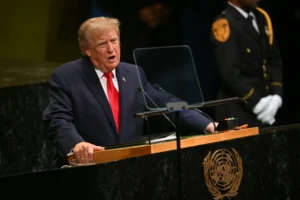
The energy crisis reached new extremes after US President Donald Trump signed an executive order imposing tariffs on any country that sells or supplies oil to Cuba. The measure came just weeks after Trump deposed Venezuelan President Nicolás Maduro in a military intervention and announced that Venezuelan oil would stop going to Cuba.
Cuba produces only 40% of its own fuel and depends on allies such as Venezuela, Mexico and Russia to fill its energy deficit. But these supplies are running out.
Pregnant women and children in the line of fire
Almost 33 thousand pregnant women face unnecessary risks due to the tightening of the energy blockade, reported the Ministry of Public Health (Minsap). The restrictions mainly affect the Maternal and Child Assistance Program, with limitations on access to obstetric ultrasounds and genetic studies essential for the early diagnosis of malformations.
The blockade also makes it difficult to mobilize medical committees responsible for evaluating cases of extremely serious maternal morbidity and newborns in critical condition, in addition to causing delays in childhood vaccination schedules. “These disruptions could significantly impact the 61,830 babies under one year of age who require special care,” authorities warned.
Care for children with specific needs — home ventilation, mechanical aspiration, air conditioning — is compromised due to unstable power supplies and limited availability of emergency medical transportation.
Cuban response: prioritize the essentials
Given this scenario, the Cuban health system adopted strategic measures: consolidation of essential services, strengthening of the family medical and nursing program, prioritization of maternal and child health and reduction of hospital admissions when clinically viable. The level of surgical activity will also be reduced, prioritizing only emergency interventions, while ensuring care for patients with chronic diseases, including those requiring hemodialysis.
“Health professionals maintain their commitment to guaranteeing care for the population, prioritizing the most vulnerable cases and reorganizing resources”, assured Minsap.
Cuban President Miguel Díaz-Canel described the Trump administration’s actions as a “brutal attempt to energetically strangle the island” and stated that he will only negotiate with Washington on an equal footing, based on respect, refusing to accept agreements that jeopardize the country’s sovereignty.
When politics becomes a death sentence
At the Institute of Nephrology in Havana, Zurama learned to “love the machine” that keeps her alive. Julio César fights death with empathy and scarce resources. Armando drives late, even though he is patient. Yamilé supervises runners with a tired but determined look.
They are the faces of a statistic: 3 thousand lives on hemodialysis. But they are also symbols of a broader reality: when economic sanctions are used as a geopolitical weapon, those who pay the highest price are civilians — the sick, the vulnerable, those who just want to survive.
With information from Granma
Source: vermelho.org.br