Published 11/25/2025 11:42 | Edited 11/25/2025 16:03
Europe is mobilizing to try to rewrite essential parts of the preliminary agreement that negotiators from the United States and Russia have forged for a possible end to the war in Ukraine.
The first version of the plan, revealed last Thursday (20), has 28 points, was presented without consulting European capitals and began to guide diplomatic discussions in recent days.
The initiative has increased pressure on the continent’s governments, which are now trying to modify sections they consider sensitive to regional security and Kiev’s position in the conflict.
The negotiations gained new momentum this Sunday (23), when North American and Ukrainian authorities announced, in Geneva, the preparation of a “refined version” of the document.
Despite this, no official details have been released, and Moscow said it has not yet received the text through formal channels. For the Kremlin, changes reported in the press need to be verified before making any assessment.
The sudden move exposed the misalignment between Washington, Moscow and European countries, which are seeking to regain space in a process that developed outside Kiev’s main allies.
The reactions reflect different interests about the post-war design and the pace of negotiations, amid Russian military advances and the political wear and tear of the Ukrainian government.
While diplomacy tries to reorganize itself, the ground remains unstable on the war front. Drone attacks hit Kharkiv in northern Ukraine, killing four people on Sunday.
At the same time, Russia announced control of new positions in Zaporizhia and Pokrovsk, reinforcing the military escalation parallel to efforts for an agreement.
Initial US–Russia agreement guides negotiations and causes European discomfort
The original plan was drawn up by Steve Witkoff, US representative, and Kirill Dmitriev, Russian envoy, and emerged last Thursday (20) after leaks in the American and Ukrainian press.
The text provided, among other points, for strict limits on the Ukrainian Armed Forces, restrictions on Kiev’s membership in NATO, de facto recognition of areas occupied by Russia and the creation of demilitarized zones in parts of Donetsk.
The initial version also included the distribution of energy generated by the Zaporizhzhia plant under IAEA supervision and mechanisms for Russia’s reintegration into international forums, such as the G8.
According to the Russian press, these excerpts were well received by sectors close to the Kremlin, who saw elements of long-term stabilization in the document.
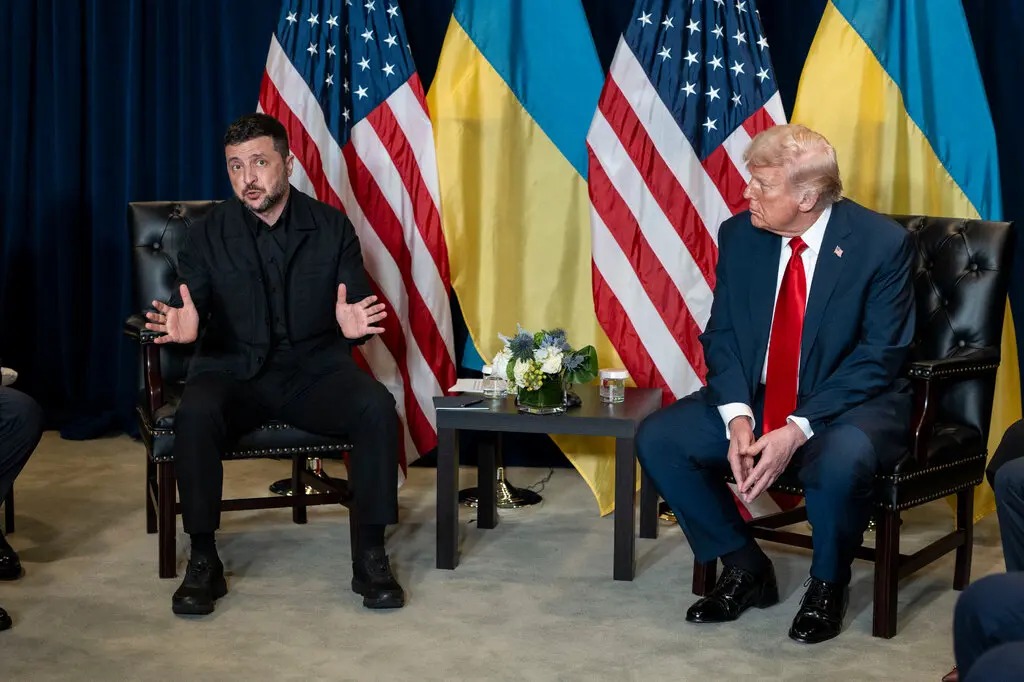
The public release of the text increased pressure on the Ukrainian government. North American President Donald Trump set a deadline of this Thursday (27) for Volodimir Zelenski to comment on the proposed terms.
Later, Trump indicated that the date could be relaxed, depending on the progress of the talks.
For Europeans, the discomfort centers on the fact that negotiations advanced without their direct participation. Diplomats report that the agreement reached the allies practically ready, and the reaction was immediate. London, Paris and Berlin began emergency consultations to respond to the document.
Europeans put together a counter-proposal and claim they were not consulted
To try to regain prominence, France, the United Kingdom and Germany prepared a formal counterproposal, which modifies central aspects of the initial plan. The European text raises the limit of the Ukrainian Armed Forces to 800,000 soldiers and removes any automatic recognition of territories under Russian control.
Instead, it foresees that any negotiations will start from the current line of contact.
The European proposal also includes a US security guarantee similar to NATO’s Article 5, which would establish an automatic response if Ukraine were attacked again.
The document maintains the possibility of future Ukrainian accession to the Western military alliance, which directly contradicts the original point discussed between the USA and Russia.
German Chancellor Friedrich Merz stated, during a parallel meeting to the EU–African Union summit in Luanda, that “peace will not happen overnight”, but recognized initial progress in the talks.
For Polish Prime Minister Donald Tusk, any agreement must avoid “weakening Ukraine or Europe”.
The participation of British, French and German observers in Geneva indicates the European attempt to prevent the process from moving forward without its influence. Still, leaders on the continent admit that the Washington–Moscow axis continues to drive the most structural points of the debate.
Zelenski tries to avoid losses and reopen direct dialogue with Trump
Inside Ukraine, President Volodimir Zelensky faces a delicate political scenario. In recent weeks, two ministers were removed following corruption scandals, and the country has seen Russian advances in strategic areas in the east and south.
Internal wear and tear limits the Ukrainian government’s room for maneuver in negotiations.
In a videoconference with European allies, Zelenski said: “We continue to work with our partners, especially the United States, to seek compromise solutions that strengthen us, but do not weaken us.” The declaration indicates resistance to the profound concessions foreseen in the original text.
Despite the retreat on some points after the meetings in Geneva, there is skepticism in Ukrainian society. Reports in the capital record criticism from citizens of the initial proposal.
North American and European sources indicate that Zelenski could travel to the United States to discuss the most sensitive terms of the agreement in person with Trump, if the talks progress in the coming days.
Russia awaits official version and observes Western division
This Monday morning (24), Kremlin spokesman Dmitri Peskov stated that Moscow has not yet formally received the new version of the agreement and that it will only comment after analyzing the full text. “It’s something very important to be guided by reports alone,” he declared. According to him, changes cited by the press require confirmation.
North American and Ukrainian outlets point out that at least three points would have been changed: increasing the limit of Ukrainian forces to 800,000, removing the absolute veto on joining NATO and eliminating the automatic recognition of occupied areas as Russian.
Peskov, however, reiterated that only official documents can guide the Kremlin’s position.
The Russian stance also reflects internal disputes. The government’s toughest wing sees the military advance on the battlefield as an element to strengthen its position in negotiations. Reports indicate that this current seeks to avoid concessions before Moscow consolidates new positions in eastern and southern Ukraine.
On Sunday, Russia announced the control of new sectors in Pokrovsk, a central logistics region in Donetsk, and the capture of a village in Zaporizhia. In Kharkiv, a drone attack left four people dead, according to local authorities.
Trump increases pressure and accuses Ukraine of “lack of gratitude”
President Donald Trump, who has been leading the diplomatic process directly, once again put pressure on the Ukrainian government this Monday (24). In publications on the Truth Social network, he stated that the Ukrainian leadership showed “zero gratitude” and criticized European countries for continuing to buy Russian energy.
After the meeting in Geneva, Secretary of State Marco Rubio classified the discussions as “the best meeting so far” and said he was optimistic about the possibility of an agreement “in a reasonable time”.
Rubio stated that Americans and Ukrainians worked peer by peer on the document to try to reduce differences.
The North American press reported, over the weekend, that senators were informed that the initial text would be a “Russian wish list”, but the State Department denied the information. Rubio also rejected the characterization and emphasized that the plan was designed by the US government.
Next steps
Ukraine and the United States stated that they will continue “working intensely” on consolidating a joint text throughout the week. European leaders say they hope their suggestions will be incorporated into future versions.
Other countries are trying to join the process. Turkish President Recep Tayyip Erdogan said he would talk to Vladimir Putin about the negotiations. French President Emmanuel Macron indicated that a new round of meetings with the United Kingdom, Canada and other leaders should take place on Tuesday.
Kiev’s formal response to the plan is expected to be presented later this week, although there are no guarantees that the initial deadline will be maintained. Meanwhile, Russia continues to await the official version of the document to take a position on the progress of the negotiations.
Source: vermelho.org.br