Published 12/11/2025 17:31 | Edited 12/11/2025 17:39
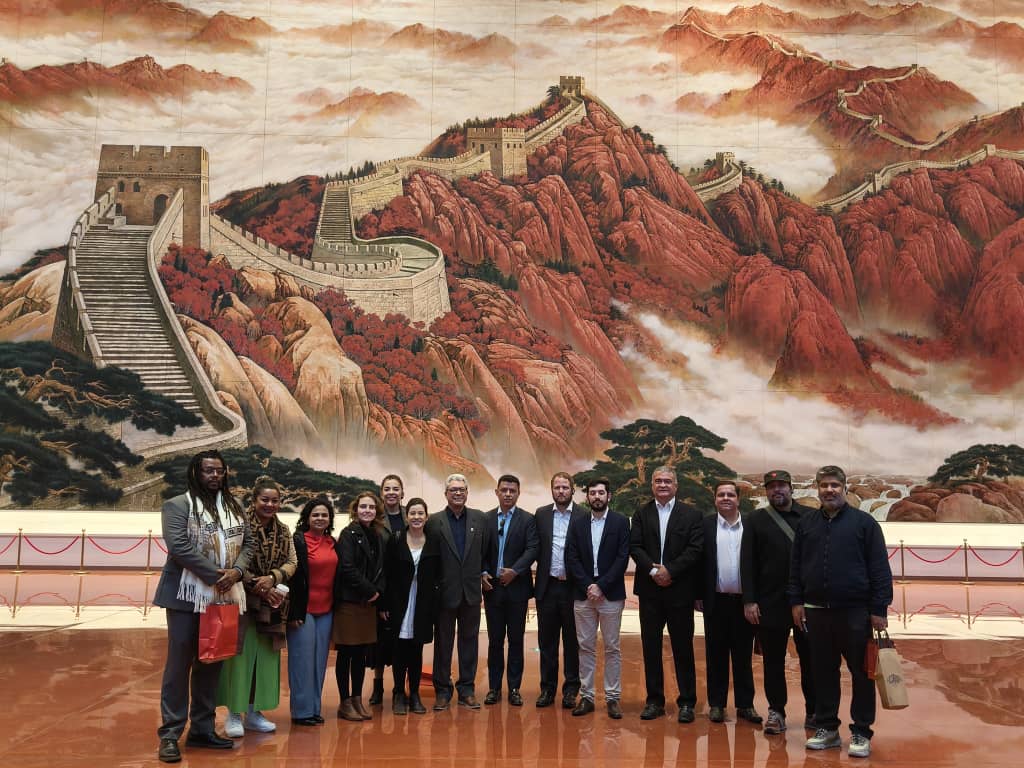
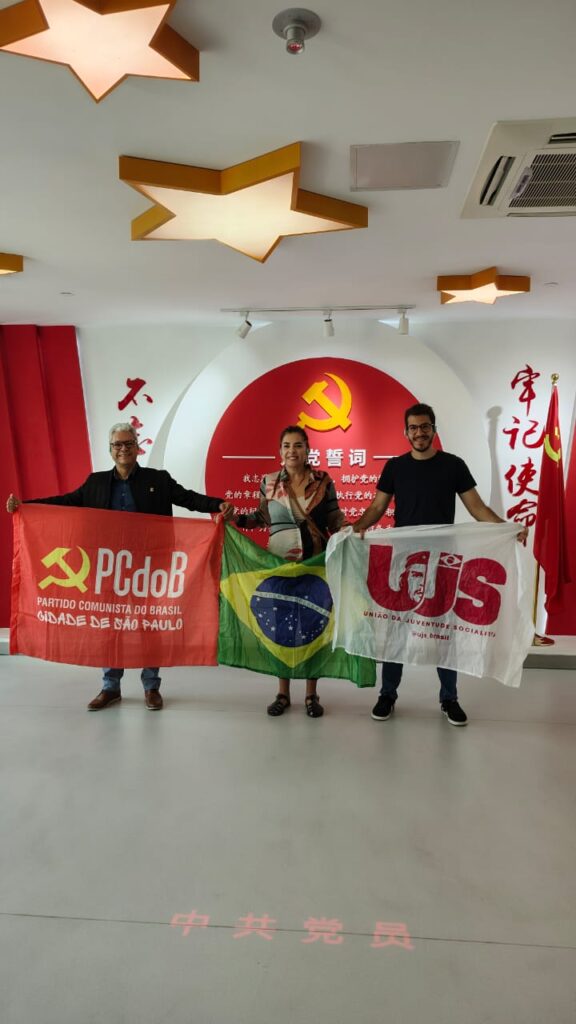
I had the intense joy of being part of the Brazilian delegation of progressive parties that visited Socialist China between October 29th and November 8th. Alongside comrade Janaína Deitos, president of the municipal committee of Florianópolis (SC) and comrade Rafael Leal, national president of UJS, representing our Central Committee, we joined comrades from PT, PSB, PDT and PSOL at the invitation of the Communist Party of China.
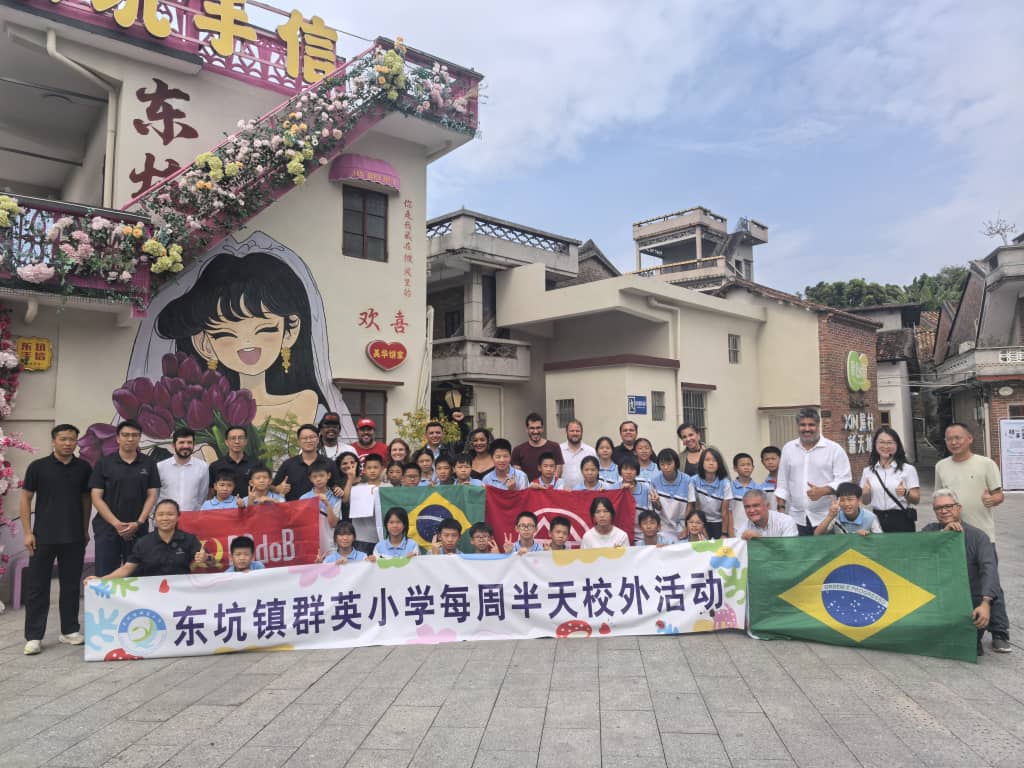
There were intense days of visits to various companies, public bodies, universities, rural communities, base committees and the CPC Central Staff School. We passed through three provinces (states), Guangdong, Anhui and Beijing (Beijing), which has provincial status as it is the capital of the republic, and visited several cities. In our free time, we use the transport system such as the subway, taxis and app-based cars, we walk through shopping malls, popular neighborhoods, bars, restaurants, combining the use of translation applications and the universal language of mimicry to understand ourselves with a people whose language, for us, is very challenging.
It is necessary to recognize that despite studying the development of socialism with Chinese characteristics, from my time as a regular school teacher, through the countless educational activities of our Escola João Amazonas, reading several works by scholars about China, among PCdoB staff and several other intellectuals dedicated to the subject, nothing had adequately prepared me to experience the intensity of the strength of that great nation. In one sentence: it was a transformative trip, on the one hand, and a reaffirmation of ideals, on the other! Transformative for seeing, live and in color, the enormous advances that the Chinese people have achieved over the last 75 years, since the victory of the Revolution in 1949, as well as for the intensified conviction that Socialism is deeply necessary for humanity.
The construction of modern China, since the Revolution, essentially involves the political power made up of the CCP and eight other parties, forming a front of forces committed to the construction of Socialism With Chinese Characteristics. This is the fundamental key to understanding the stage of development they have reached. I could feel a deep connection between the people and the Communist Party, which has around 100 million members. Here, therefore, is a first historical lesson: the intense connection between the CCP and the urban and rural masses has been built since its foundation in 1921, with the Party being the spearhead of the main struggles of the Chinese people against European imperialist oppression, in defense of national liberation against the brutal Japanese occupation in the 30s of the 20th century and in the 75 years of development of a new China.
From the formation of this political alliance between the CCP and other parties, China developed its economic structuring process through several stages that created the foundations for the Reform and Opening process of recent decades, which catapulted the Chinese economy to the status of the largest industrial center in the world. It was not a straight-line process, nor was it devoid of intense contradictions, advances and setbacks, but the current level of technological, industrial, commercial evolution and basic standard of comfort for the Chinese people prove the historical correctness of the socialist path adopted since the beginning of the revolution.
From everything we saw and heard on this trip, it is clear that the most basic problems of any nation, from housing to food, from health to leisure, have been solved, based on a broad process of economic production that integrates all possible initiatives to generate employment, income and essential social well-being for society as a whole. Chinese logic implies the integration of the state economy with the private sectors, between large national and foreign companies, small and medium commerce, the so-called “entrepreneurship” with new businesses and initiatives, international trade and massive financing through banks and development agencies. All under the central guidance of the State, directed in an intensely efficient manner by the CCP. There is a very beneficial obsession with efficiency, both in sectors and companies under the direct command of the State and in private activities, in an intense process of integration into the general effort to defend national development and meet the needs of the people. Serving the people, in fact, is one of the main mottos of the CCP and the State.
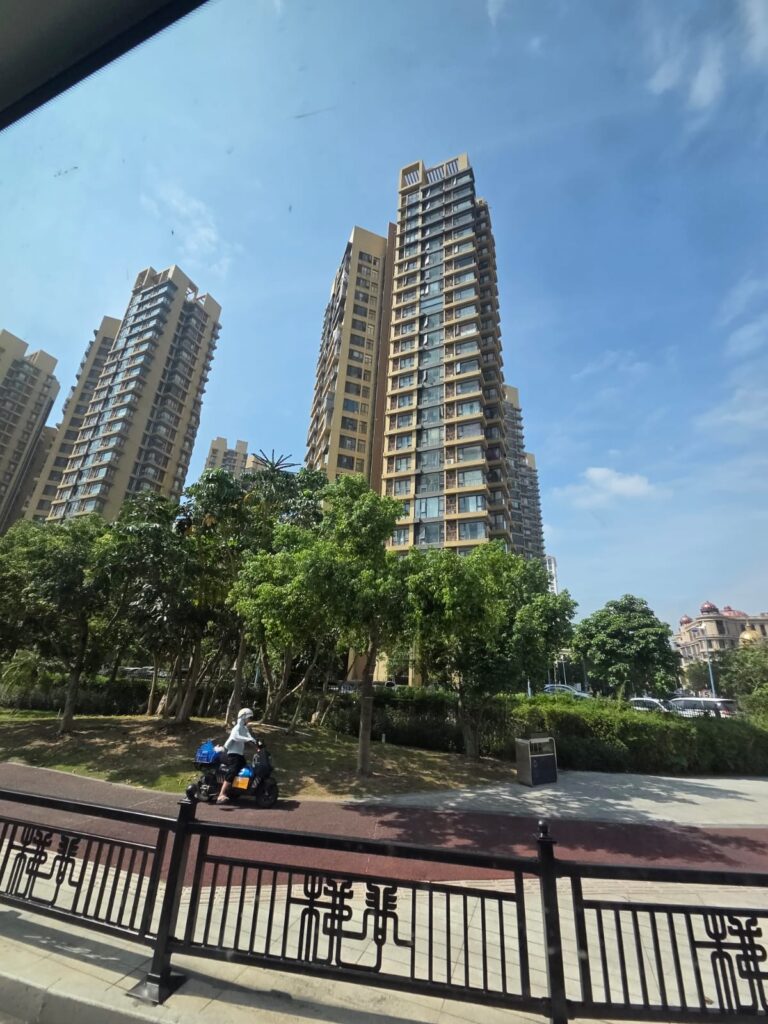
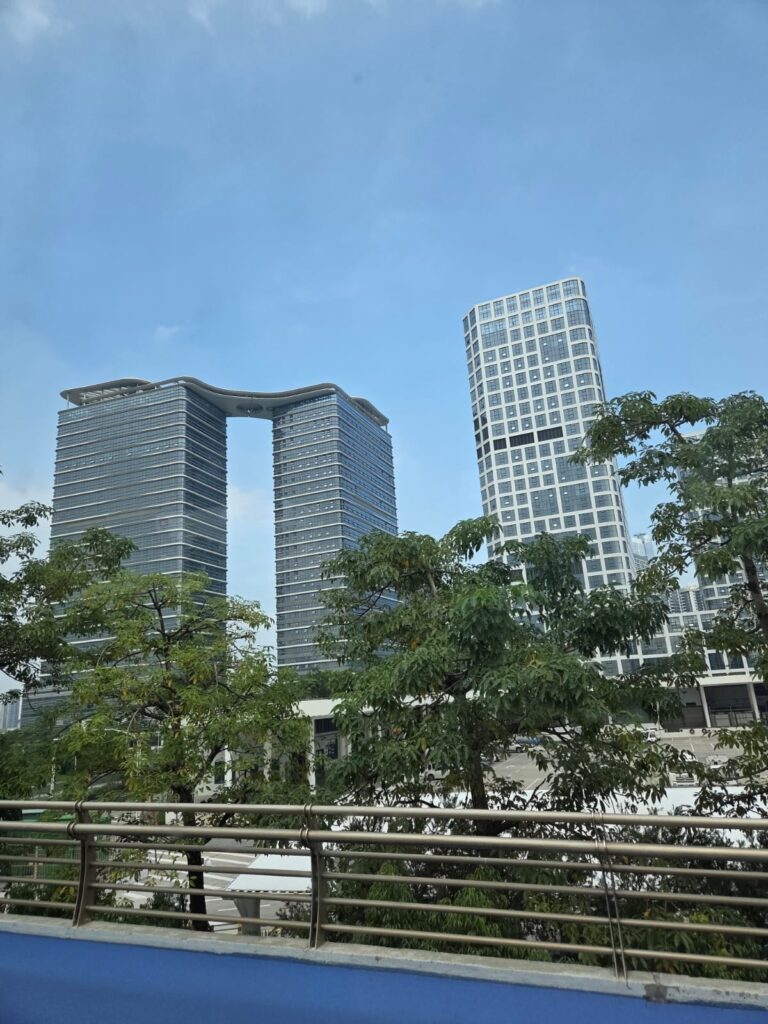
In the cities we visit and those we pass through on our journeys, we remember an intense verticalization, with true forests of reinforced concrete, combined with impressive afforestation, immense green areas, parks, gardens, which, in themselves, create enormous leisure spaces that are absolutely free and considerably improve the environment and quality of life in general. Cars and scooters, mostly electric, travel along wide avenues, always lined with trees, something beautiful to see. There seems to be a kind of national “master plan” in this sense, because it cannot be just a mere coincidence that all the cities seen have the same pattern, with the exception of local characteristics.
We visited rural villages that were degraded due to the intense movement of populations from the countryside to the cities, especially in recent decades, in search of jobs in industries, which are in the process of revitalization, integrating agricultural production with leisure activities, entrepreneurship and technological innovation, giving new life to each of them. There are millions of projects like this across the country. In companies, including car manufacturers and cutting-edge technology in other sectors, including waste recycling, we are amazed by the intense large-scale production in intensely clean, healthy environments and the strong presence of youth at the forefront of these processes. Public services are districted, in units that range from issuing documents to basic health care, always with agility and the use of cutting-edge technologies, aiming to serve the people with quality, providing comfort and speed.
If the China of recent decades seemed to me like a nation that is several years in the future, the perception was not only confirmed but we could also see projects in development that are putting the country several steps ahead of the others. In other words, we were able to glimpse several aspects of the Chinese future in a society that has achieved extraordinary advances, especially when compared with the more general situation in Brazil, with our deep economic and social discrepancies.
Does it mean that China has resolved all its problems and contradictions? Not at all, and the Chinese, especially the CCP leadership, are the first to say this, without hesitation. A few days before our arrival, the party’s Central Committee had approved the guidelines for the development of the 15th Five-Year Plan, which we had access to, in Portuguese, as soon as we arrived. At the same time that the success of the previous Five-Year Plan is welcomed, the document highlights the various bottlenecks, insufficiencies, risks given the turbulent international scenario and other problems to be faced in the next period.
But it does mean, and I have no doubt about this, that Socialism developing in China, with its characteristics, peculiarities and interpretation of problems and search for solutions in the light of intense economic planning, has transformed a backward nation, subjected to imperialism just 75 years ago, into a super power that redesigns geopolitics and shows the people of the world a path to overcoming the enormous aberrations generated by capitalism, in the construction of a great and rich shared progress.
Source: vermelho.org.br