Published 10/30/2025 10:17 | Edited 10/30/2025 11:19
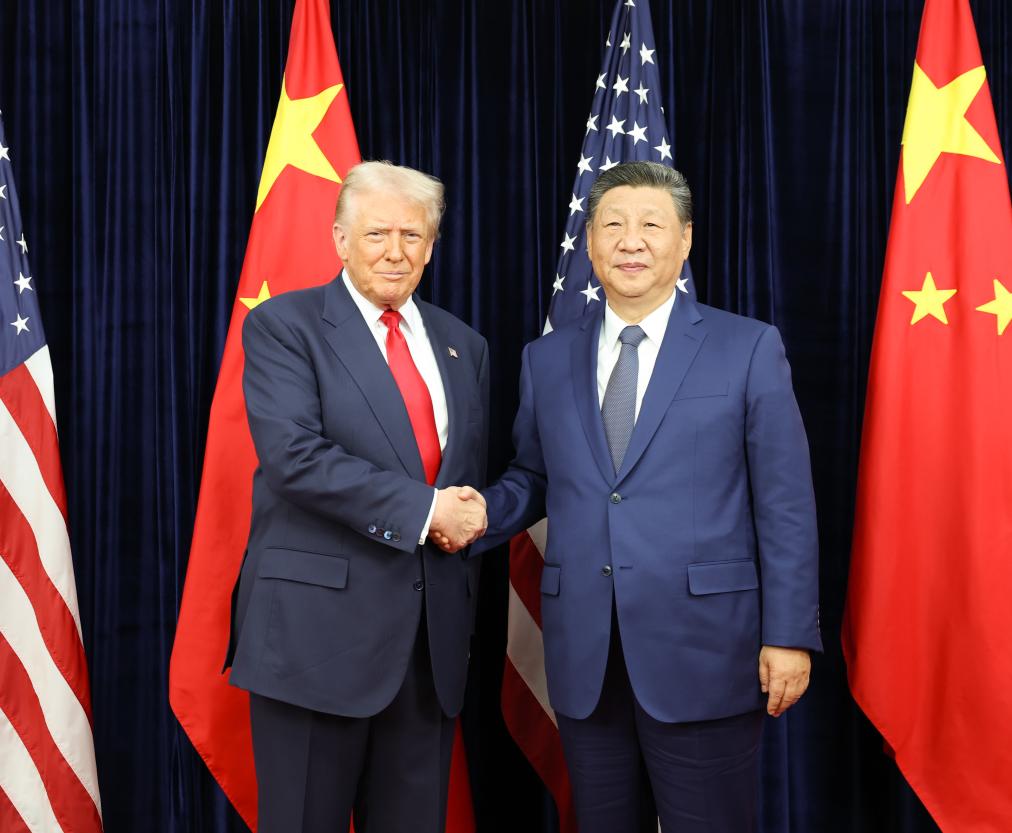
The President of the United States, Donald Trump, and the leader of China, Xi Jinping, announced this Thursday (30) a one-year economic truce, with a reduction in tariffs and the suspension of trade sanctions.
The meeting took place in Busan, South Korea, on the sidelines of the APEC summit, and marked the first meeting between the two leaders since 2019.
Trump stated that tariffs on Chinese products will fall from 57% to 47%, with a specific cut in taxes on chemicals linked to fentanyl, which will go from 20% to 10%. In return, Beijing promised to resume soybean purchases and suspend for 12 months restrictions on the export of rare earths, strategic minerals for the defense, technology and energy sectors.
The agreement ends months of tense negotiations between Washington and Beijing, which began after the new round of tariffs announced by Trump in April. At that time, American surcharges had reached record levels, reaching 147% in some industrial sectors, which led China to retaliate with restrictions on the export of rare earths and the purchase of agricultural products from the United States.
Since then, the tariff war has caused uncertainty in global supply chains, put pressure on the technology sector and reignited disputes over mutual dependence between the two powers. The announcement in Busan, therefore, represents a temporary relief for the markets and a gesture of rapprochement between governments that, in recent years, had been alternating between hostility and pragmatism.
“It was an incredible meeting. I would say 12 out of 10,” declared the Republican, in a self-promoting tone, aboard Air Force One, after leaving South Korea. Xi, in turn, adopted diplomatic and symbolic language: “You and I are at the helm of China–US relations. We must stay the course and ensure the great ship of our relations is sailing steadily.”
Despite the apparent optimism, the agreement does not end the trade dispute between the world’s two largest economies. International analysts describe it as a tactical truce led by Trump, aimed more at relieving domestic economic pressures and giving breathing space to the White House amid the slowdown in consumption and rising prices in the US.
The official Chinese reading, released by the Xinhua agency, presented the meeting as a gesture of stability and rationality in the face of American volatility. Xi defended that “China and the United States must be partners and friends”, highlighting that differences are “natural between the two largest economies in the world”.
The leader also highlighted that the Chinese economy “is like a vast, large, resilient and promising ocean”, reporting 5.2% growth in GDP and a 4% increase in global trade in the first three quarters of 2025.
For Xi, China’s objective “is not to challenge or replace anyone, but to manage its own affairs well and share development opportunities with the world.”
The president promised to expand reforms, accelerate economic opening and maintain dialogue “on equality and mutual respect” with Washington. According to Xinhua, Xi invited the US to work together on issues such as illegal immigration, artificial intelligence and combating money laundering, and proposed that the two powers “assume their responsibilities as great countries” in the face of global crises.
Xi’s speech reinforces China’s strategy of presenting itself as a stable and cooperative force, in contrast to Trump’s erratic style. Beijing’s diplomacy insists that dialogue is better than confrontation — a phrase that has become a fixed axis of Chinese rhetoric since the start of the tariff war in 2024.
The reading of analysts in Beijing and Washington is that the meeting served both to restore predictability in commercial relations and to test the limits of coexistence between two powers competing for technological and industrial leadership in the 21st century. The truce signals a willingness to cooperate, but keeps the dispute for global influence and new spaces of economic power intact.
Source: vermelho.org.br